About Agrotis ipsilon (Hufnagel, 1766)
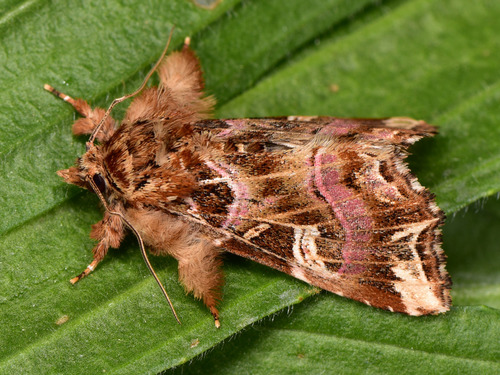
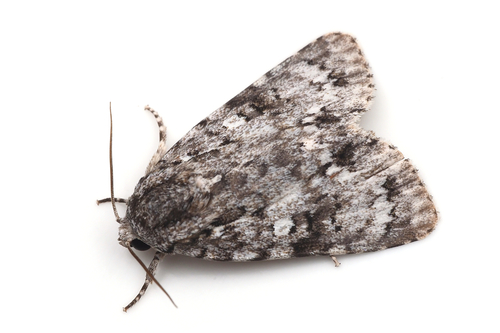
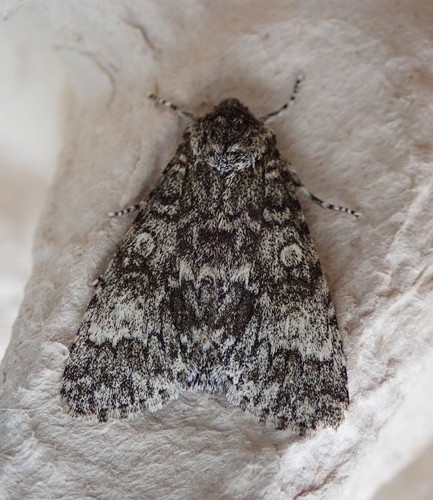
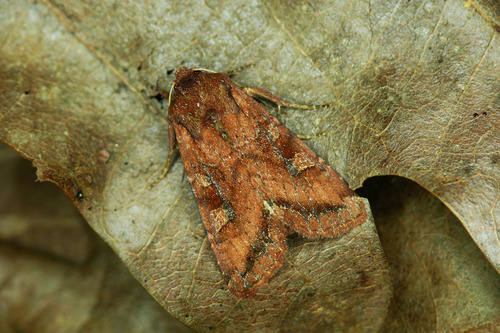
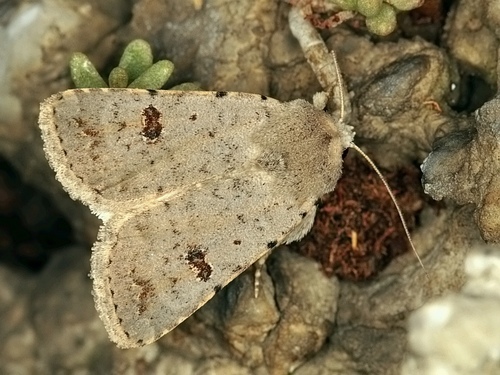
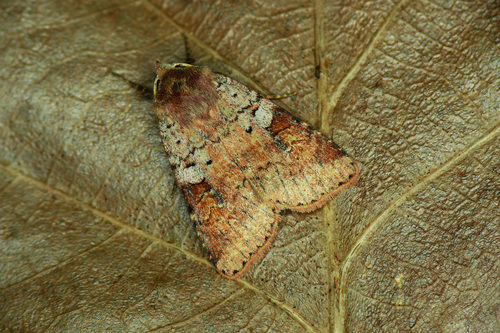
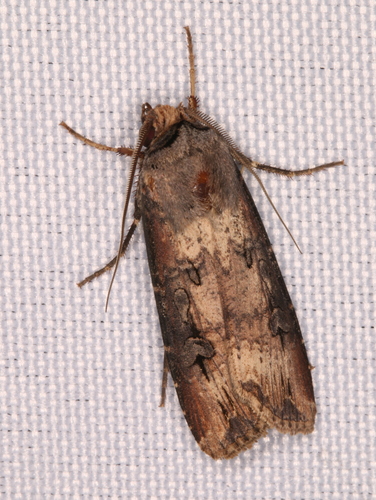
Adult Agrotis ipsilon (Hufnagel, 1766) measure 38–48 millimeters (1.5–1.9 inches) in size. Males have bipectinated antennae. Forewings are brown with a reddish tinge, mixed with pale greyish-ochreous; the costa and sometimes the median area are suffused with dark fuscous. The first and second lines on the forewings are edged with dark fuscous. Spots are outlined in black, and the reniform spot is followed by a short black dash. The subterminal line is obscure, and it is usually preceded by two fine black marks in its middle section. Hindwings are whitish-grey or whitish, with terminal suffusion of fuscous. The larva is ochreous brownish or bronzy-grey, and its sides are sometimes greenish. The dorsal, subdorsal, and spiracular lines are faintly darker or lighter, and are usually edged with darker color. The head has diffuse brown markings. Populations of this species have been recorded in southern Canada, 48 of the United States plus Hawaii, Mexico, Central America, South America, Australia, New Zealand, the Pacific Rim, North Africa, Europe, and Asia. It is absent from some tropical regions and colder areas, and it is more widespread in the Northern Hemisphere than the Southern Hemisphere. This species migrates north in spring and south in fall. The number of annual generations varies based on location and weather conditions. Canada has 1 or 2 generations per year, while the United States has 2 to 4 generations per year. In warmer locations like Arkansas, U.S., this species is most abundant in late spring (May to June) and early fall (September to October). In cooler locations like New York, U.S., it is most abundant during summer (June to July). A full individual life cycle lasts between 35 and 60 days.