About Agriotes sputator (Linnaeus, 1758)
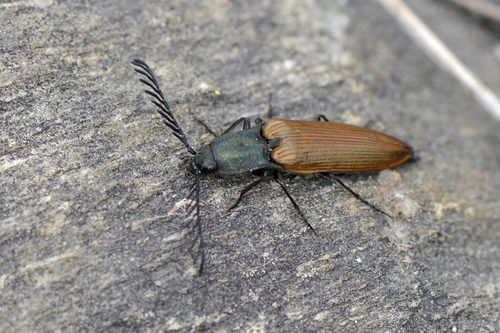
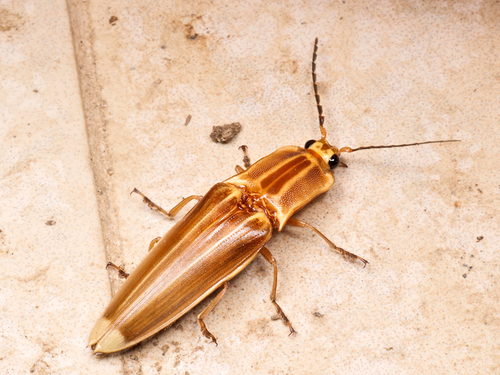
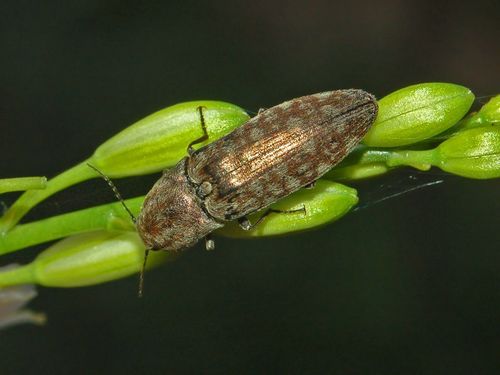
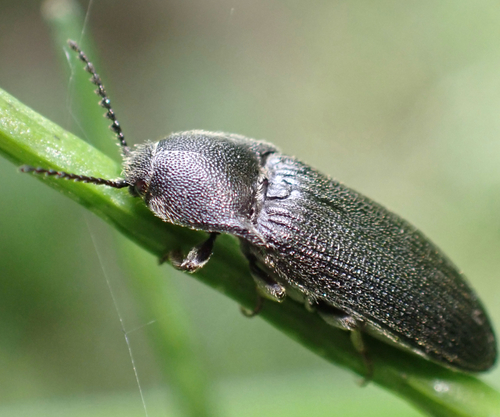
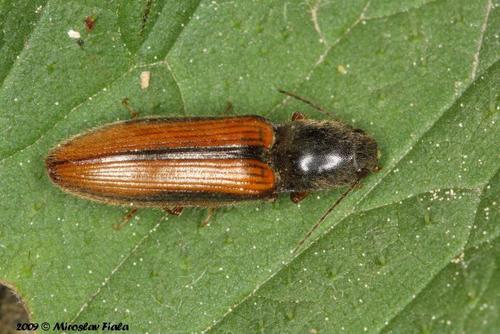
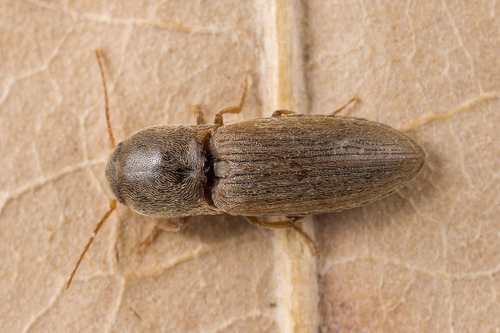
Agriotes sputator (Linnaeus, 1758) is a click beetle species whose larvae are commonly called wireworms. Adult beetles of this species measure 6–9 mm (0.24–0.35 in) long and 1.8–2.8 mm (0.07–0.11 in) wide. Their head and pronotum are bluntly pointed. Antennae match the combined length of the head and pronotum, with the second antennal segment slightly longer than the third. Pronotum shape differs by sex: typically longer than wide in males, and as long as it is wide in females. The entire body is covered in dense, short greyish hairs, and the pronotum bears fine puncture marks. Coloration is variable; most individuals are overall brownish black, with lighter brownish ginger antennae, legs, and wing covers. The front edge and hind lateral corners of the pronotum also often show a lighter brown shade.
In Europe, Agriotes sputator is most similar to Agriotes sordidus and Agriotes brevis. It differs from these species mainly in the shape and coloration of its pronotum, which is less densely punctured and shinier between punctures.
The larval stage, known as a wireworm, lives in soil. It is yellow, slender, stiff and leathery, reaching a mature length of 17–20 mm (0.7–0.8 in). A small tooth sits in the center of its mandible for gnawing. The most important larval identification feature is a belt-like region of very fine, densely packed granules on the upper surface of each of the first 8 abdominal segments, while the remaining upper abdominal segments have much larger, more widely spaced granules. Molecular genetic identification of larvae has been studied and confirmed to be feasible.
Agriotes sputator is native to Europe, where it is most common in the United Kingdom, France, Germany, southern Sweden, Austria, Hungary, Poland and Switzerland. It is only absent from Finland, and the northern regions of Norway, Sweden and Russia. In the south, it has been recorded from western northern Africa (Morocco and Algeria) and parts of the Near East including Turkey, Syria and Iran. To the east, its range extends to western Siberia (Russia), Kazakhstan, Mongolia, and parts of China. This species has been accidentally introduced to North America, where it occurs in isolated locations in eastern Canada, specifically Nova Scotia, Prince Edward Island, New Brunswick and Quebec. A 2018 pheromone trap survey in western Canada did not capture any specimens. A single isolated record from Indianapolis, USA requires confirmation.
In Europe, adult A. sputator are active for multiple months beginning in April. Females lay around 100 eggs in batches 2–5 cm (0.8–2.0 in) below the soil surface; eggs hatch after approximately two weeks. Larvae develop in soil over two to four years. They are polyphagous, feeding on the seeds and seedlings of a wide range of plants, including new tillers of cereal crops. They gnaw into plant roots and locate food by scent. Recorded host plants include species in the grass family Poaceae and the plantain genus Plantago. Larvae feed only when soil temperature exceeds 12 °C (54 °F), and require moist soil. They are killed by dry conditions or temperatures below approximately −6 °C (21 °F), but can avoid lethal conditions by moving down to around a meter below the soil surface. They can survive for long periods without feeding. When fully grown, larvae pupate in late summer or early autumn within the soil. Adults emerge two to three weeks later, but remain in the soil until the following spring. The complete life cycle from egg to producing new eggs takes up to five years. Adult beetles are most active in the afternoon and evening; they feed on grass leaves and pollen, and are often found on the flower heads of umbelliferous plants.
Like other Agriotes species, A. sputator’s natural habitat is grassland, and it often invades cultivated cereal crops from these areas. In Austria, most A. sputator larvae are found at medium altitudes of 300 to 500 m (≈ 1000 to 1500 ft) above sea level, in areas with medium to low annual rainfall (around 750 mm, ≈ 30 in) and low soil pH. In Croatia, the species is most common near crops including white clover, alfalfa, sugar beet and barley.
Following the 2004 ban on persistent organochloride pesticides under the Stockholm Convention, neonicotinoid and phenylpyrazole insecticides have become the main treatments for controlling A. sputator. Both classes of these pesticides are highly harmful to beneficial insects such as honey bees. Additionally, an EU directive in effect since 2014 restricts the use of all chemical pesticides and promotes the adoption of Integrated Pest Management (IPM). An IPM approach requires monitoring pest populations, only applying pesticides when significant economic damage is predicted, and prioritizing non-chemical control methods. While some insecticides, such as the phenylpyrazole fipronil, cause high mortality in A. sputator wireworms, the effectiveness of neonicotinoid insecticides remains uncertain. In a four-year field trial, treating seed potato tubers with the neonicotinoid imidacloprid did not sufficiently prevent damage from A. sputator and other wireworms. Furthermore, pesticide treatments may only produce temporary effects on A. sputator and other wireworms, as populations recover after some time.