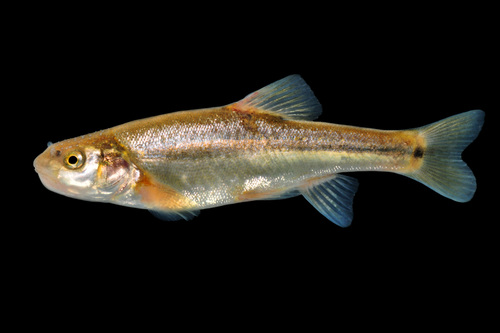
About Agosia chrysogaster Girard, 1856
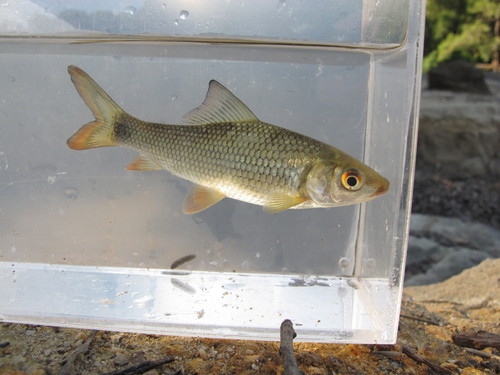
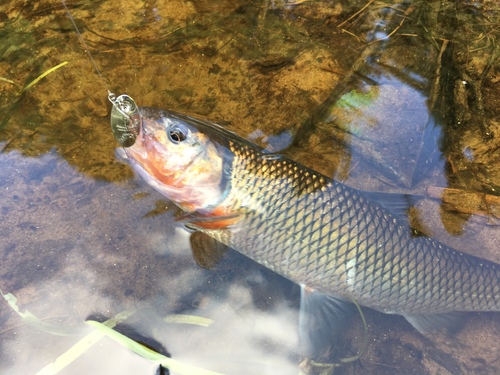
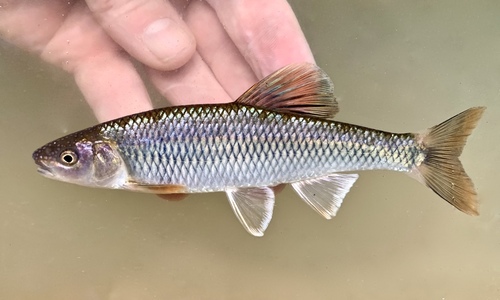
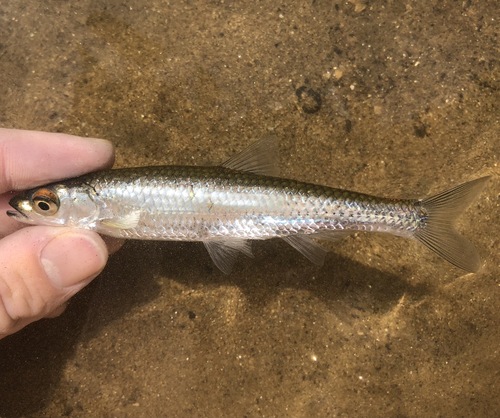
Longfin dace (Agosia chrysogaster Girard, 1856) have a bluntly shaped snout and head, with a slightly subterminal mouth. A small barbel is present in the upper jaw, which typically protrudes above the lower jaw. Their bodies are fusiform and covered with small scales. Longfin dace have 70–95 scales along their lateral line, seven to nine anal fin rays, and nine dorsal fin rays. Fully grown adults reach a maximum total length of 4 inches (100 mm), though individuals rarely grow to 3.2 inches (81 mm). Age estimation done via scales and length-based grouping indicates most longfin dace live less than two years. Longfin dace are native to the deserts of southwestern North America, specifically found in the American states of Arizona and New Mexico, and the northern Mexican states of Sinaloa and Sonora. This species tolerates a wide range of water temperatures, and can be found from low elevation desert streams to mountain brooks. They prefer streams with sandy or gravel bottoms, that usually have overhanging banks or other cover they can use for protection. During drought periods, longfin dace may take refuge in mats of algae and detritus. Longfin dace reach sexual maturity within one year, and can spawn year-round, though the majority of spawning takes place in spring and late summer. They create sand depressions to deposit their eggs; these depressions provide cover from predators while the eggs develop and hatch. Neither eggs nor juveniles receive any parental care.