About Agonopterix walsinghamella (Busck, 1902)
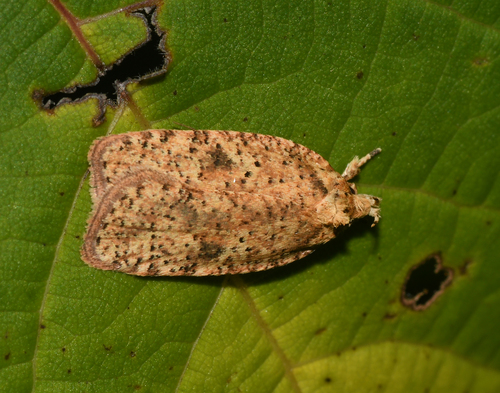
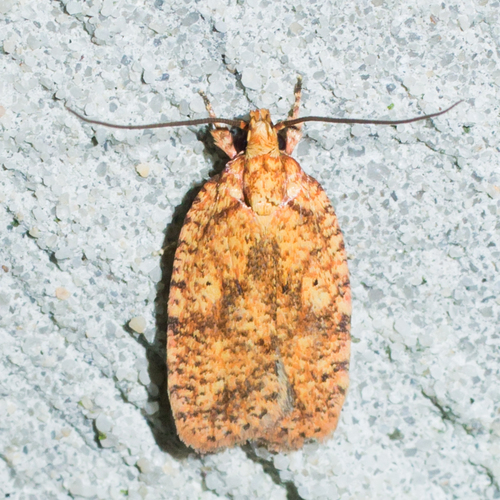
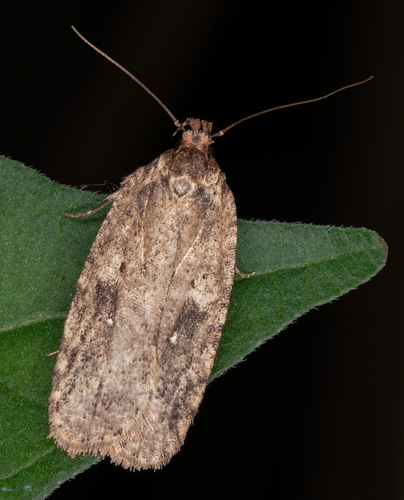
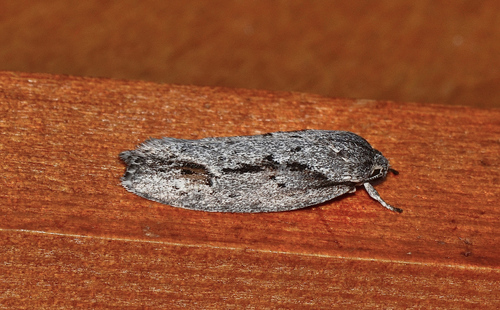
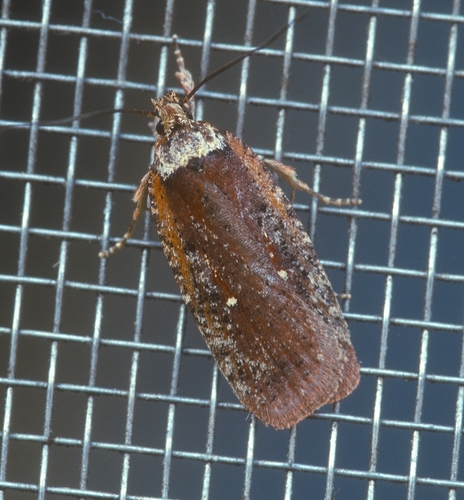
Agonopterix walsinghamella, commonly known as Walsingham's agonopterix moth, is a species of moth in the family Depressariidae. It was first described by August Busck in 1902. This moth is found in North America, with recorded populations in northeastern United States and Canada. Its wingspan measures 20 to 22 mm. The forewings are a deep crimson red, speckled (irrorated) with black and ash-gray (cinereous) scales. The costa is broadly tawny red nearly all the way to the apex; veins 9 through 12 are marked clearly with ash-gray scales and speckled with black, and poorly defined fuscous spots sit along the extreme edge of the costa. The discal spots on the forewings are white. The first discal spot, located at the basal third of the wing, is edged with carmine. The second discal spot, located at the end of the cell, is preceded by a small number of carmine scales. The hindwings are light fuscous. The larvae of Agonopterix walsinghamella feed on Comptonia peregrina, Myrica aspleniifolia, and Myrica gale.