About Agonopterix nervosa Haworth, 1812
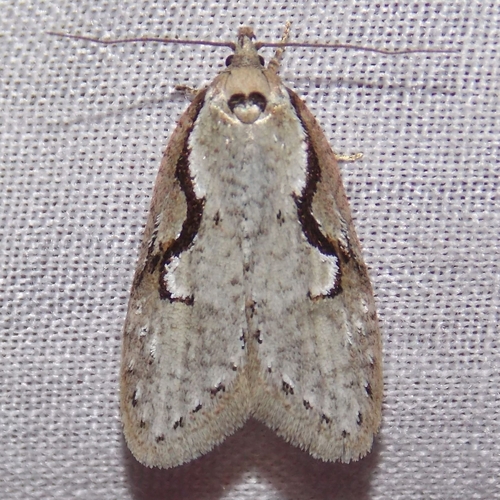
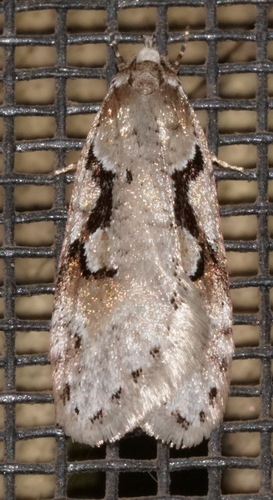
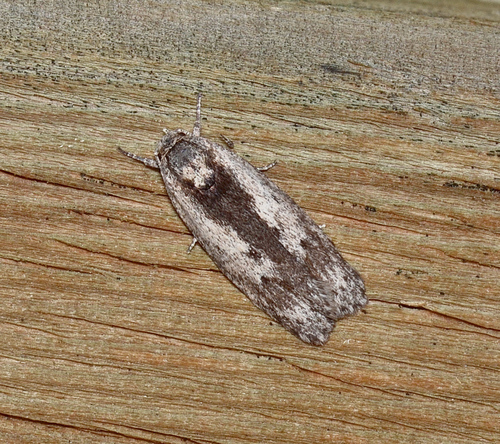
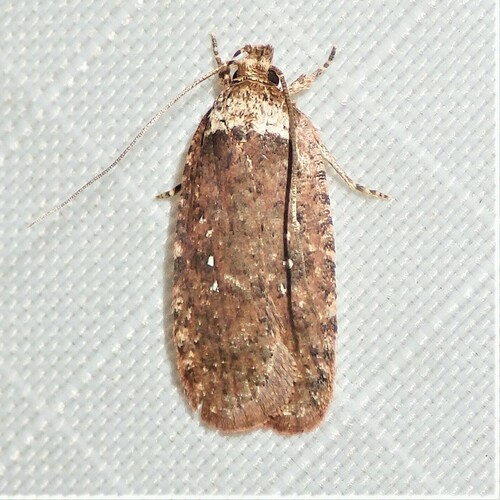
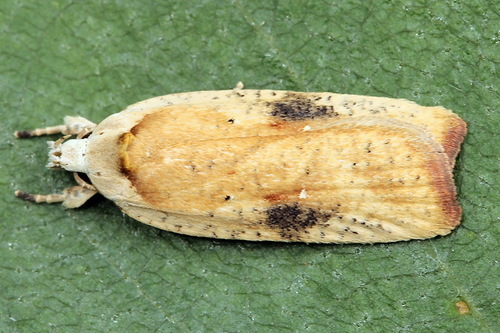
The gorse tip moth, with the scientific name Agonopterix nervosa Haworth, 1812, is a moderately small moth species belonging to the family Depressariidae. It can be found in Europe and North America. This moth has a wingspan of 16 to 22 millimeters. The terminal joint of its palpi features two blackish bands. Its forewings are light brown, lightly sprinkled with whitish coloring, and sometimes carry a faint reddish tint; they bear numerous dark fuscous dashes. Two of these dashes mark the discal stigmata, and there is sometimes a line of pale scales between the two stigmata. An obscure, pale, very acutely angulated fascia is located three-quarters of the way along the forewing. The hindwings are fuscous-whitish, becoming more fuscous towards the posterior end; the 5 vein is connate with the stalk of veins 3 and 4.
The larva is dark bluish-grey, with an orange-yellow lateral line. Its spots are black, outlined with white rings. It has a black head, and the plate on its second segment is black, divided in two, with a whitish anterior edge. Adult moths fly from July to September, with the exact timing varying by location. The caterpillars feed on brooms, specifically species from the genera Cytisus, Genista, Laburnum (golden chains), and Ulex (gorses).