About Aglaope infausta (Linnaeus, 1767)
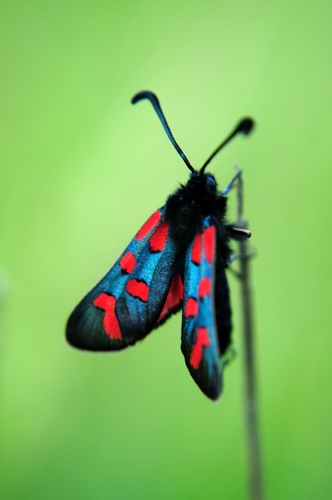
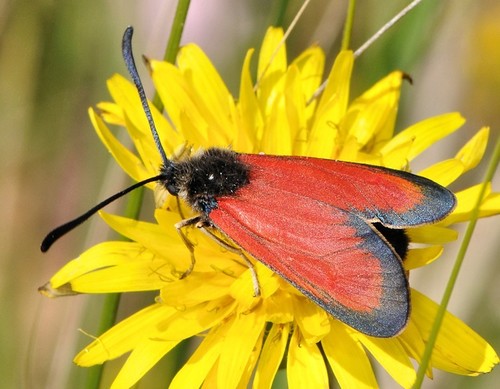
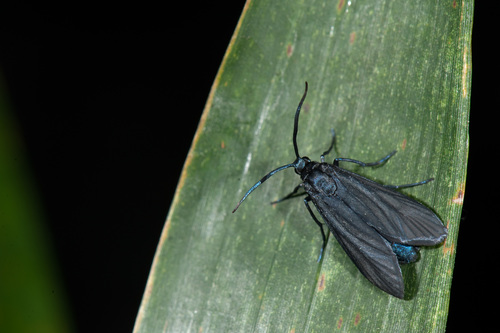
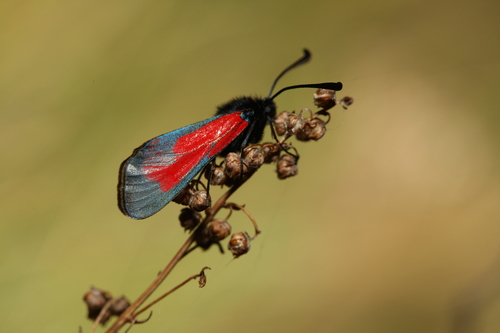
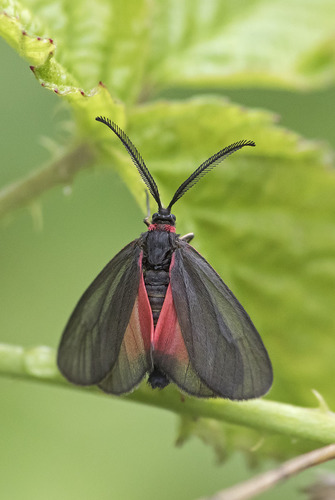
Aglaope infausta, first formally described by Linnaeus in 1767, has gray wings with red coloration toward the wing bases. Its black thorax is crossed by a distinct red band. Adults have a wingspan of approximately 15 millimetres (0.6 inches). The caterpillar of this species can retract its head into its prothorax, and a yellow band marked with black spots runs along the top of its body. Pupation typically begins in early June, inside an elongated whitish or light brown cocoon. The pupa itself is pink or yellowish, and measures 10 millimetres (0.4 inches) long. Larvae feed on Prunus spinosa, Crataegus species, Cotoneaster species, and other plants in the Rosaceae family. This species acts as a pest that damages foliage and young fruit. Compared to other lepidopteran species, Aglaope infausta has a very low level of genetic heterogeneity, but this low genetic variation does not reduce the species' viability. During the Ice Age, the species split into two distinct genetic lineages. Aglaope infausta is distributed across Portugal, Spain, France, and north-western Italy, with its north-eastern range limit in western Germany. It requires hot, dry habitat conditions, and occurs in bushy warm steppe regions and forests. It sometimes shares its habitat with the moth species Heterogynis penella.