About Agelenopsis aperta (Gertsch, 1934)
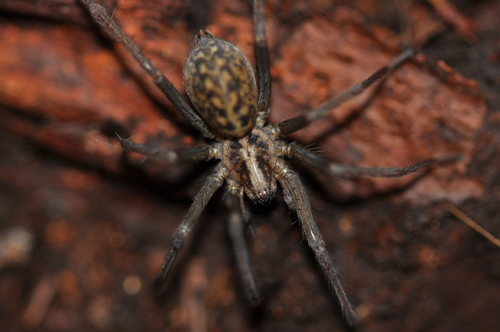
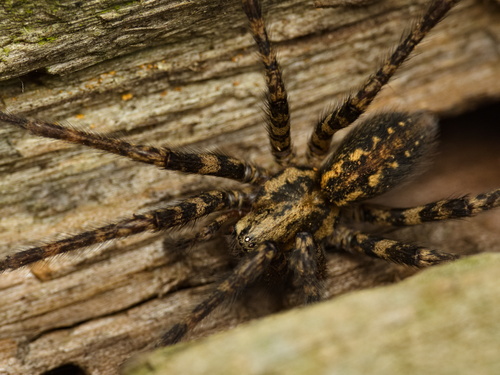
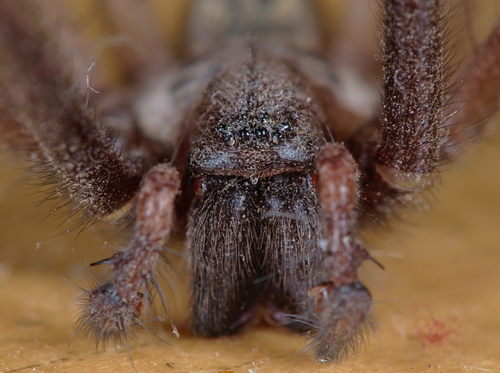
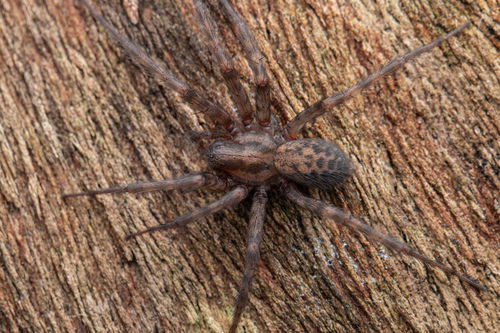
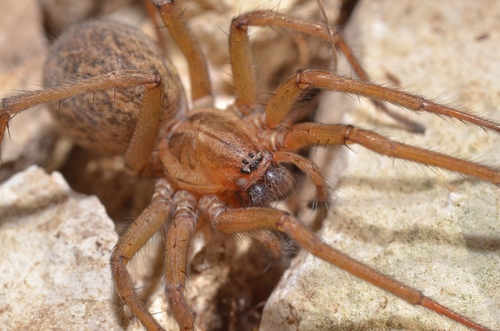
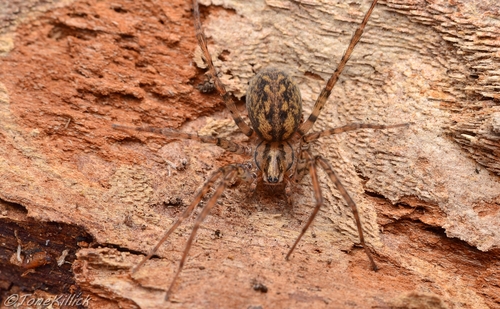
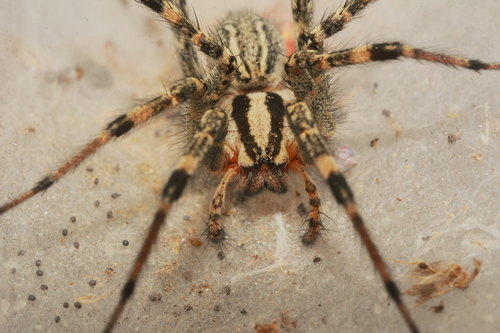
Agelenopsis aperta, commonly called desert grass spider, has a coloration combining gray, brown, and black. The cephalothorax, the spider’s frontmost primary body segment, is tan or gray with two longitudinal brown stripes, while the larger second body segment, the abdomen, is tan with two black stripes. This light-bodied two-stripe pattern is common among funnel weaving spiders. This species has relatively long legs that let it run quickly to capture prey that lands on its non-sticky web. The combined length of the cephalothorax and abdomen typically ranges from 13 to 18 mm. Like all grass spiders, female desert grass spiders are larger than males. They have prominent, long spinnerets—silk-producing organs that extend from the tip of the abdomen. They have eight eyes arranged in two rows that form an arc. As their common name suggests, desert grass spiders live in dry, arid climates. Their range spans the southwestern United States from southern California to Texas, extending into northwestern Mexico. They occupy a wide range of habitats including grasslands, lava beds, and rangeland. They are occasionally found inside homes and other buildings across this region, where they build webs in corners and other undisturbed spots. Most A. aperta are monogamous; this tendency is more common when males face high travel costs to reach mates, or when females become much less receptive to mating after their first mating. Polygyny has been observed in around 10% of these spiders, and males are far more likely to mate with multiple females than females are to mate with multiple males. When males fight over access to a female, the outcome is determined by male size: the larger male always wins, because larger size signals higher future reproductive success. For females, success in competitive fights over food is determined by their fighting ability.