About Agave sisalana Perrine
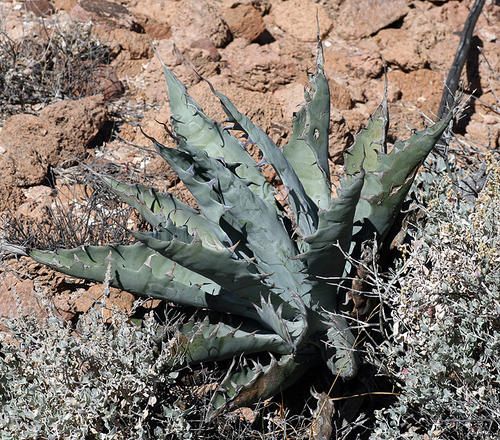
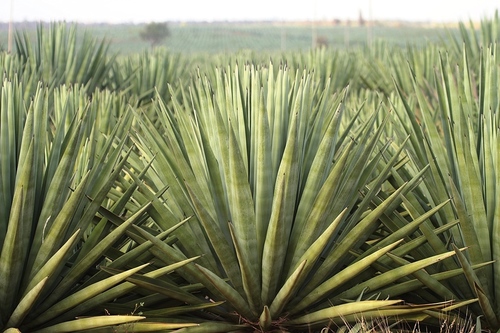
Agave sisalana Perrine, commonly known as sisal, grows as a rosette of sword-shaped leaves that reach 1.5 to 2 meters (4 feet 11 inches to 6 feet 7 inches) in height. Young leaves may have a small number of minute teeth along their edges, but these teeth are lost as the plant matures. The sisal plant has a 7 to 10 year lifespan, and typically produces 200 to 250 commercially usable leaves. Each leaf holds roughly 1000 fibers, and fibers account for only around 4% of the plant's total weight. Sisal is classified as a tropical and subtropical plant, as its cultivation benefits from temperatures above 25 °C (77 °F) and full sunshine. Historically, the Aztecs and Maya used sisal to produce fabric. In the 19th century, sisal cultivation spread to Florida, Caribbean islands, and the Brazilian states of Paraiba and Bahia, as well as to countries across Africa (notably Tanzania and Kenya) and Asia. Reportedly, sisal was brought to Africa from Florida by a notable German botanist named Hindorf. Fernando Heydrich introduced sisal cultivation to Matanzas, Cuba in 1880. The first commercial plantings in Brazil were established in the late 1930s, and Brazil's first sisal fiber exports occurred in 1948. Brazilian production did not expand rapidly until the 1960s, when the first of many spinning mills were built. Today, Brazil is the world's major producer of sisal. Traditionally, sisal has been the primary material for agricultural twine, including binder twine and baler twine, due to its strength, durability, stretchability, affinity for certain dyestuffs, and resistance to saltwater damage. The importance of this traditional use has declined due to competition from polypropylene and the development of new haymaking techniques, while new higher-value sisal products have been developed. Beyond ropes, twines, and general cordage, sisal is used in low-cost and specialty paper, dartboards, buffing cloth, filters, geotextiles, mattresses, carpets, handicrafts, wire rope cores, and macramé. It has been used as an environmentally friendly strengthening ingredient to replace asbestos and fiberglass in composite materials for a range of applications, including the automobile industry. Lower-grade fiber is processed by the paper industry, due to its high cellulose and hemicellulose content. Medium-grade fiber is used by the cordage industry to produce ropes, baler twine, and binder twine; these ropes and twines are widely used for marine, agricultural, and general industrial purposes. Higher-grade fiber, after processing, is converted into yarns for use in the carpet industry. Other products made from sisal fiber include spa products, cat-scratching posts, lumbar support belts, rugs, slippers, cloths, and disc buffers. Sisal wall covering meets the abrasion and tear resistance standards of the American Society for Testing and Materials and the National Fire Protection Association. Sisal wall coverings were very commonly used in Mormon meetinghouses constructed between 1985 and 2010, and this frequent use has made it a meme in Mormon culture. Since fiber extraction only uses a small percentage of the total plant, efforts to improve the economic viability of sisal cultivation have focused on using leftover waste material to produce biogas, make stockfeed, or extract pharmaceutical materials. Sisal is a valuable forage source for honeybees, due to its long flowering period. It is especially attractive to honeybees during periods of pollen shortage. However, the honey produced from sisal is dark, and has a strong, unpleasant flavor. Because sisal is a type of agave, it can be fermented and distilled to produce mezcal. In India, sisal may be used as an ingredient in some street snacks.