About Agave deserti Engelm.
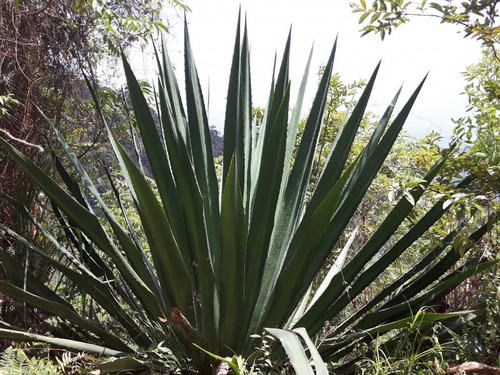
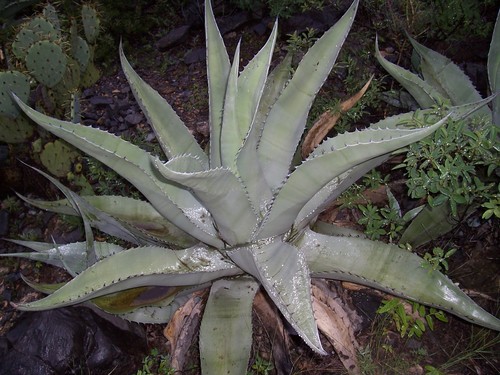
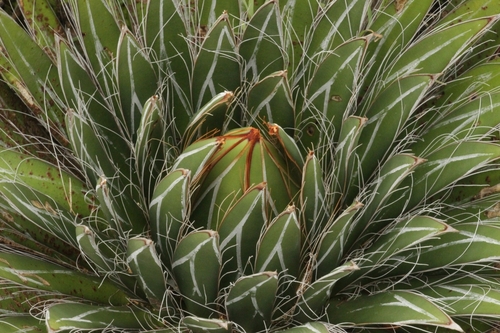
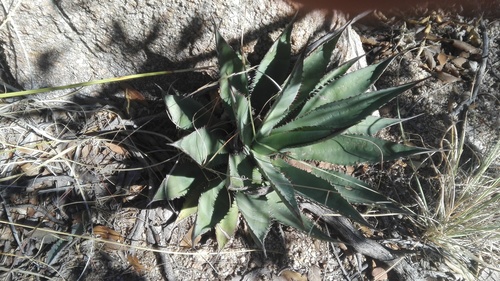
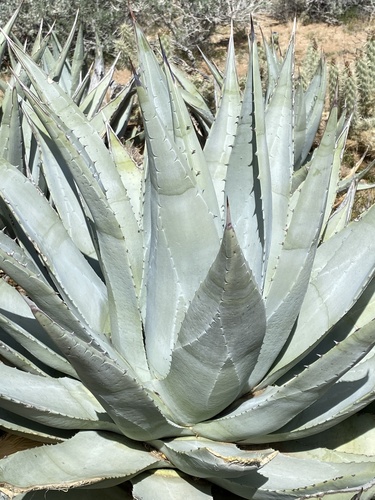
Agave deserti Engelm., commonly known as desert agave, mescal, century plant, or maguey, is an agave species native to desert regions of southern California, Arizona, and Baja California. In spring, its tall yellow flower stalks can be found scattered across dry rocky slopes and washes. This species grows a rosette of fleshy gray-green leaves that measure 20–70 cm long and 4.5–10 cm broad, with sharp spines along the leaf edges and at each leaf tip. It flowers when it reaches maturity, which occurs between 20 and 40 years of age, sending up a 2–6 m tall inflorescence. The panicle holds numerous yellow, funnel-shaped flowers that are 3–6 cm long. Two varieties of Agave deserti are recognized: Agave deserti var. deserti, which typically grows numerous rosettes, has a 3–5 mm perianth tube, and is found only in southern California; and Agave deserti var. simplex (Gentry) W.C.Hodgson & Reveal, which typically grows one or only a few rosettes, has a 5–10 mm perianth tube, and is found in southern California and Arizona. For cultivation, desert agave is drought-tolerant but requires good drainage. Desert-dwelling Native Americans used fibers from this agave's leaves to make cloth, bowstrings, and rope. They ate roasted young flower stalks, buds, and roasted plant hearts. Native peoples of southern California typically harvested the "heads" of this plant with a specialized digging stick, then roasted both the leaves and the heart. The food obtained from this plant often became a dietary staple, even during drought years. Alcoholic drinks were also made from the sweet juices of this species and other agaves.