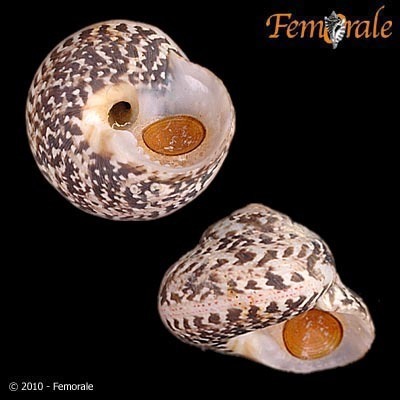
About Agathistoma fasciatum (Born, 1778)
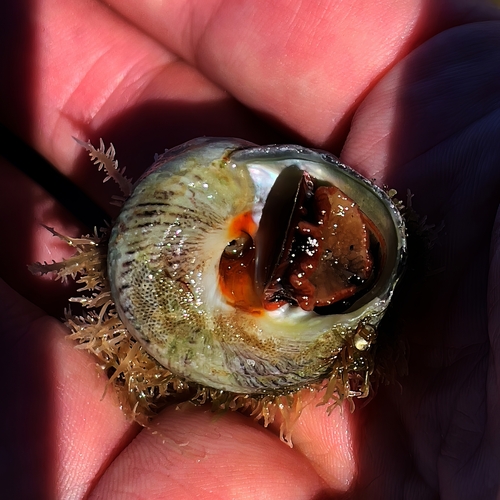
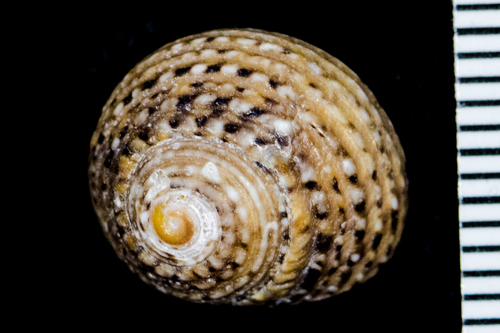
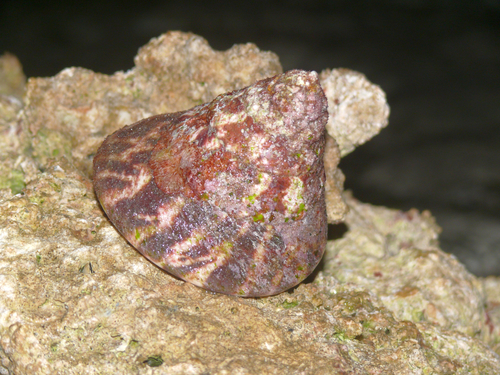
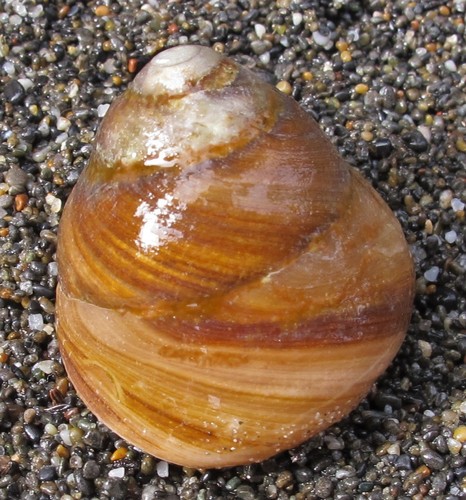
Agathistoma fasciatum is slightly smaller than *Turritopsis lividomaculata*, which reaches 5⁄8 to 7⁄8 inches (16 to 22 mm) in height. A. fasciatum’s shell is somewhat wider than that of T. lividomaculata. Its shell is thick, solid, depressed, and umbilicate. It has six whorls, which are smooth, convex, and rounded, with an acute apex. The upper whorls are nearly flat, while the last whorl is flattened beneath the suture. The base of the shell is rounded, and concave around the umbilicus. The aperture is oblique. The outer lip is finely crenulated along its inner surface. The columella is short and arcuate, with a white callus on its upper portion and two transverse tubercles at its base. The shell’s base color ranges from reddish or pale tan to dark brown. It usually has irregular white splotches distributed axially, plus fine spiral lines made of alternating reddish and white spots or streaks. A pale band is often present along the periphery of the last whorl. Agathistoma fasciatum typically occurs under rocks at low tide level. It is abundant across southern Florida, the Caribbean Sea, and the West Indies in the Atlantic Ocean, found at depths from 0 meters to 90 meters.