About Agaricus diminutivus Peck
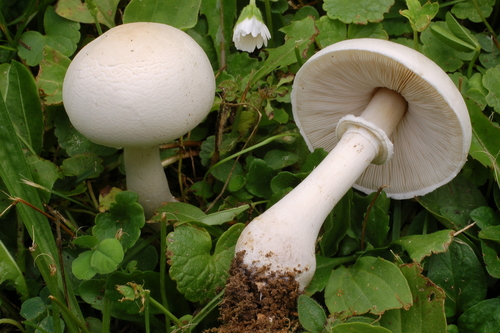
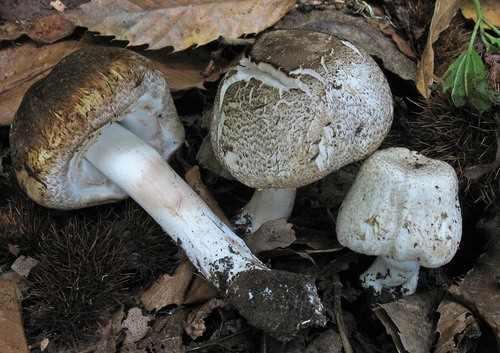
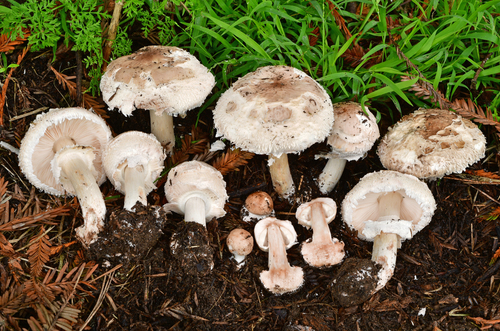
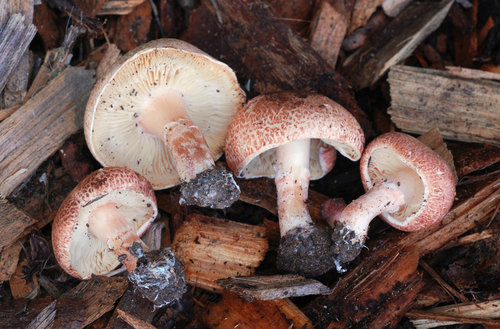
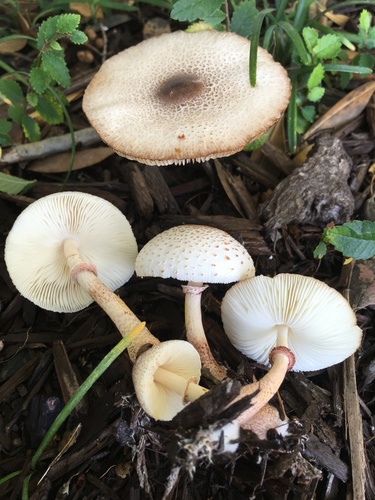
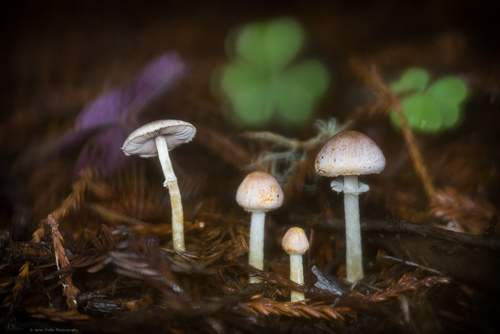
The cap of Agaricus diminutivus is around 1 to 3 centimeters in diameter. It starts out round or ovoid, maturing to become convex or flat. It is pale, most often whitish or tannish. The stipe is 2 to 6 centimeters long and 3 to 10 millimeters wide, with a ring that sometimes disappears as it ages. The gills are free from attachment to the stipe; they start pale pinkish tan, become pink as they develop, and finally turn brown at maturity. The mushroom's flesh bruises slightly yellow when damaged, and also turns yellow when potassium hydroxide (KOH) is applied. Its spore print is brown. While Agaricus diminutivus is likely edible, it is not recommended as food because it can be confused with poisonous Inocybe species. It is also very small and not very common. Agaricus diminutivus is actually a species complex, made up of multiple closely related species that are difficult to distinguish from one another. Agaricus diminutivus grows in forests, especially under conifers, and fruits during autumn.