About Agaricus bitorquis (Quél.) Sacc.
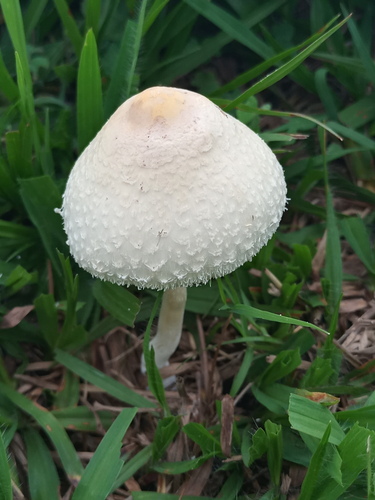
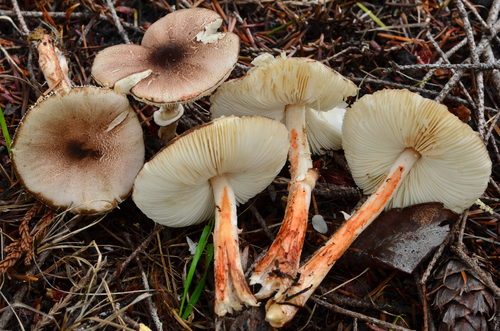
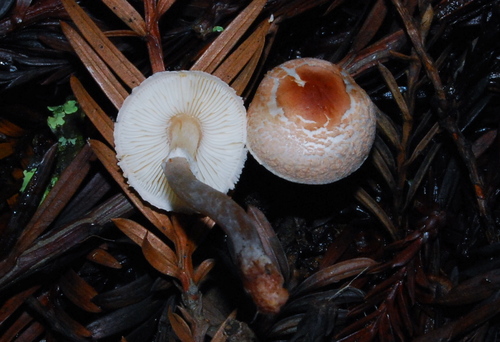
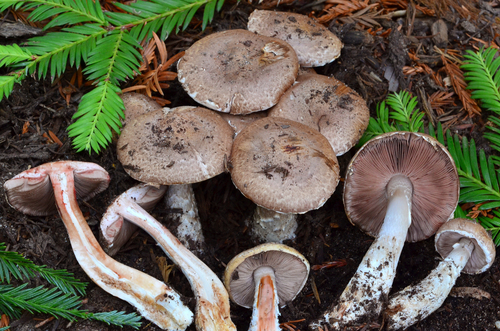
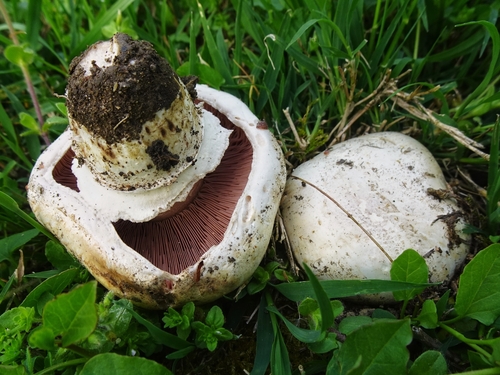
The cap of Agaricus bitorquis is dry, smooth, and white, though it develops a yellowish stain as it ages. It measures 4 to 18 centimetres (1+1⁄2 to 7 inches) in diameter, with a shape ranging from convex to flat, and often has dirt present on its surface. The gills are free, very narrow, and closely spaced. They are light pink when young, and turn dark reddish-brown as spores mature. The spore print of this species is chocolate brown. The stipe is 3–11 cm long and 1–4 cm thick, with a shape ranging from cylindrical to club-shaped (clavate). It is stout, white, and smooth, with a membranous veil and thick white mycelial sheathing near its base. A distinct characteristic of this species is the presence of two rings: a thick upper ring shaped like a funnel, and a thinner skirt-like lower ring. This two-ring feature gives the species its specific epithet bitorquis. The flesh is solid and firm, with a mild odor. Agaricus bitorquis can be found growing solitary or in small groups (it has also been noted to grow in a gregarious manner) in gardens and along roadsides. It usually grows on pavement, often in areas where salt is applied to melt winter ice. It is a partially subterranean species that can push through asphalt and concrete slabs, and often matures fully underground. It occurs occasionally across North America, Europe, Asia and Australia. Agaricus bitorquis was first commercially cultivated in 1968. It has a number of growth characteristics that have attracted the interest of mushroom cultivators seeking an alternative to the common button mushroom, Agaricus bisporus. For example, Agaricus bitorquis is more resistant to a range of viral diseases, can grow at higher temperatures and higher carbon dioxide concentrations, and has better resistance to bruising than A. bisporus. In addition, high temperature-resistant strains of A. bitorquis have been developed recently, which may help cultivators overcome problems associated with cooling production rooms during hot summer months.