About Agama impalearis Boettger, 1874
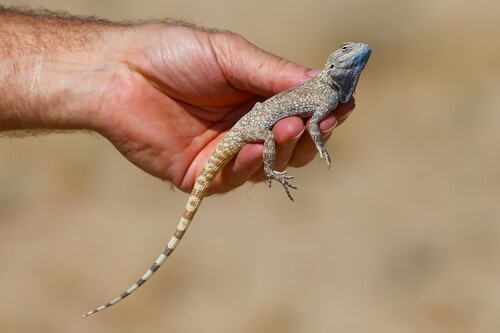
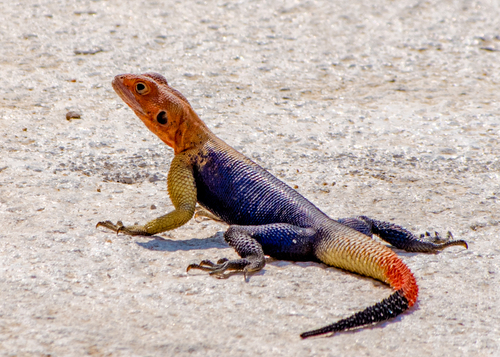
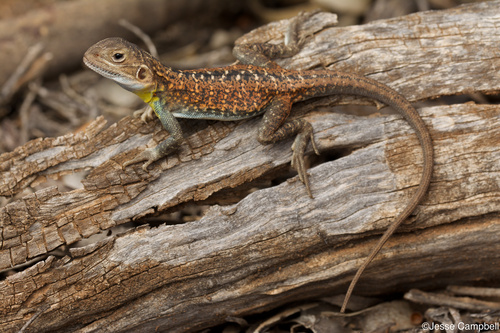
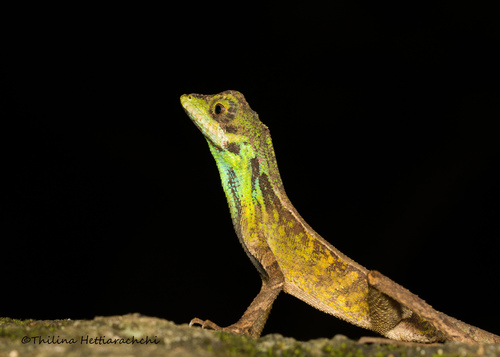
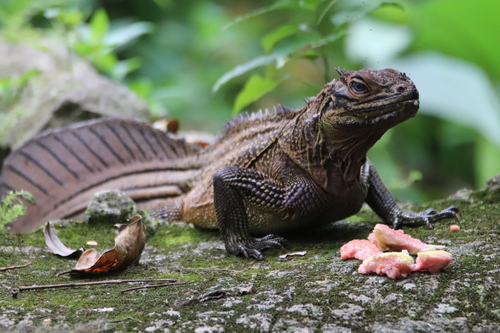
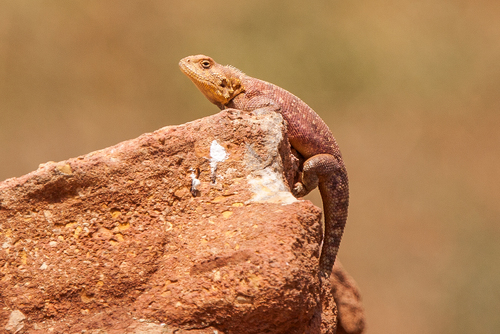
Agama bibronii is a medium-sized lizard that reaches a total length of 25–30 cm, with 15 cm of this length consisting of a cylindrical tail. Its dorsal scales are relatively large and uniform in size; it has small spikes on its neck and the sides of its head, and its throat is wrinkled. Males grow larger than females. The dorsal surface is greyish-green with brown spots, and the head is blue with orange rims around the eyes. During the breeding season, the head and body of breeding males turn coppery-orange, while the rest of the body becomes purplish-blue with pale rings on the tail. Females are mostly bluish-grey, with orangey-yellow backs marked by red stripes. An individual's color can also vary with age or sun exposure. Juveniles have tubercles that will develop into adult spikes. Agama bibronii is found in northwestern Africa, with its range centered on Morocco. It extends south to Western Sahara and east to Batna Province in northeastern Algeria, and may also occur in the Zemmour Massif in northern Mauritania. This species lives in rocky areas and is active during the day. Its main prey is arthropods, but it also eats small lizards and plant material; in Morocco, these lizards are thought to eat flowers primarily for their moisture content. It has also been recorded in Mediterranean-type vegetation, steppe, and suitable habitat at the edges of cultivated land. One-third to half of all females lay two clutches of eggs per year, while the remaining females lay one clutch per year. Each clutch contains 6 to 23 eggs, with a mean clutch size of 14 eggs. The breeding season runs from late April to early September. Females begin breeding in their first year, and breeding is most common among females aged 1–2 years. Agama bibronii is a skilled climber that moves easily over both trees and rocks, and it tolerates high temperatures and direct sun exposure. Even so, during the hottest part of midsummer days, it will retreat into shade. When threatened, it can quickly flee to hide between rocks or under a shrub. In habitats with abundant prey and plenty of shelter, these lizards can occur at high population densities. Their main predators are snakes and raptors, and if they cannot reach shelter, they will play dead. Agama bibronii spends nights in a burrow dug under a large stone, in a bank, or under an embankment. The main burrow is less than one meter long, and may have several side galleries. When not foraging, males use a rock or pile of rocks as a lookout to watch over their territory, which ranges from 100 to 500 square meters in size. During the breeding season, if two males encounter each other, they perform a dominance display: they make themselves appear as large as possible, swell their throats, and lift the front portion of their bodies with their front legs to intimidate the intruder. The other male either flees or initiates a fight, where the two males circle each other and use their tails as weapons until one male gives up and runs away. A male approaches a receptive female using circular movements, then the female signals she is ready to mate by arching her back and raising her body and tail. The male then bites the back of the female's neck and copulates with her. Eggs complete most of their development inside the female's body, and are laid in moist substrate. There appears to be no parental care, and the eggs hatch after 60 days.