About Agalychnis moreletii (Duméril, 1853)
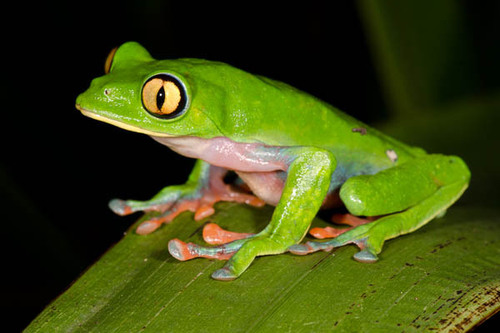
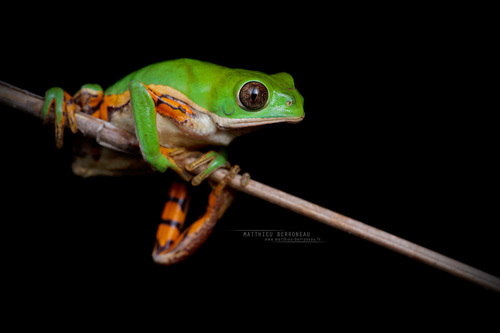
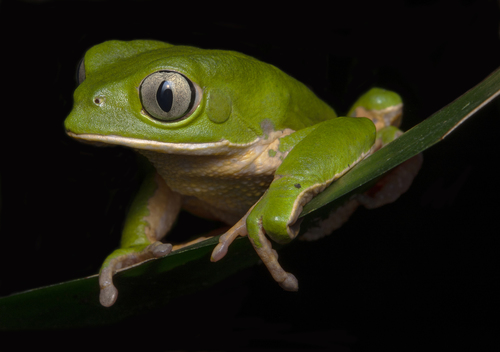
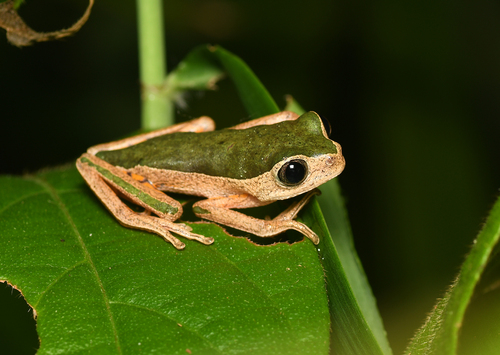
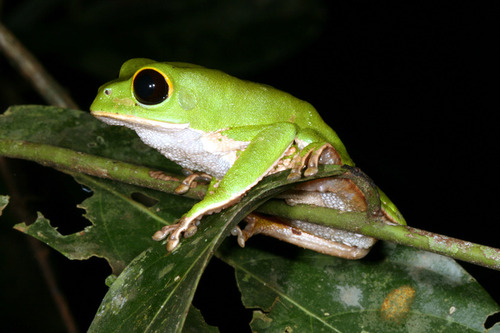
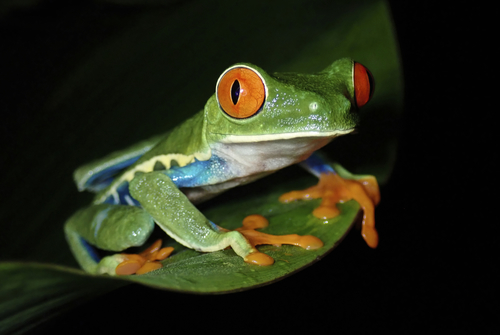
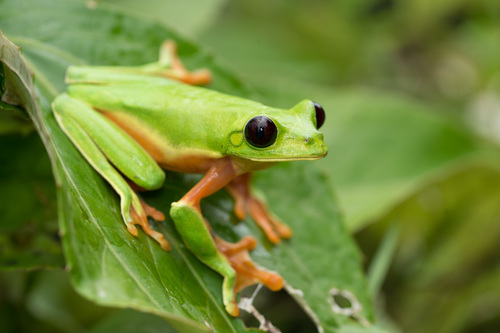
Morelet's tree frog, scientifically named Agalychnis moreletii (Duméril, 1853), has a similar body shape to its close relative, the red-eyed tree frog (A. callidryas), with overlapping range areas. It is slightly smaller than the red-eyed tree frog, with a more uniformly green body, solid black eyes, and a red or pink underbelly.
This species primarily lives in moist subtropical lowland forests, montane or cloud forests, and wetland habitats that have enough tree cover. It occurs across central Central America, ranging from southern Mexico to northwestern Honduras, and is also present in Belize, El Salvador, and Guatemala. In Mexico, it has been recorded on both the Atlantic and Pacific slopes of Veracruz, especially in the hills around Córdoba; its range extends north as far as Cuetzalan, Puebla. On Mexico's Pacific coast, it has been found near Acapulco, Guerrero, and is also known from the states of Chiapas and Oaxaca. Outside of Mexico, the species has been observed in Celaque National Park, Honduras; the Maya Mountains, Belize; most of the Pacific slopes of Guatemala's hills; and near the Santa Ana volcano and the Pacific slopes around San Salvador, El Salvador. It can survive in both undisturbed and disturbed habitats, and breeds in either temporary or permanent bodies of water.
Morelet's tree frog has an extended breeding season that falls during the summer months. When selecting mates, females search out males with the highest quality mating calls; females prefer males with the longest calls that contain the most frequent pitch pulses, and these males are successfully chosen as mates. Females deposit clutches of 50 to 75 eggs on vegetation or rocks that hang over water. The eggs have green pigment; after hatching, the tadpole larvae fall into the water to finish their development into adult frogs.