About Agalychnis lemur (Boulenger, 1882)
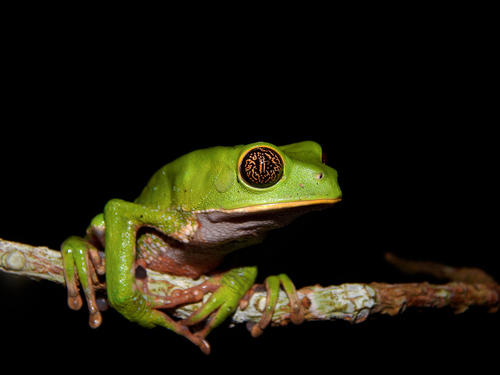
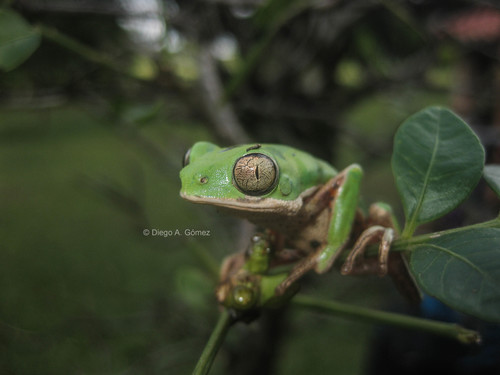
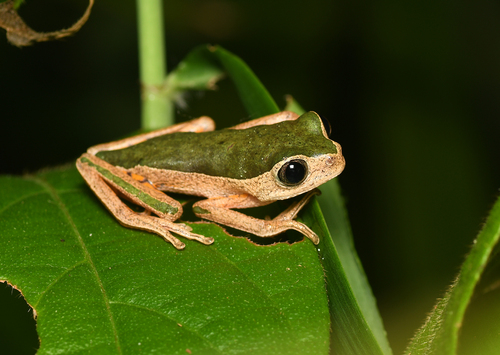
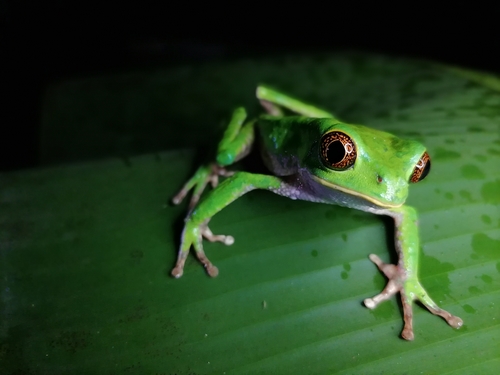
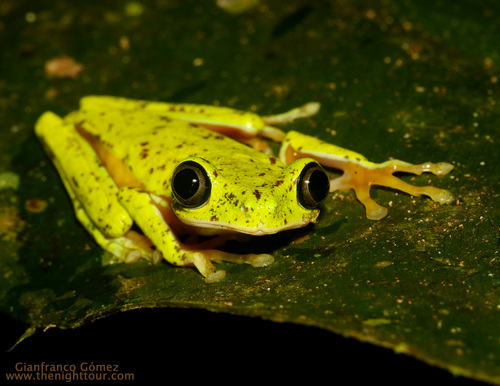
The lemur leaf frog, scientifically named Agalychnis lemur (Boulenger, 1882), has distinct morphological characteristics. During the day, it is vibrant green, but changes to brown at night — this trait improves its ability to camouflage during the day and hunt at night. It is a slender species with no interdigital webbing on its front or hind feet. In the past, this lack of webbing led researchers to place the species in the genus Phyllomedusa. However, recent analysis of mitochondrial and nuclear gene sequences has shown that the species is genetically closer to species in the genus Agalychnis, where it is currently classified. This species also exhibits sexual dimorphism: females are larger than males. Adult females measure approximately 40–45 mm in length and 15–20 mm in abdominal width when resting, while adult males measure approximately 30–35 mm in length and 10–15 mm in abdominal width when resting. On average, females weigh around 4 grams, while males only weigh about 2 grams. The lemur leaf frog inhabits tropical mid-elevation pre-montane rainforest between 440 and 1600 metres above sea level. In Costa Rica, the species is currently found at three sites: Fila Asuncion, an abandoned farm 15 km southwest of Limón; a forested area near Parque Nacional Barbilla; and Guayacán in Limón Province. Of these three locations, only Fila Asuncion is known to host a large breeding population.