About Agalinis purpurea (L.) Pennell
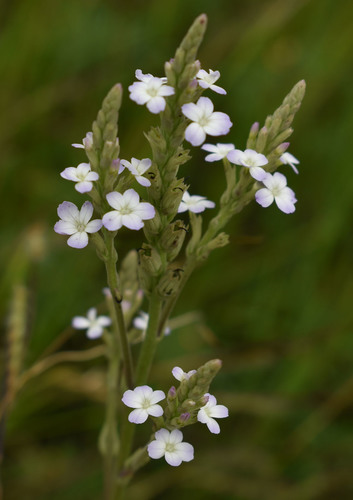
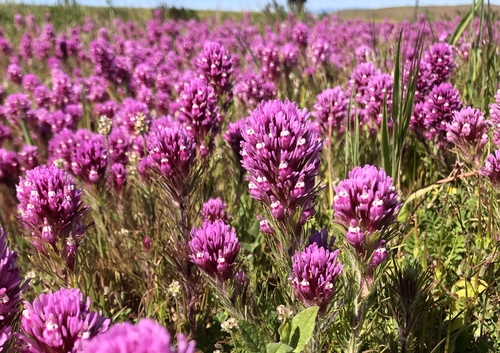
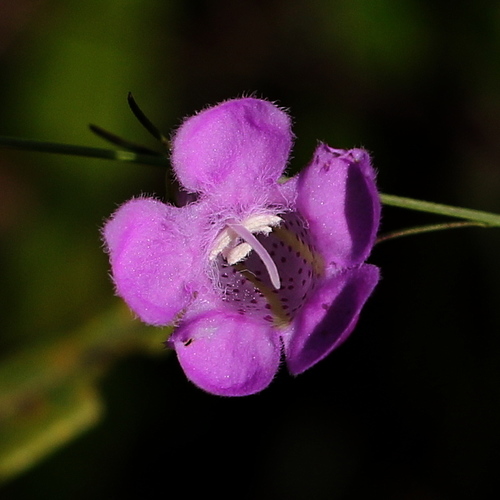
Agalinis purpurea (L.) Pennell ranges from 10 to 120 centimeters in height. It has a slender stem with spreading branches. Its leaves are simple, opposite, 10 to 40 millimeters long, and only 0.5 to 2 millimeters wide. Flowers grow in racemes on the branches, and are held on pedicels that measure 1 to 8 millimeters long. Each flower is bilaterally symmetrical, with five petals 20 to 38 millimeters long that are fused into a corolla tube, plus four stamens. The fruit is a round dry capsule 4 to 6 millimeters long that splits open when it reaches maturity. Agalinis purpurea is widely distributed across the eastern United States, though local populations may be scattered. It has been recorded in the following U.S. states and district: Alabama, Arkansas, Connecticut, Washington, D.C., Delaware, Florida, Georgia, Iowa, Illinois, Indiana, Kansas, Kentucky, Louisiana, Massachusetts, Maryland, Michigan, Minnesota, Missouri, Mississippi, North Carolina, Nebraska, New Hampshire, New Jersey, New York, Ohio, Pennsylvania, Rhode Island, South Carolina, Tennessee, Texas, Virginia, Wisconsin, and West Virginia. It has also been recorded in the Canadian province of Ontario. In the state of Virginia, it grows in habitats including marshes, swamps, interdune swales, and old fields. Its continued presence in any area depends on having suitable habitat; it can be eliminated from an area by development, changes in land use, or competition with invasive species. Like other species in the genus Agalinis, this plant is hemiparasitic on a variety of host plants, especially graminoids. It uses haustoria to connect its roots to the roots of its host plants, but it also produces its own green photosynthetic tissues and carries out photosynthesis.