About Agalinis aspera (Douglas ex Benth.) Britton
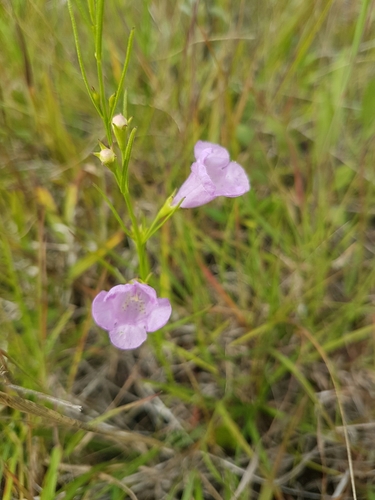
Agalinis aspera, commonly called rough agalinis, rough false foxglove, or tall false foxglove, is a non-toxic plant in the genus Agalinis. It grows in dry prairies, reaching a mature height of 8 to 24 inches. Its blooming flowers range in color from purple to pink, and this species is native to parts of the United States and Canada. According to USDA Plants, it occurs specifically in Arkansas, Iowa, Illinois, Kansas, Minnesota, Missouri, North Dakota, Nebraska, Oklahoma, South Dakota, Texas, Wisconsin, and Manitoba; it does not grow in other areas because those locations do not offer its required habitat. It prefers to bloom in low wet meadows or along hillsides, with a bloom period from June to September. This species is classified in the family Orobanchaceae; it was formerly placed in the family Scrophulariaceae, and this reclassification was done after molecular phylogeny data was obtained from the chloroplast genome. University of Wisconsin biology professors Dr. Virginia Freire and Dr. Emmet J. Judziewicz note that the genus name agalinis is Latin for "remarkable flax", and the specific epithet aspera is Latin for "rough" or "harsh", referring to the coarse texture of its leaves. Tall false foxglove is currently considered endangered. One factor contributing to population loss is tied to its habitat: when it grows in low wet plains, drainage of these plains can remove the plants along with the drained water. COSEWIC states that human activity is the greatest threat to these populations, since most populations occur in road allowance areas. Any major disturbance to these road allowances, such as road expansion or road straightening projects, puts these populations at risk.