About Africofusus ocelliferus (Lamarck, 1816)
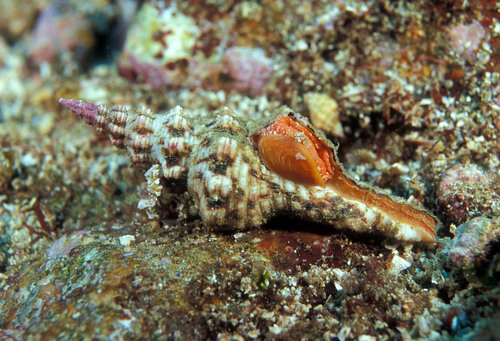
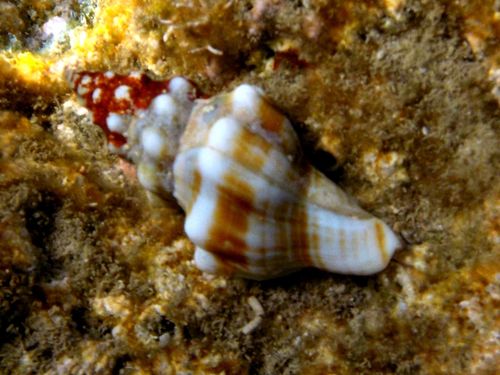
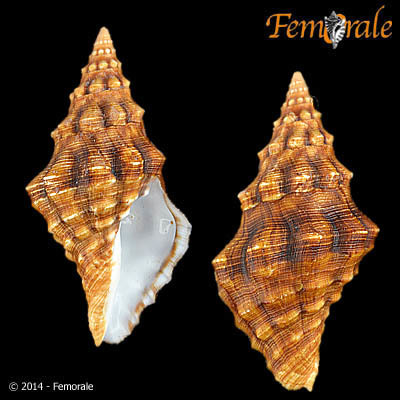
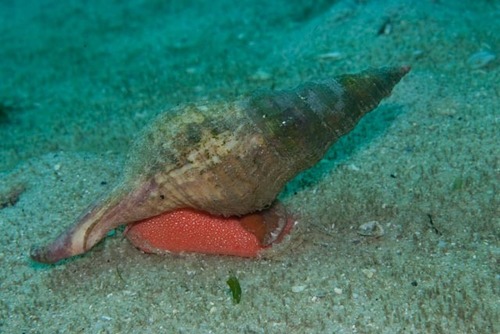
The shell of Africofusus ocelliferus can reach a maximum length of 160 mm. Its shape ranges from narrowly spindle-shaped to broadly spindle-shaped. The spire makes up between half and three-quarters of the total length of the aperture. The siphonal canal is long and slender, and may account for up to one-third of the shell's total length; it is often slightly curved. The shell's sculpture is made up of coarse, flattened spiral ridges, and the prominence of these ridges varies greatly between different specimens. Some individuals have a distinct shoulder marked with rounded nodules. Mature specimens often have a deep false umbilicus next to the siphonal base. There are no columellar pleats on the inner lip, and the interior of the outer lip is smooth. The base color of the shell is whitish, and the spiral ridges are often spotted or mottled with brown. When a shoulder is present, it typically has darker brown spots, especially on its nodules. The periostracum is a velvety, horn-brown layer that often flakes away. The soft body of the animal is orange-red. This is a marine species endemic to South Africa. It is found off the South African coast from Namaqualand on the west coast to KwaZulu-Natal on the south coast, and lives from the infralittoral zone down to 150 m, and possibly as deep as 300 m.