About Aeshna umbrosa Walker, 1908
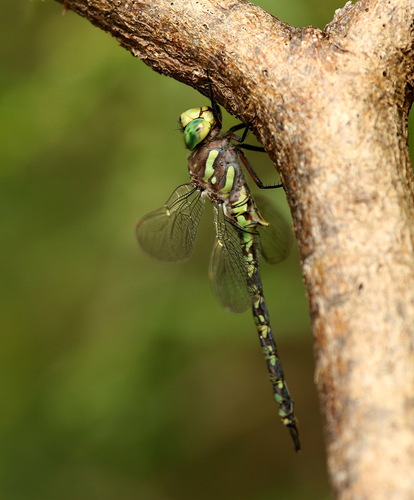
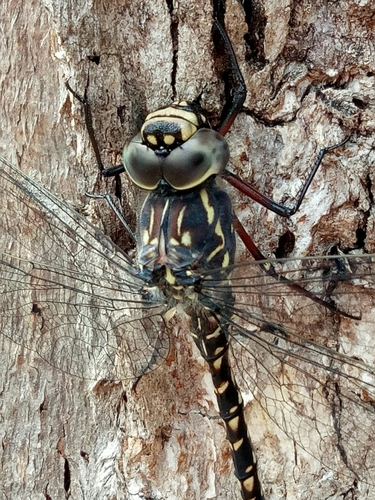
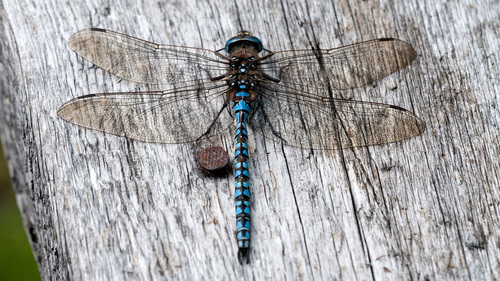
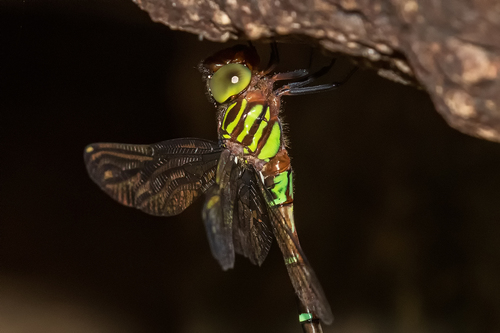
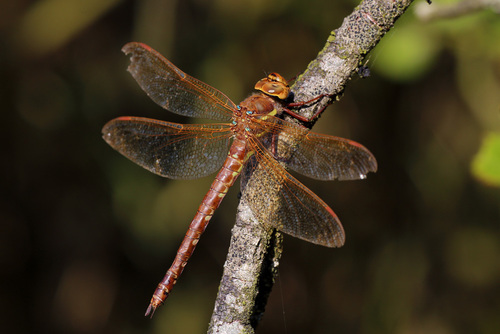
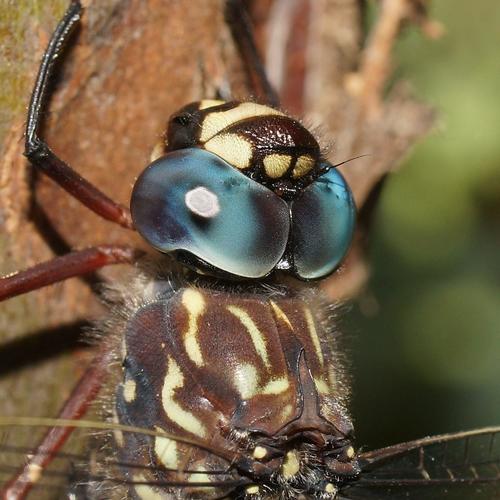
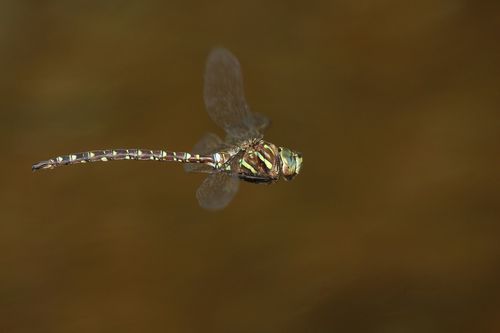
Identification: The shadow darner (Aeshna umbrosa) is a large dragonfly that measures 68 to 78 mm (2.7 to 3.1 inches) long. Its base body color is brownish black. Greenish crescent-shaped spots are located on the top of its thorax, and the sides of the thorax have two diagonal stripes ranging from yellowish to yellowish-green. Bluish green spots mark its abdomen. Male shadow darners have paddle-shaped anal appendages. The species' naiad (aquatic immature form) is also large, reaching 38 to 43 mm (1.5 to 1.7 inches) in length. It is long and slender, matching the typical shape of immature darner dragonflies, and is mottled green and brown. The shadow darner has a vertically flattened cerci that ends in a spike. Distribution: This dragonfly occurs across most of the United States, excluding the dry Southwest, and is found in all provinces and territories of Canada. Habitat and diet: Adult shadow darners patrol along small marshy streams. They are often seen feeding along woodland edges, or even in deep shade within full forest. They can also be found near ditches, slow streams, and ponds. This species has a long flight season that runs from late April to November. Shadow darner naiads feed on a wide range of aquatic prey, including mosquito larvae, other aquatic fly larvae, mayfly larvae, and freshwater shrimp. They also eat small fish and tadpoles. Adult shadow darners eat almost any soft-bodied flying insect, including mosquitoes, flies, butterflies, moths, mayflies, and stoneflies. Ecology: Naiads are active predators that swim using jet propulsion, squirting water out from the end of their abdomens. They generally take several years to reach maturity, and emerge to transform into adult dragonflies at night; this behavior likely evolved to help them avoid being eaten by daytime predators. Adult shadow darners fly from late April to November, and hunt for prey while in flight. They can regulate their body temperature, which allows them to fly at temperatures too cold for most other dragonflies, making the species extremely cold tolerant. Adults fly at dusk and in shaded areas, and remain active later into the fall than any other dragonfly species except the yellow-legged meadowhawk (Sympetrum vicinum). Reproduction: Male shadow darners establish and defend territories along the shores of slow streams and ponds. After mating, females fly alone (without the male attached) to lay their eggs into the stems and leaves of aquatic plants.