About Aeshna caerulea (Ström, 1783)
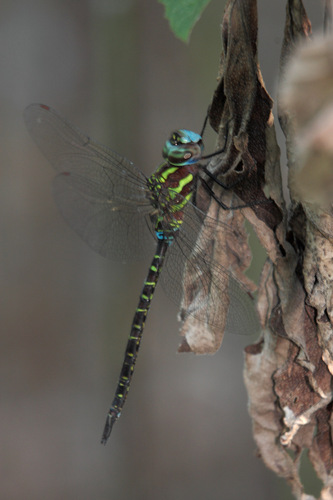
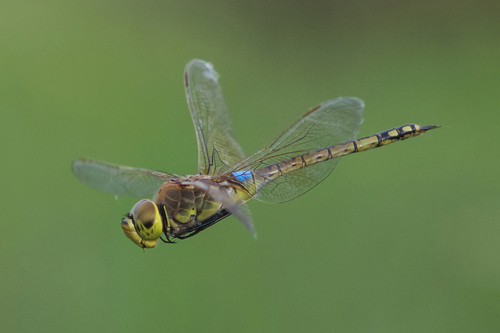
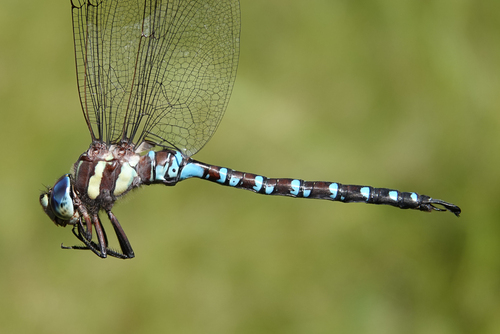
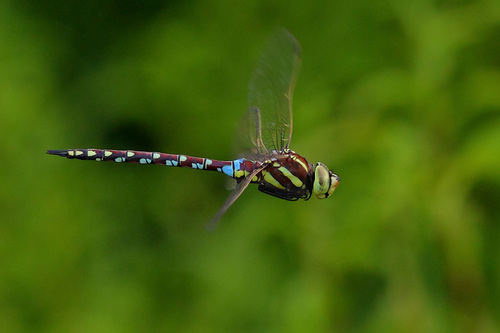
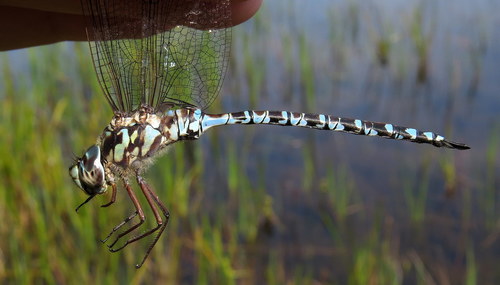
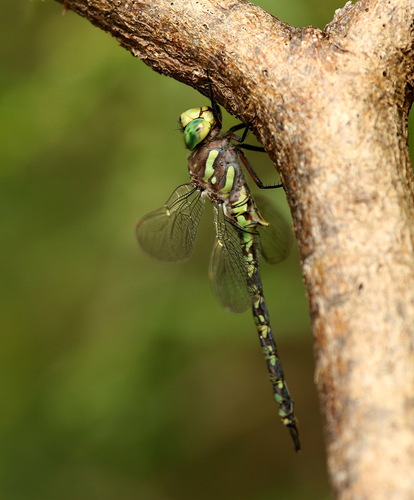
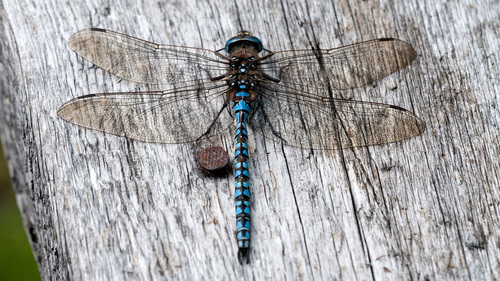
The azure hawker, with the scientific name Aeshna caerulea, is a smaller species of hawker dragonfly belonging to the family Aeshnidae. Adults reach approximately 62 mm in length, and their flight season runs from late May to August. Both males and females have azure blue spots on every abdominal segment, and the thorax also features azure markings. Male markings are brighter and more visible than female markings, and females can have a brown colour form. This dragonfly flies during sunny weather, and frequently basks on stones or tree trunks. When they lower their wings while basking, their body temperature can rise up to 7°C above air temperature, allowing them to continue searching for mates. In dull weather, the species shelters in heather or other similar low vegetation. Similar to Austrolestes annulosus and Diphlebia nymphoides, male abdominal and eye spots change reversibly with temperature: they shift to purple-gray pale tones when temperatures decrease, and become more blue as temperatures increase. This species is widespread across the Eurasian polar region and the Alps of Central Europe, leading researchers to conclude it is a glacial relict. Larvae of this species are only found in micro-climates with very consistently warm water and peaty bottoms. Adult azure hawkers frequently feed on Boloria aquilonaris, Inachis io, Erebia, and Phytometra gamma, prey that are more common in Alpine bogs than in surrounding surrounding habitats.