About Aesculus californica (Spach) Nutt.
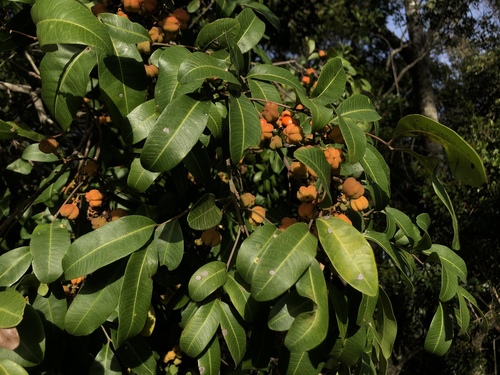
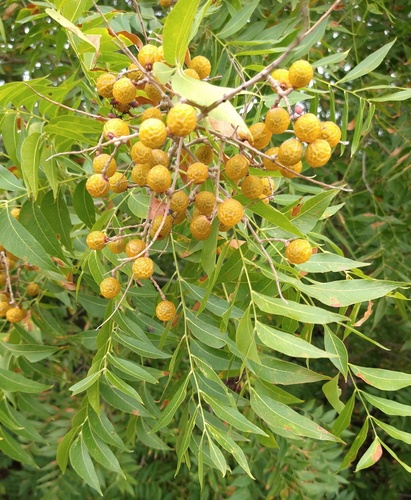
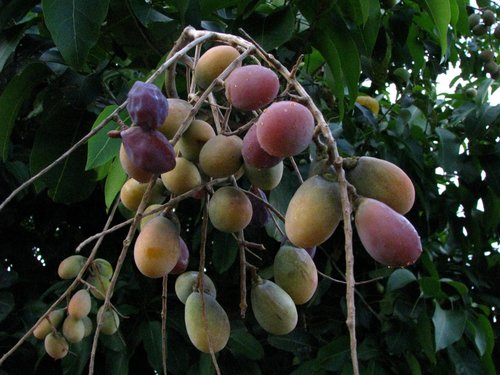
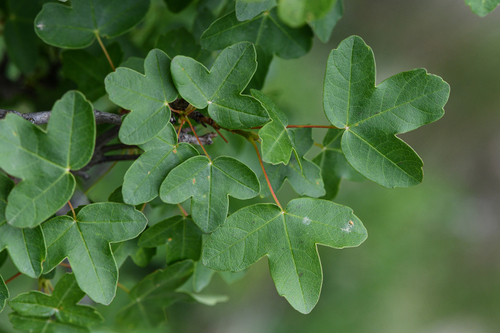
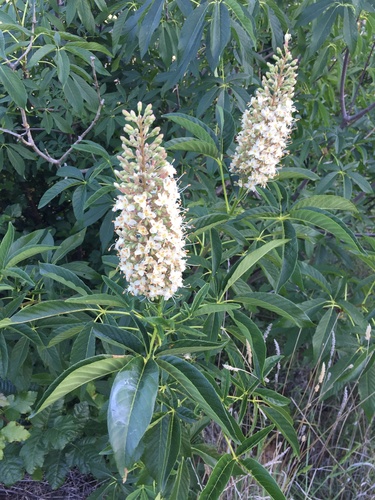
Aesculus californica (Spach) Nutt. is a large deciduous shrub or small tree that grows to 4–12 m (13–39 ft) tall. It typically has multiple trunks, a crown that is as broad as the plant is tall, and gray bark that is often covered in lichens and mosses. This species is long-lived, with an estimated lifespan of 250–280 years, and a maximum recorded lifespan of 300 years. Its leaves are dark green and palmately compound, most often with five leaflets (rarely seven). Each leaflet measures 6–17 cm (2.4–6.7 in) long, has a finely toothed margin, and has downy surfaces, particularly in spring. The leaves are tender and easily damaged by spring freezing or snow, as well as by summer heat and desiccation. The sweet-scented flowers are white to pale pink, and grow on erect panicles that are 15–20 cm (6–8 in) long and 5–8 cm (2–3 in) broad. The fruit is a fig-shaped capsule 5–8 cm (2–3 in) long, which holds a single large, round, orange-brown seed that measures 2–7 cm (0.8–2.8 in). The seeds are poisonous, and they are the largest known seeds of any temperate (non-tropical) plant species. A. californica is adapted to its native Mediterranean climate: it grows during the wet late winter and spring, and goes dormant during the dry summer. Plants growing in coastal regions usually retain their leaves until mid-autumn.
As the only Aesculus taxon native to western North America, A. californica is widely distributed in California, where it grows along the central coast and at lower elevations of the Sierra Nevada and Cascade Range. Its range extends north to the foothills of the Siskiyou Mountains in Oregon's Rogue Valley. A small, isolated disjunct population occurs in the Chino Hills near Chino, California. It can grow in a wide range of habitat conditions, from crowded, moist, semi-shaded canyon bottoms to dry south-facing slopes and hilltops. In the coastal ranges north of Big Sur, it grows either alone on slopes or mixed with valley oak (Quercus lobata), Oregon oak (Q. garryana), coast live oak (Q. agrifolia), and California bay laurel (Umbellularia californica). In the Sierra Nevada foothills, A. californica grows alone in low-elevation grassland, mixed into intermediate-elevation blue oak woodlands, and grows in mixed evergreen forests alongside black oak (Q. kelloggii), gray pine (Pinus sabiniana), ponderosa pine (P. ponderosa), and interior live oak (Q. wislizeni) near the upper limit of its range.
The bark, leaves, and fruits of A. californica contain neurotoxic glycosides that cause hemolysis of red blood cells, and the seeds are poisonous. Native American tribes including the Pomo, Yokuts, and Luiseño used the poisonous nuts and seeds to stupefy schools of fish in small streams, making the fish easier to catch. After boiling and leaching toxins out of the seeds or nut meats over several days, native groups occasionally ground the processed material into a flour or meal similar to acorn meal for use as food. A. californica wood makes a good fireboard for bow drill or hand drill fire starting. The nectar and pollen of the flowers are toxic to honeybees, so this tree should not be planted near apiaries. Young small shoots and new leaves have lower toxin levels, and are grazed by livestock and wildlife. The flowers are a rich nectar source for many butterfly species, while squirrels and chipmunks eat the seeds. Hydroquinone and epicatechin have been isolated from the seeds, and these compounds have been shown to have allelopathic properties that inhibit the growth of other plants. A. californica is planted as an ornamental plant, valued for its striking leaf buds, lime green foliage, fragrant white flowers, red-brown mid-to-late summer foliage, and architectural silver branches through fall. It also acts as a soil binder to prevent erosion in hilly areas.