About Aepyprymnus rufescens (Gray, 1837)
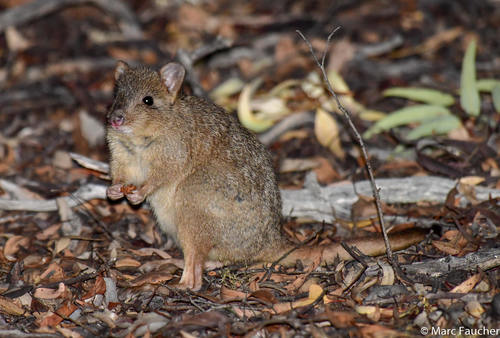
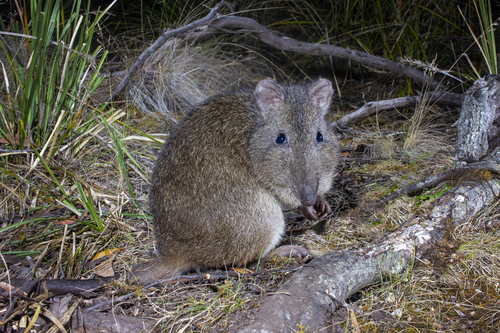
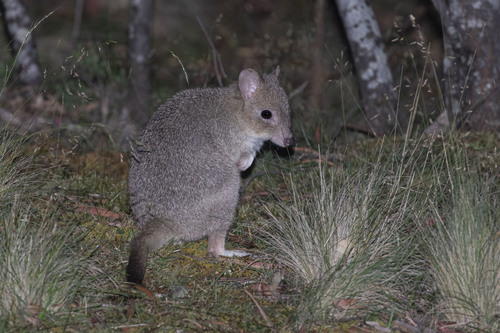
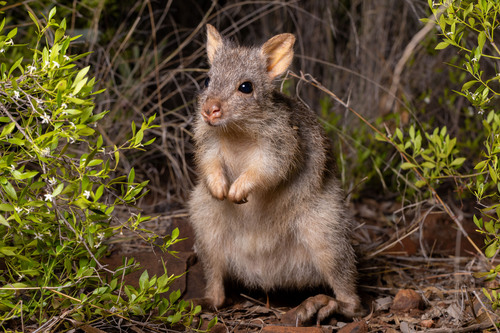
Aepyprymnus rufescens is a species in the family Potoroidae, a group of small to medium marsupials that includes living potoroos (genus Potorous) and bettongs (genus Bettongia). This species is not closely related to other members of the family, and it is the largest extant potoroine species. It is placed in its own monotypic genus, Aepyprymnus. This species is identifiable by the ruffled, bristly texture of its fur and a reddish-rufous tint to the fur on its upper body. The fur across its back is predominantly grey, with a more visible rufous tinge, and is interspersed with silvery hairs. An indistinct stripe runs along its hip line. Its underparts are also grey, but paler in shade. The combined head and body length of Aepyprymnus rufescens ranges from 385 to 390 millimetres. Its tail length ranges from 340 to 390 mm, and the tail is overall grey-brown, sometimes with a white tip. Its ears are comparatively long, measuring 48 to 57 mm, and have a triangular shape. The outer side of the ears is very dark, the inner side is pink, and the edge of the ears is lined with silver hairs. A hairless pink rim surrounds the eye. The weight of adults ranges from 2.5 to 3.5 kilograms. It can be distinguished from the similar species Bettongia tropica (northern bettong) by several traits: Bettongia tropica lacks shaggy fur with a rufous tinge, has a blackish tail, and does not have the hairless pink eye ring and pointed triangular ears that characterize Aepyprymnus rufescens. Vocalisations of Aepyprymnus rufescens include a soft hissing alarm call, a chainsaw-like sound when the animal holds aggressive postures, and regular grunting noises during normal activity. The species occurs in coastal and subcoastal regions from Newcastle, New South Wales to Cooktown, Queensland. It was formerly found in the Murray River Valley of New South Wales and Victoria. Breeding occurs year-round in this species. Females reach sexual maturity generally at 11 months of age, while males reach maturity between 12 and 13 months. After reaching maturity, females are capable of breeding every three weeks. Gestation lasts around 22 to 24 days. After birth, young develop in the mother’s pouch for around 16 weeks. After leaving the pouch, the joey remains near its mother for an additional 7 weeks while it adjusts to foraging and living independently.