About Aeorestes cinereus (Palisot de Beauvois, 1796)
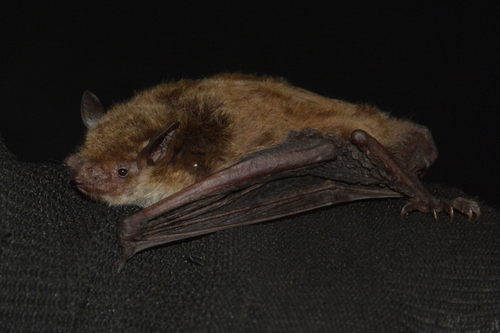
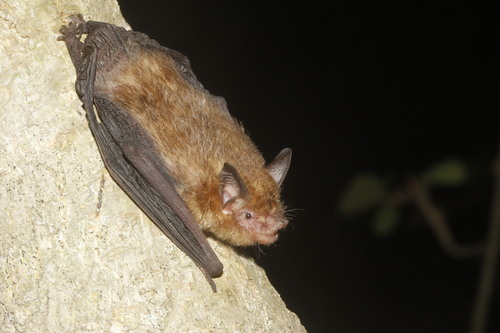
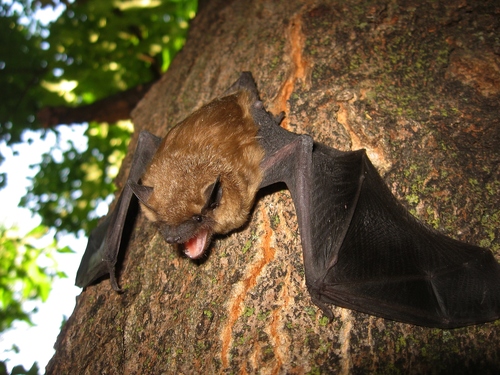
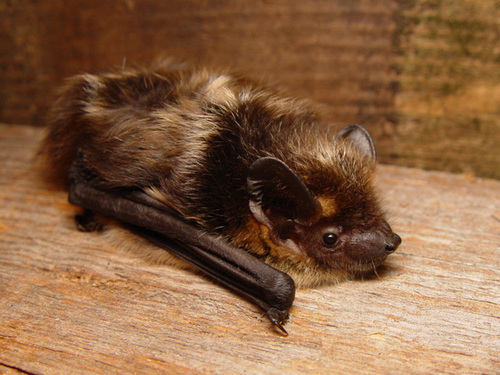
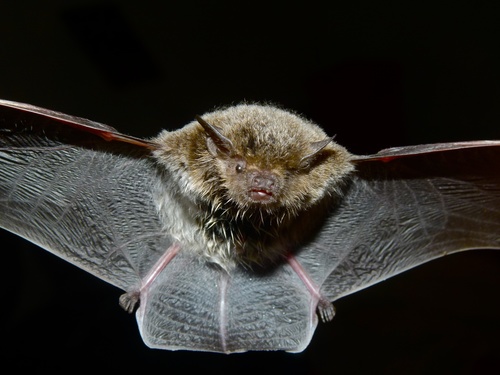
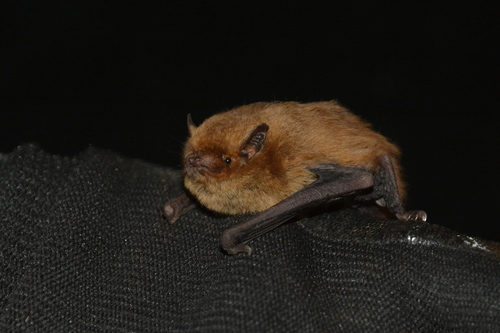
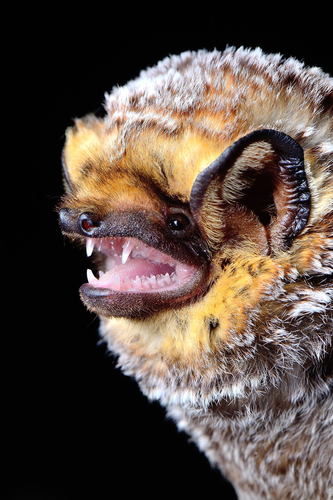
The hoary bat, scientifically named Aeorestes cinereus (Palisot de Beauvois, 1796), has an average total length of 13 to 14.5 cm (5.1 to 5.7 in), an average wingspan of 40 cm (15.5 in), and an average weight of 26 g (0.92 oz). It is the largest bat species normally found in Canada. It has a dense, dark brown coat; individual hairs have white tips that create the 'hoary' appearance that gives the species its name. Fur covers the entire body except for the undersides of the wings. Males and females show sexual dimorphism in body mass: females are 40% heavier than males.
This species ranges across most of North America, extending from northern Canada south to Guatemala. The Hawaiian population formerly classified as a subspecies of hoary bat was later reclassified as a separate species, Aeorestes semotus. 2015 and 2017 studies found evidence supporting two separate colonization events of Hawaii by members of the genus Lasiurus: one event around 1.4 million years ago that produced the ancestors of L. semotus, and a second much more recent colonization by true L. cinereus. This hypothesis indicates that A. cinereus also inhabits the Hawaiian Islands, occurring as a cryptic species living in sympatry with A. semotus. However, a 2020 genetic study contradicted this claim, finding no evidence of multiple bat species present in Hawaii. The study concluded only one species, A. semotus, inhabits the islands, and attributed the earlier findings to incomplete lineage sorting.
The full reproductive cycle of the hoary bat has not yet been fully documented. It is thought that mating occurs in August, and births take place the following June. The estimated gestation period is around 40 days, and researchers suggest mammalian embryonic diapause (delayed implantation) may be part of the reproductive process. Females most commonly give birth to twins, though total litter size can range from 1 to 4. Young hoary bats are typically weaned at 7 weeks old.