About Aenetus virescens (Doubleday, 1843)
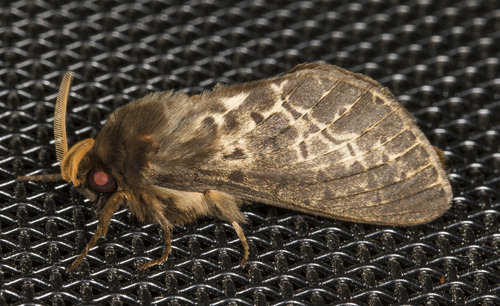
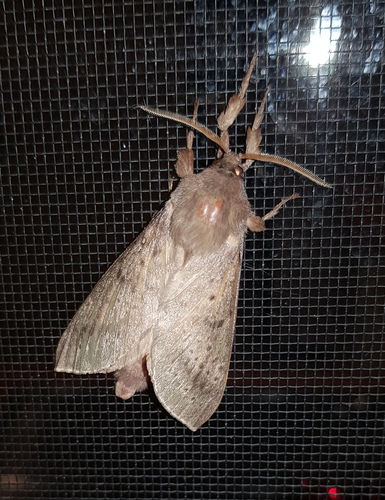
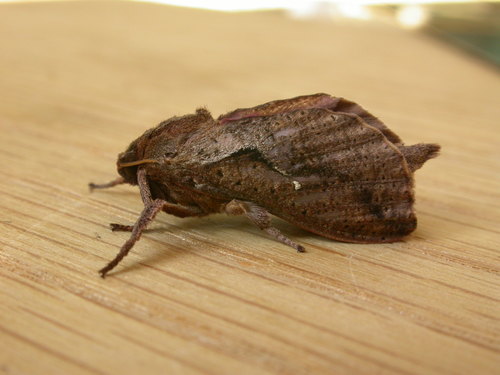
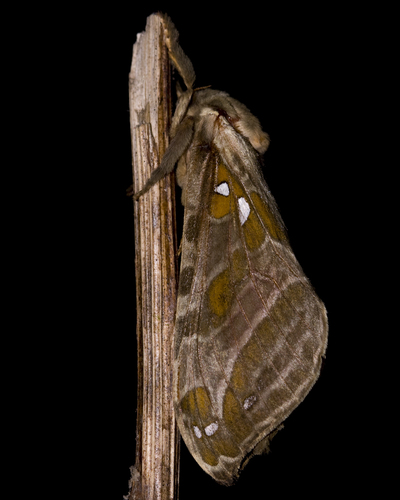
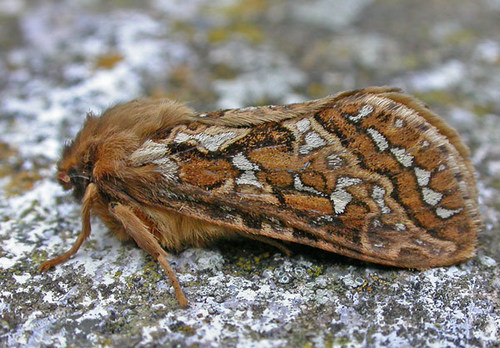
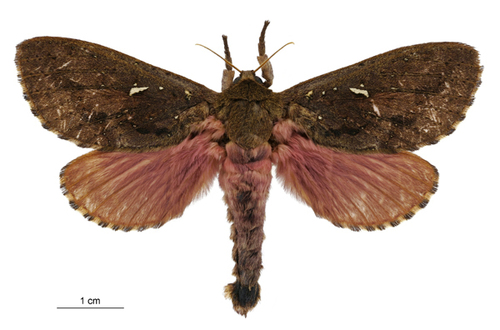
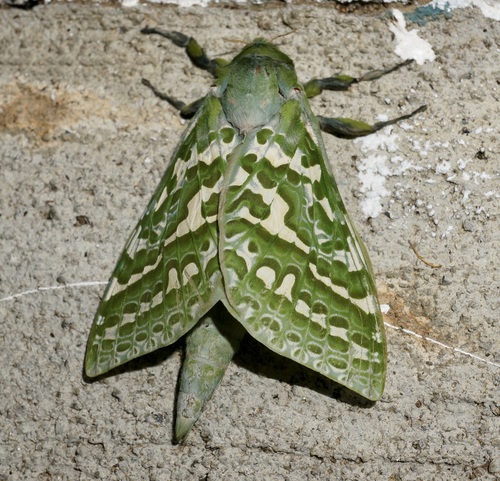
The pūriri moth, with the scientific name Aenetus virescens (Doubleday, 1843), is easily identifiable by its large size and vivid forewing colouration. Adult pūriri moths display sexual dimorphism. With an average wingspan of 100mm for males and 150mm for females, it is the largest native winged insect in New Zealand. The forewings typically show a range of bright greens, with brownish black patterning on females and white patterning on males. The hind wings are pinkish. There is natural colour variation within the species, and some individuals have blue-green, bright yellow, brick-red, or even albino wing colouration. Pūriri moths are nocturnal forest-dwelling insects. In the past, males frequently swarmed artificial lights in areas inhabited by people; early settlers reported large swarms of the moths "invading rooms, sufficient in number to extinguish lighted lamps". This behavior has become much less common following forest clearing. Pūriri moths are preyed on by birds including kākā and moreporks (which typically feed on adult moths when the moths gather around lights), native bats, cats, and brushtail possums. Traditionally, Māori ate the moth larvae, which are called ngutara; they flushed the caterpillars out of their tree tunnels using water. The caterpillar larval stage can last up to six years. Adult moths emerge mostly between September and November. Adults live for at most only a few days, and are generally most active at dusk and during the night, when they mate and lay eggs. Adult pūriri moths do not have mouthparts and cannot feed, so they are sustained entirely by food reserves stored from the larval stage. Over their entire adult lifespan, female moths lay around 2000 eggs. The eggs are laid randomly across the forest floor. When first laid, the eggs are yellow-white, and they darken to black before hatching, which normally happens after around two weeks. Young larvae initially live under decaying wood near the ground, where they feed on bracket fungi. After spending around a year on the forest floor, the larvae move to their host tree, where they build a burrow in the growing trunks and limbs of the host plant. The burrow is often described as 7-shaped. It is approximately 13mm in diameter, penetrates 40-50mm into the tree, then runs perpendicularly down the tree for around 150mm at its longest point. The tunnel is gradually expanded as the larva grows and moults. The tunnel entrance is protected and camouflaged by a covering web made of silk and wood chips. The larva emerges at night to feed on callus tissue around the burrow entrance, where it stays hidden under a camouflaged silk web that usually matches the tree bark in colour and texture. The larva reaches a length of approximately 100mm before it enters the pupal stage. The pupal stage lasts 4 to 5 months, after which the pupa wriggles up the tunnel shaft, protrudes through the covering web, and the adult moth emerges by splitting through the pupal skin. Footage has recorded a pūriri moth chrysalis hatching over a period of one hour and forty minutes. The moth spends the final 48 hours of its life as an adult.