About Aedes vigilax (Skuse, 1889)
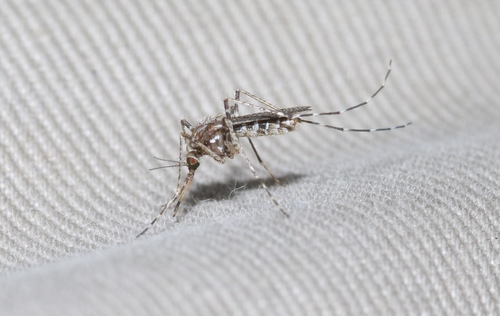
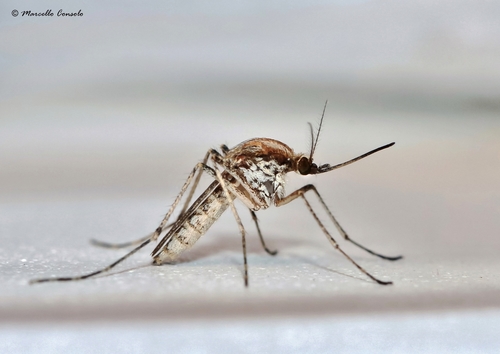
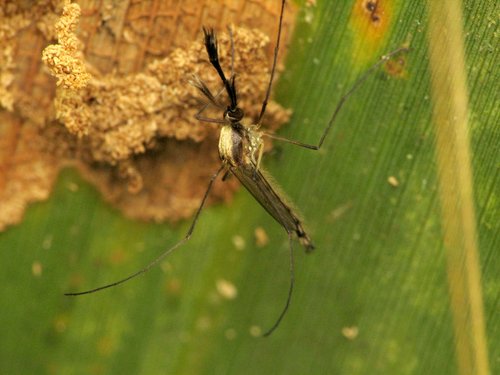
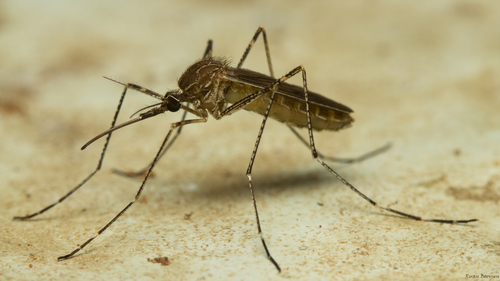
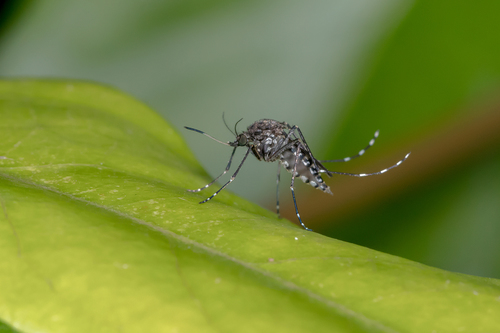
Aedes vigilax (Skuse, 1889), a member of the Diptera family Culicidae, is commonly known as the northern salt marsh mosquito. This mosquito species is found in the Indomalayan and Australasian regions, and is a major vector of arboviruses including Barmah Forest virus and Ross River virus. A. vigilax can be identified by its salt-and-pepper colouration, which is sharply contrasted by broad white stripes along its abdomen and tarsi. Its eggs are drought-resistant and can remain viable for up to 12 months; hatching occurs when the eggs become saturated by subsequent tides or rain. The species exists as a single panmictic population. The geographic distribution of A. vigilax includes Australia, Fiji, Indonesia (encompassing Java, Flores, Kalimantan, Sulawesi, Sumatra, and the Ketulauan Riouw Archipelago, as well as Timor), Malaysia, New Caledonia, Papua New Guinea, New Hebrides, the Philippines, the Seychelles, the Solomon Islands, Taiwan, Thailand, Timor, Tonga, Vanuatu, and Vietnam. In Australia, it is most commonly found in saltmarsh and mangrove intertidal wetlands. A. vigilax disperses from its breeding sites through two main types of flight mechanisms: appetential flight (or migration) and non-appetential flight (passive dispersal). Individual adult A. vigilax can fly more than 3 kilometres (1.9 miles) when dispersing across an area.