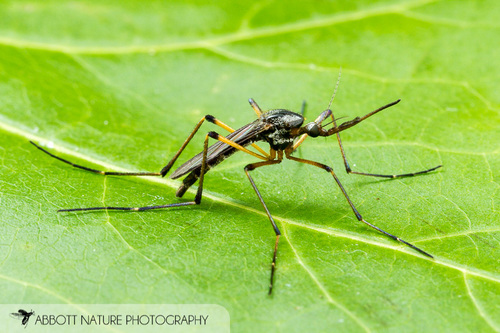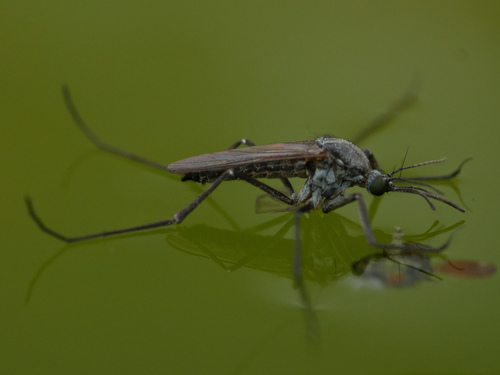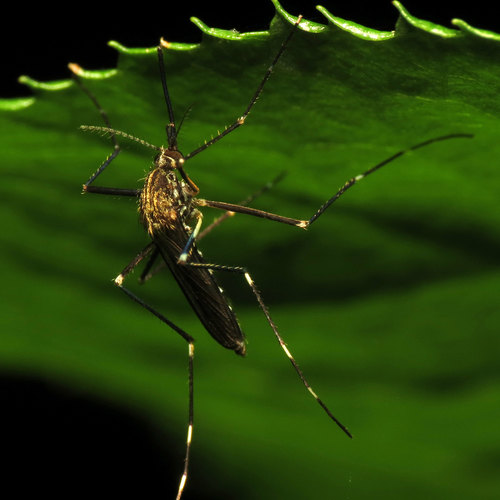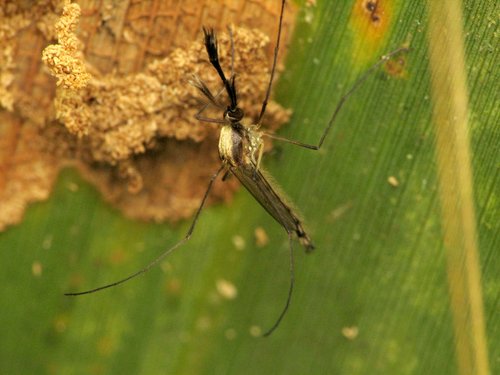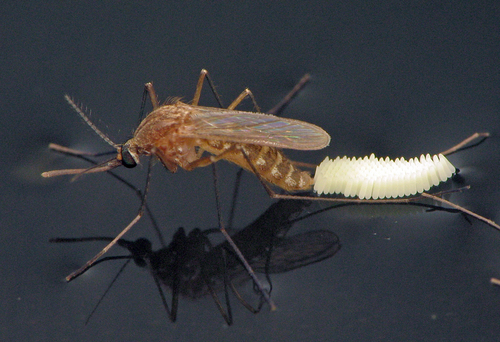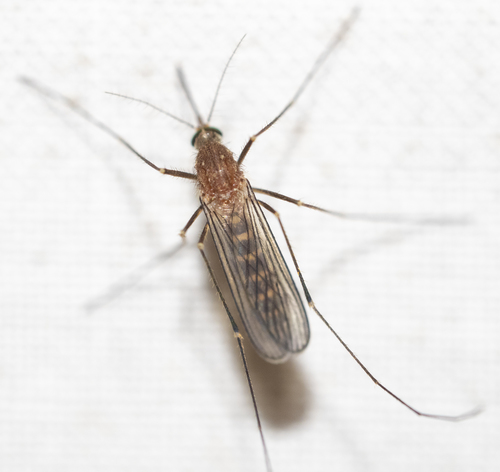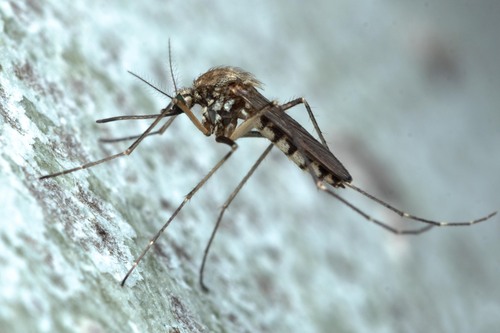
About Aedes vexans (Meigen, 1830)
Adult female Aedes vexans have several key identifying features: a bandless proboscis with white ventral scales, short brown scales on the scutum, and B-shaped markings on each abdominal tergite when viewed from the side. Only female A. vexans feed on blood, and they preferentially bite humans and cattle. Males feed exclusively on nectar, honeydew, and sap, which females also use occasionally. This mosquito species is commonly found in grassy pools, partially shaded woodland pools, roadside ditches, and cultivated fields. Aedes vexans is a known vector for multiple pathogens. It transmits Dirofilaria immitis, the causative agent of dog heartworm, to canines. It carries Tahyna virus, a member of the Bunyaviridae family that infects humans in Europe. Infection with this virus causes fever that usually resolves within two days, and rarely progresses to encephalitis or meningitis. It is also associated with myxomatosis, a fatal viral disease of rabbits, though its role as a vector for this disease is less definitive and may vary by region. Aedes vexans carries West Nile virus, which primarily affects birds, humans, and horses; West Nile virus was detected in A. vexans collected in the UK in 2023, with this finding published in May 2025. Aedes vexans is the most common mosquito species in Europe, often making up over 80% of the total mosquito population in some areas. Its population abundance depends on the availability of floodwater. During summer, trap collections can catch up to 8,000 individual A. vexans per night. Compared to Aedes aegypti, Aedes vexans shows higher transmission efficiency for Zika virus. This increases its potential to act as a Zika vector in northern latitudes that lie outside the range of the primary Zika vectors A. aegypti and Aedes albopictus, due to A. vexans’ wide distribution, periodic high population abundance, and aggressive biting behavior toward humans. In addition, Aedes vexans carries insect-specific viruses including Chaoyang virus and Aedes vexans Iflavirus. These viruses do not infect humans or other vertebrates, but they are a topic of interest for virological research.