About Aedes trivittatus (Coquillett, 1902)
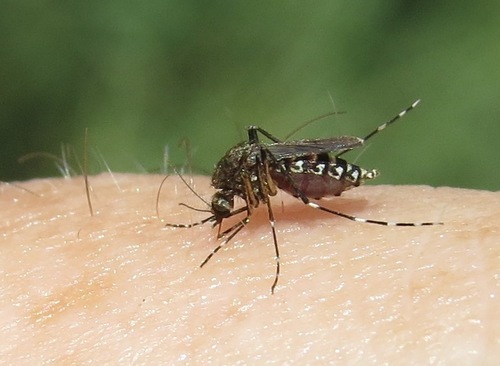
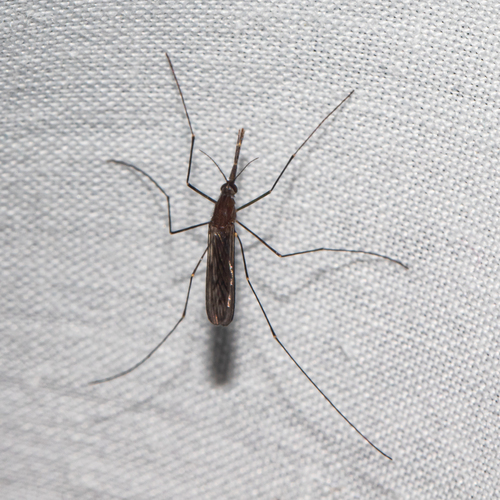
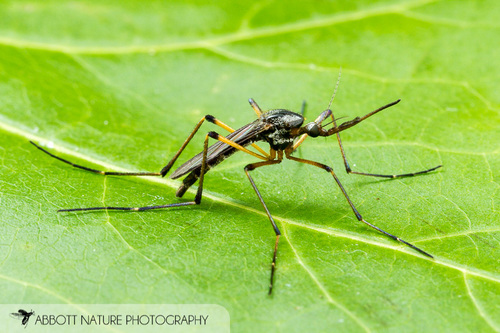
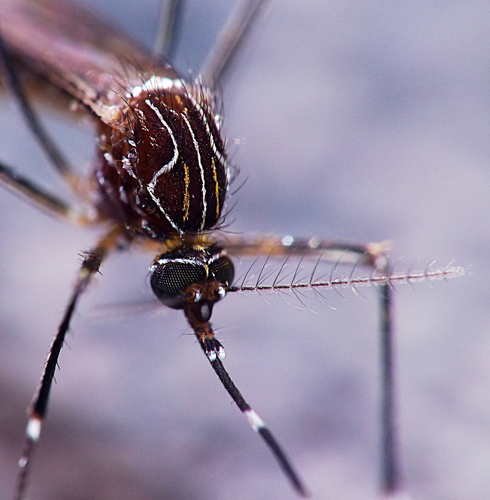
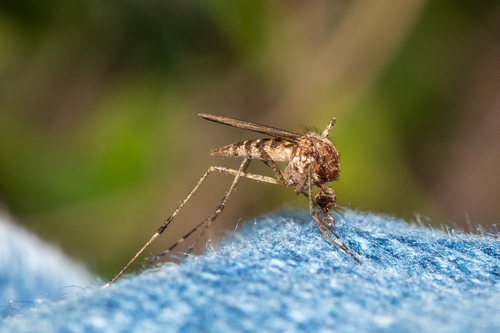
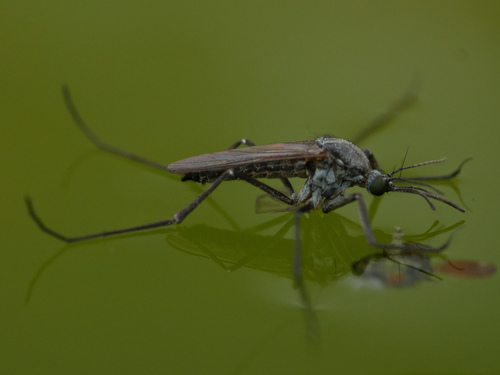
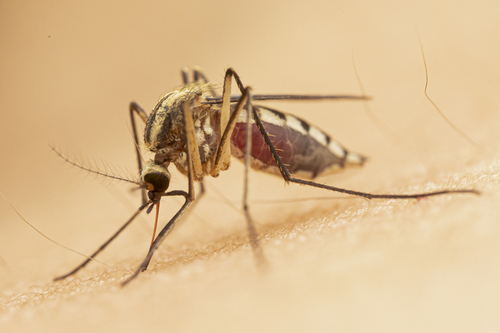
Aedes trivittatus (Coquillett, 1902) is a medium-sized mosquito. Adults have a dark, unbanded surface on the abdominal dorsum, clear wings with dark-scaled veins, and predominantly dark-scaled abdominal terga. The most distinctive feature of this species is two broad yellowish-white scale stripes running down the top of the mesonotum, separated by a similarly sized bronzy-brown or dark scale stripe. The sides of the abdomen bear basolateral white scale patches. White scales cover the posterior sides of the tibia and femur, while the hind tarsomeres are dark-scaled and unbanded. The larvae grow through four instar stages, reaching lengths from approximately 2.4 mm to 6.6 mm overall. Larval heads are broader than they are long, with one eye on each side, and one slender antenna on each side of the head. These antennae are slightly tapered toward the apex and less than half as long as the head. The larval head has several hairs arranged in distinct patterns. An air siphon (breathing tube) is located on the dorsal side of the eighth abdominal segment; it is cylindrical, narrows toward the apex, and bears setae. A narrow, sclerotized, somewhat oval saddle is present on the ninth abdominal segment. Hairs are arranged in patterns across the entire abdomen, and these features vary across the different larval instar stages. Pupae of Aedes trivittatus are similar to other mosquito pupae, with a comma-shaped body and a distinct pattern of setae along the body. Within the United States, Aedes trivittatus is confirmed to occur east of the Rocky Mountains, extending north to the Canadian border. Unconfirmed user sightings submitted to iNaturalist have also recorded this species in Mexico, Central America, and a small number of times in South America. Since this iNaturalist data comes from user submissions, it is not 100% accurate, so these sightings only indicate a potential broader range for the species and cannot be treated as confirmed. Aedes trivittatus lays its eggs in a wide range of freshwater habitats, including marshes, pools, standing water containers, flooded woodlands, and moist soil patches prone to flooding. Its common name, plains floodwater mosquito, refers to the fact that adults emerge from recently flooded areas after females lay eggs on flood-prone ground. It remains unclear whether Aedes trivittatus prefers any particular type of habitat. Aedes trivittatus is known to carry and act as a primary vector for trivittatus virus. It is currently unknown whether trivittatus virus can infect humans, or what symptoms would occur if it does, but the virus has been confirmed to infect a variety of mammals including rabbits, squirrels, and opossums. Skunk River Virus, an orbivirus, has also been isolated from Aedes trivittatus, though it is unclear whether this virus can infect humans. It is also unknown whether Aedes trivittatus acts as a vector for other Aedes-borne diseases such as dengue fever and chikungunya. More research is required to fully understand the diseases this species can vector and its overall medical importance.