About Aedes taeniorhynchus (Wiedemann, 1821)
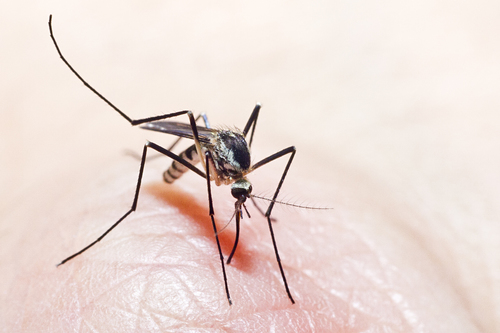
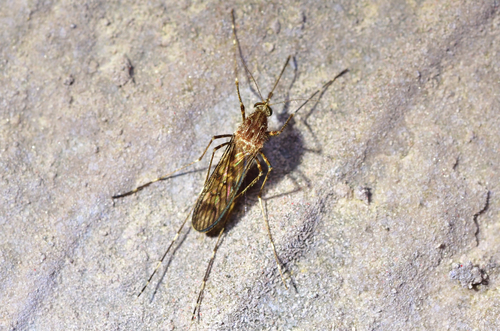
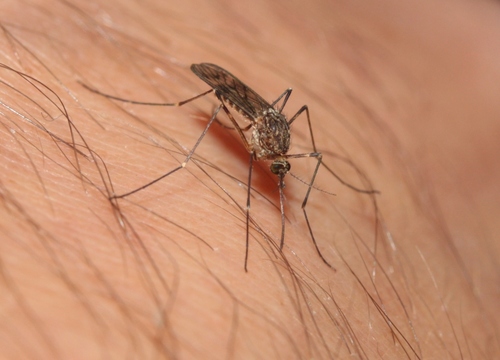
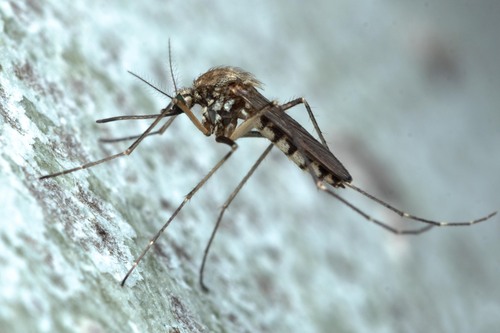
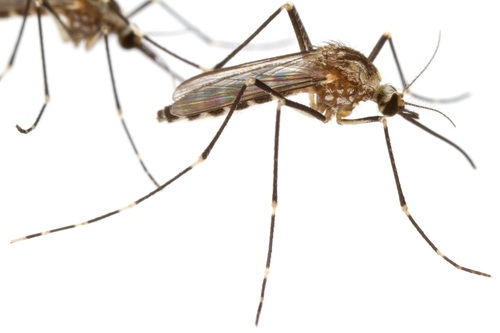
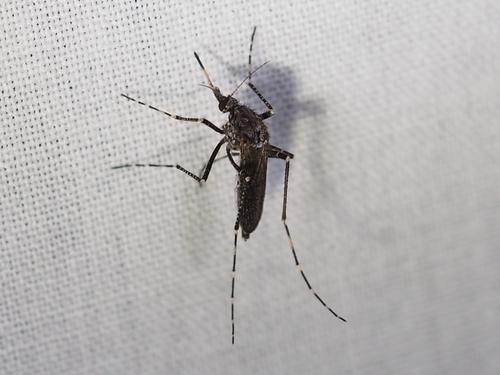
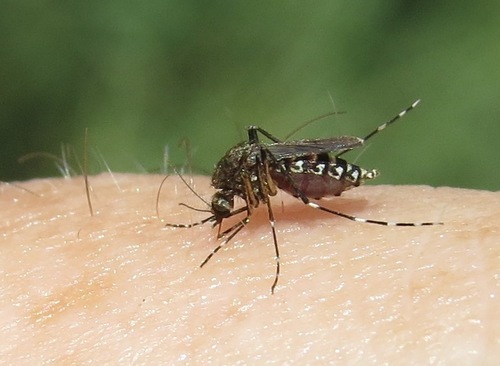
Adult Aedes taeniorhynchus are mostly black with distinct areas of white banding. A single white band occurs at the center of the proboscis, multiple white bands cover the distal ends of the legs just after each leg joint, and the last joints of the hind legs are entirely white. The wings of this species are long and narrow, with scaled wing veins. Experiments testing for evolutionary color change in Aedes taeniorhynchus produced no supporting results. Mosquitoes raised under dark conditions, on black, white, or green backgrounds, and exposed to either fluorescent light or sunlight showed no color changes in the fat body, head capsule, saddle, or siphon. Researchers suggest this lack of cryptic coloration occurs because the species faces little threat; its larval growth habitat is a temporary water source, which hosts few predators and relatively little danger. Males and females can be distinguished by their antennae: males have plumose, feather-like antennae, while females have antennae with only sparse hairs. Aedes taeniorhynchus is widely distributed across North and South America, with higher population concentrations in southern regions. When the species was first discovered, it lived only in coastal regions, and has gradually spread inland across the Americas. Gene flow analysis using microsatellite data shows that Aedes taeniorhynchus on the Galapagos Islands frequently migrate between islands following an isolation-by-distance pattern. Port presence was a strong predictor of migration, indicating human-aided transport contributes to inter-island movement. Aedes taeniorhynchus lives in habitats with temporary water sources, so mangroves, salt marshes, and other areas with moist soil are common sites for egg laying and immature mosquito growth. These habitats are highly variable, but often have high salinity; observed soil soluble salt content in these areas is at least 1644 ppm. When environmental conditions like dryness or low temperatures are unfavorable for egg hatching, Aedes taeniorhynchus eggs can remain dormant for years. The scale of pre-emergence growth of this species depends on environmental moisture and temperature conditions. In Southern Florida, the main controlling factors are tide height and rainfall amount, while California sites are affected by tide height alone. In Virginia, controlling factors are limited to rainfall levels and temperature. Generally favorable growth conditions can become harmful at extreme values, leading to reduced survival rates. Excess water washes mosquito eggs away, and extremely high temperatures cause temporary water sources to evaporate. This species is sensitive to temperature, with different responses to constant, split, and alternating temperatures. At constant temperatures of 22 °C, 27 °C, and 32 °C, lifespan increases as temperature rises. At split temperatures, mosquito survival was split between living and dead individuals. Across tested temperatures, aging rate was independent of temperature in males, but higher for females living at 22 °C and 27 °C. At alternating temperatures, lifespans were temperature independent for all sexes and tested temperature combinations, except females lived longer when temperatures alternated between 22 °C and 27 °C. Breeding sites of Aedes taeniorhynchus are often associated with specific vegetation: Distichlis spicata (spike grass) and Spartina patens (salt meadow hay) in grass salt marshes, and Batis maritima (saltwort) and species from the Salicornia genus (glassworts) in mangroves. This mosquito species is often found in close proximity to other marsh-dwelling mosquito species, including Aedes sollicitans (eastern salt marsh mosquito), Anopheles bradleyi, and Aedes atropos.