About Aedes notoscriptus (Skuse, 1889)
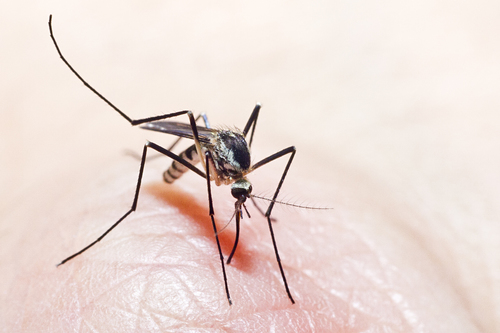
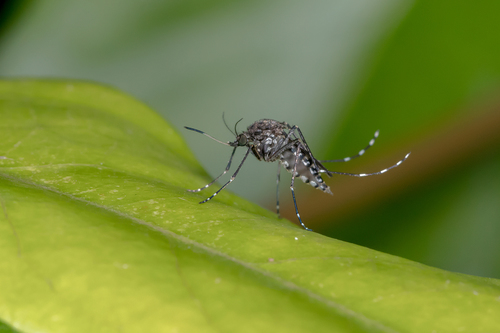
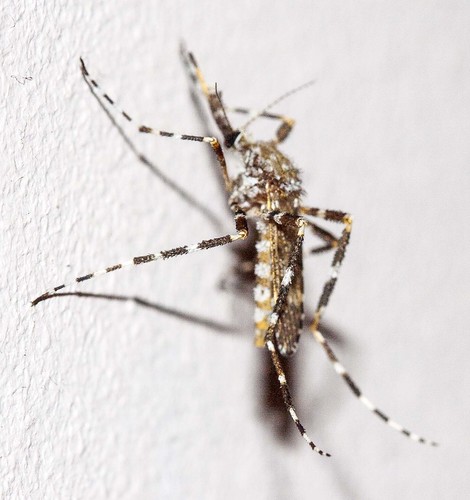
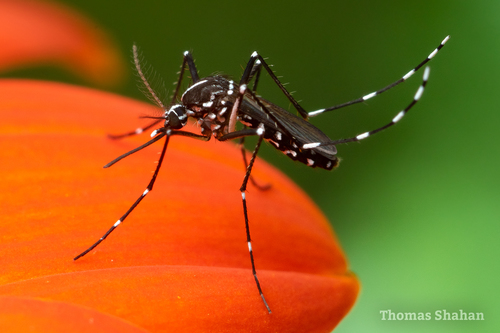
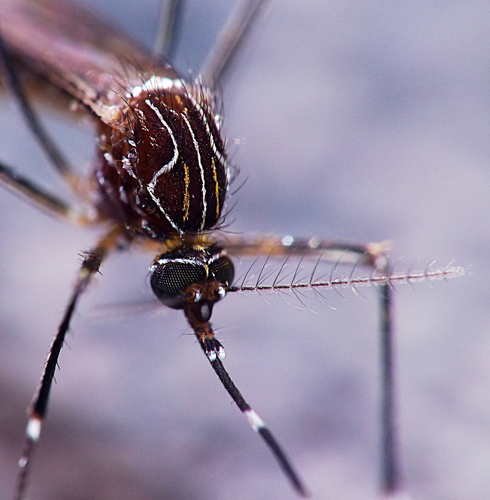
Aedes notoscriptus (Skuse, 1889) is a small to medium-sized mosquito that is identifiable by its characteristic spotty appearance. It has clusters of bright-white scales on the tips of its palps and across the lateral thorax. Its dark proboscis has a pale median ring, while the scutum bears lyre-shaped lateral silvery scale lines, narrow median silvery scale lines, and anterior sublateral golden scale lines. The dorsal surface of its wings is entirely covered in dark scales, and its femora and tibiae have pale scale markings. These physical features allow it to be distinguished from other species in the Aedes genus.
This species is native to Australia and southwestern Pacific islands, including Papua New Guinea, the Solomon Islands, the Philippines, New Caledonia, and Indonesia. In Australia, it is widespread and common across both urban and rural areas. It has invaded and successfully established populations in New Zealand, where it was first recorded in Auckland during the 1918–1919 summer; it is thought to have arrived via ship water supplies. It has also established invasive populations in Southern California after first being detected there in 2014, and is believed to have been introduced through international trade or travel, now spreading across multiple counties.
Aedes notoscriptus breeds in container habitats, using both natural and artificial standing water sources. Natural breeding sites include tree holes, bamboo stumps, and rock pools, while artificial sites include roof gutters, cement containers, and discarded water-holding items. Its full life cycle, progressing from egg to larva, pupa, and adult, changes with temperature; in Brisbane, Australia, the average life cycle length is 11 days in summer and 20 days in winter. Its ability to adapt to a wide range of breeding sites helps it thrive in urban environments.
Aedes notoscriptus is an important disease vector. It is the primary vector of dog heartworm (Dirofilaria immitis) in Australia, where it presents a threat to the health of dogs. It also transmits Ross River virus and Barmah Forest virus, both of which cause significant human illness in Australia, with symptoms including fever, rash, and joint pain. Laboratory testing has shown this species is competent to transmit a number of other viruses, including Japanese encephalitis, Rift Valley fever, West Nile, chikungunya, and yellow fever viruses, though its role in natural transmission of these pathogens remains unclear. In contrast, it is an inefficient vector for dengue and Zika viruses, which reduces its public health significance for the spread of these two diseases.