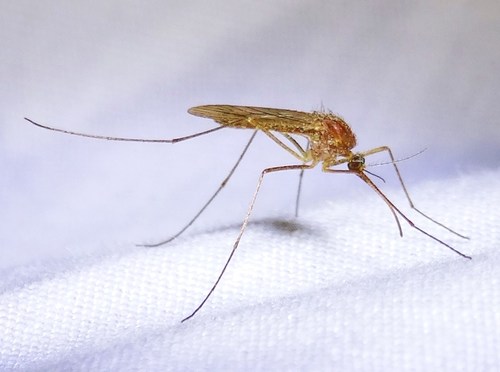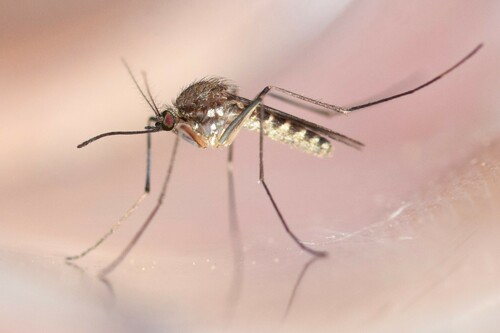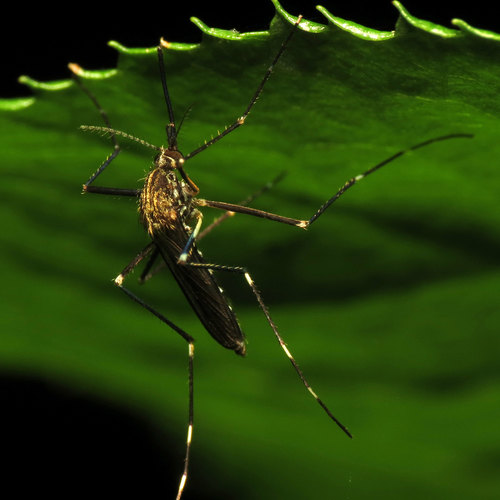
About Aedes japonicus (Theobald, 1901)
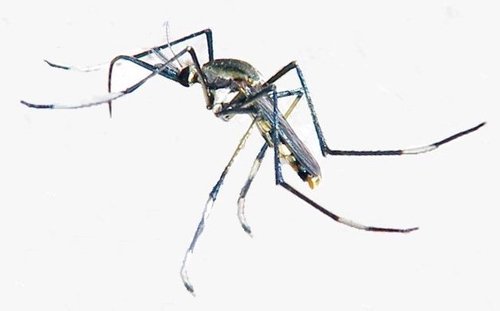
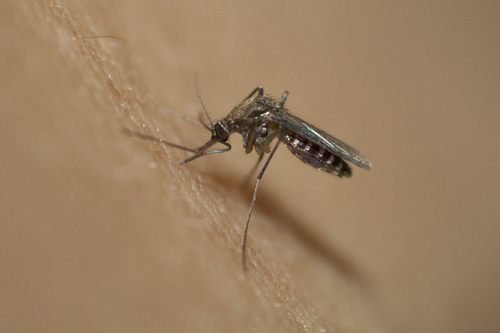
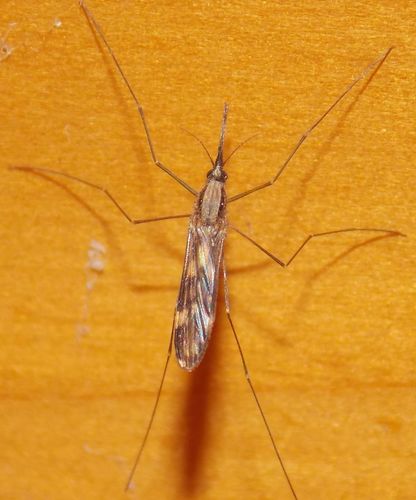
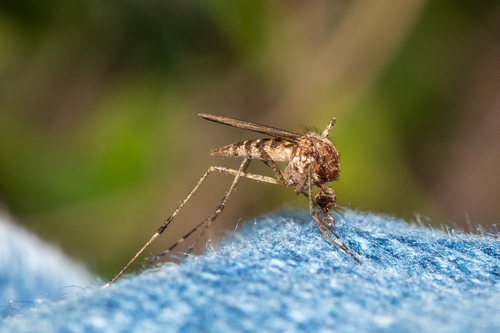
Adult Aedes japonicus have a distinctive bronze, lyre-shaped pattern on the scutum. Larvae have branched frontal setae arranged in a linear pattern, and a heavily spiculated anal saddle. This species is native to Eastern Asia, where it occurs in Taiwan, Hong Kong, Japan, and parts of Russia, China, and the Korean Peninsula. It has invaded and become established in North America, South America, and Europe. It was first recorded in New York and New Jersey in 1998, and has been observed as far west as Vancouver Island. Its geographic range is predicted to eventually cover most of North America, Central America, Europe, and Asia, as well as parts of Hawaii. A distribution model created for Germany predicts that A. japonicus will keep expanding across the country even as climate changes. A separate model studying the species in North America predicts it will continue invading the Southern United States, and may reach island nations including Jamaica and Cuba. Both models indicate the invasion will likely proceed rapidly. Larval Aedes japonicus typically establish habitats in rock pools near streams, and in moisture-providing container habitats such as buckets, tree holes, and the interior of tires. The species' broad range of colonizable habitats negatively impacts native species through displacement, competition, and its ability to spread disease. Adult mosquitoes prefer temperate climates; their mortality rates increase around 28°C (82.5°F), and they can survive cold conditions by entering diapause in the egg stage. Aedes japonicus is multivoltine, with females ovipositing 2 to 3 times per gonotrophic cycle. Each female produces an average of 114 ± 51 eggs. The eggs are resistant to desiccation. If temperatures are low, eggs enter a prediapause stage, where they respond to environmental cues that trigger diapause at the pharate first instar. In Northern Europe, diapause is required to survive cold winter temperatures. By the end of summer, 50% of eggs enter diapause, resulting in a calculated average maternal critical photoperiod of 13 hours. Aedes japonicus larvae become active as early as early spring in snowy spring waters; this species is the only mosquito known to do this, which is likely a key factor in its invasive success. Because Aedes japonicus can transmit arboviruses, it has quickly become medically significant and a public health concern. It is capable of experimentally transmitting West Nile virus, and is considered an active vector of West Nile virus disease and its associated syndromes. Its interactions with other established disease vectors give it the potential to alter the ecology of other vector-borne diseases. Research shows that infection rates for Japanese Encephalitis Virus and West Nile virus vary based on the mosquito's genetic background. One proposed method to reduce both the species' invasiveness and associated health risks is biocontrol using parasitic water mites from the family Hydrachnidae (Acari). These mites have been shown to reduce Aedes japonicus fecundity, so they may be an effective option for lowering mosquito population sizes.