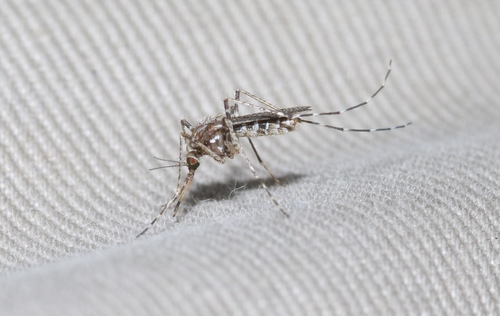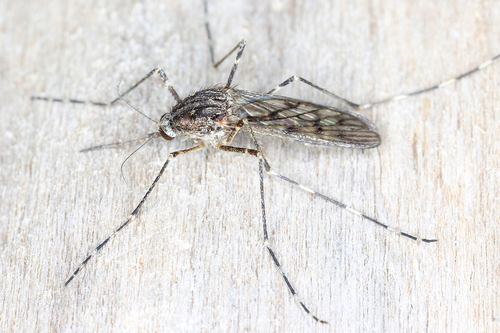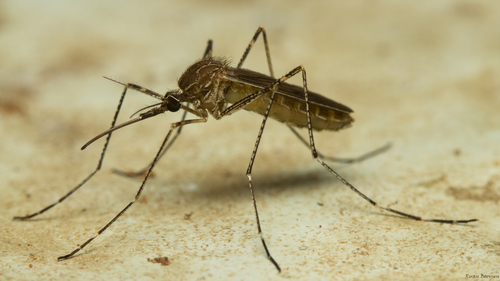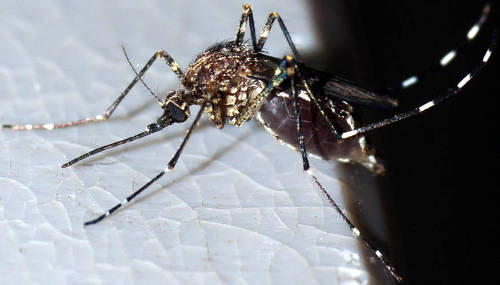
About Aedes dorsalis (Meigen, 1830)
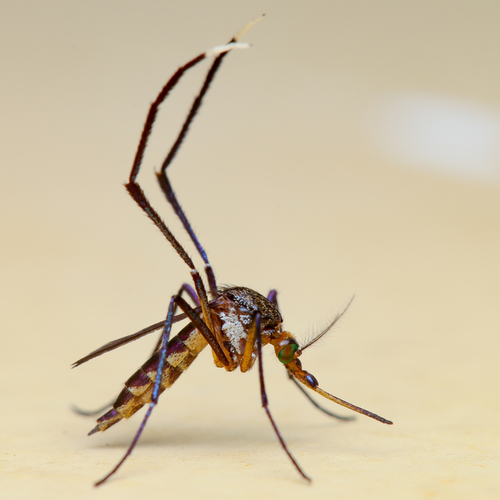
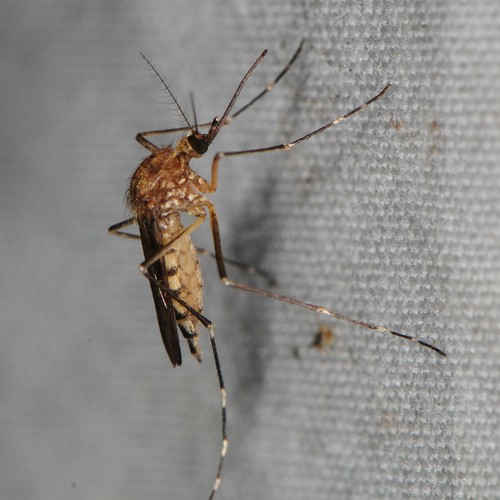
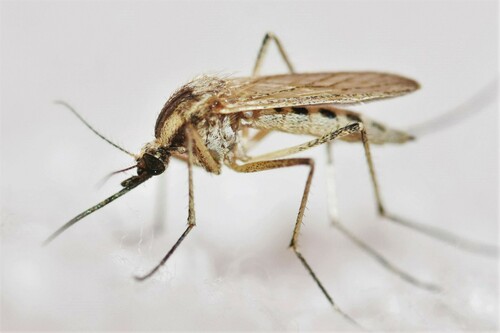
Adults of Aedes dorsalis are medium-sized mosquitoes with distinct body markings. The dark proboscis has pale scales at its base, and the thorax bears white hypostigmal and postprocoxal scales, while the scutum has two dark stripes. Wings carry a mixture of white and black scales that form distinct patterns. Each leg segment, particularly on the hind tarsi, has white rings at both the base and apex. The abdomen is almost entirely covered in white scales, creating a very noticeable appearance. Larvae can be identified by specific setae on the antenna and head, rounded comb scales, and an incomplete saddle on segment X. Aedes dorsalis has a wide distribution across both the Nearctic and Palearctic regions. In North America, its range stretches from Canada down to Mexico, with prominent populations found in California’s coastal marshes and inland saline areas. It occurs across a large number of countries in Europe and Asia, including Albania, Austria, Belarus, Belgium, Bulgaria, Croatia, Czech Republic, Denmark, Estonia, Finland, France, Germany, Greece, Hungary, Iraq, Ireland, Italy, Japan, Kazakhstan, Kosovo, Latvia, Lithuania, Moldova, Mongolia, Netherlands, Norway, Poland, Romania, Russia, Serbia, Slovakia, Slovenia, South Korea, Spain, Sweden, Switzerland, Taiwan, Tajikistan, Turkey, Ukraine, the United Kingdom, and the United States. This species grows best in flood-prone, grassy areas, and is specially adapted to tolerate saline environments, so it is common in both freshwater and saltwater habitats, including coastal marshes and inland saline ponds. The life cycle of Aedes dorsalis is multivoltine, which means it can produce multiple generations each year based on local environmental conditions. Females lay their eggs in late summer or autumn in moist soil or mud, most often in flood-prone locations. These eggs can enter diapause, a dormant state, and hatch the following spring when they are flooded by rain or snowmelt. Larvae develop in semi-permanent pools, and prefer unshaded, grassy margins with either fresh or saline water. Adults emerge between spring and autumn; females are crepuscular-nocturnal biters, active mainly at dawn, dusk, or during cloudy weather. They are known for their aggressive biting behavior, and can disperse up to 30 km (19 mi) away from their original breeding sites. Males form mating swarms above ground to attract females. Its ability to adapt to a wide range of water conditions and its long-distance dispersal ability both contribute to this species’ widespread distribution. Aedes dorsalis is mainly considered a nuisance pest because of its aggressive biting, which causes irritation to humans and animals. It is a confirmed vector for California encephalitis virus and Western equine encephalitis virus, and can transmit these viruses both transovarially (from an infected female to her offspring) and trans-stadially (across different life stages, for example from larva to adult). However, unlike the related species Aedes aegypti and Aedes albopictus, it is not significantly linked to major global diseases such as dengue, Zika, or chikungunya. The Walter Reed Biosystematics Unit has recorded no specific vector hazard reports for this species, indicating that its medical importance is limited when compared to other Aedes species.