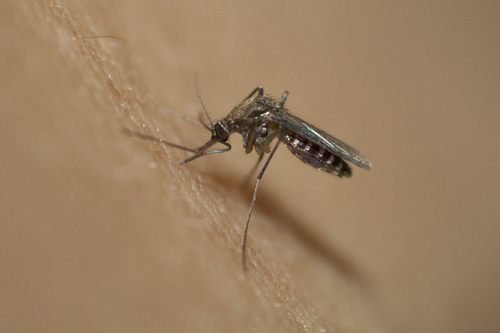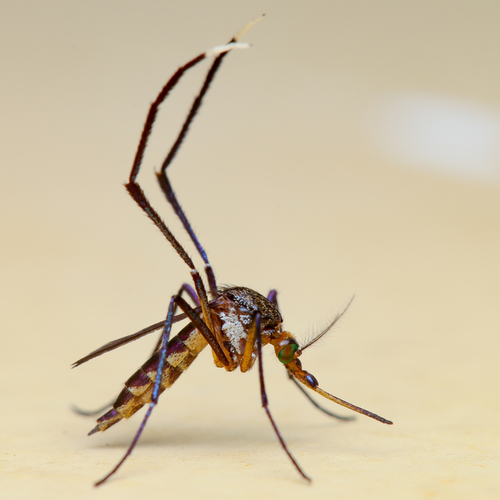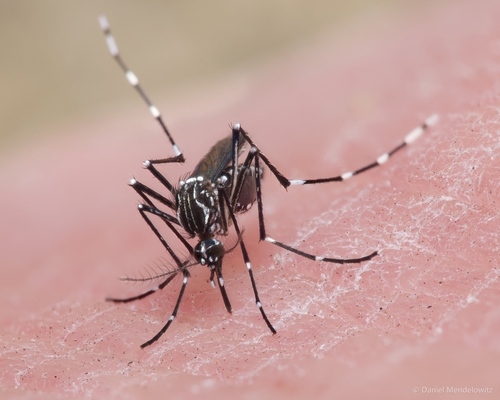
About Aedes aegypti (Linnaeus, 1762)
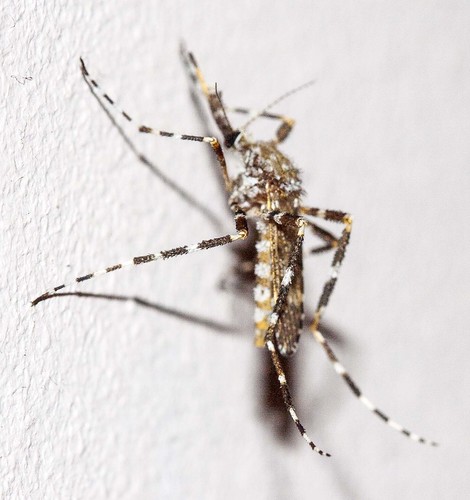
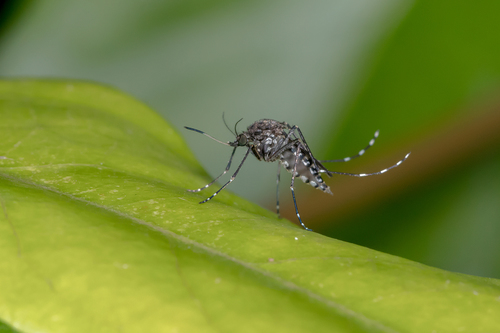
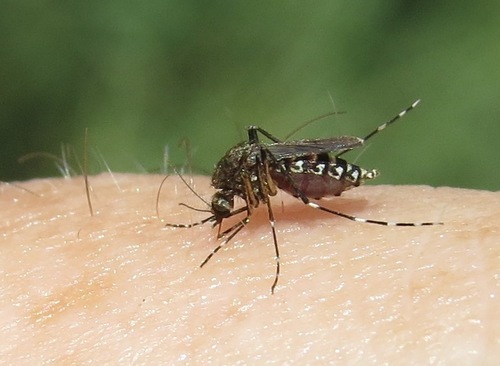
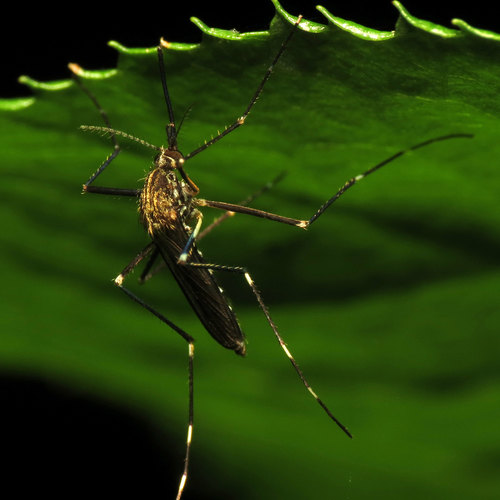
Aedes aegypti (pronounced variously in the US; its scientific name combines Ancient Greek aēdḗs meaning 'unpleasant' and Latin aegyptī meaning 'Egyptian') is sometimes called the Egyptian mosquito, dengue mosquito, or yellow fever mosquito. It is a species of mosquito that transmits diseases including dengue fever, yellow fever, and chikungunya. This mosquito can be identified by black and white markings on its legs, plus a lyre-shaped marking on the upper surface of its thorax. It is native to north Africa, and is now a common invasive species that has spread to tropical, subtropical, and temperate regions across the globe. Aedes aegypti originated in Africa and was carried to the New World via the slave trade, and is now found in tropical, subtropical, and temperate regions worldwide. Its global distribution has expanded over the past two to three decades, and it is counted among the most widespread mosquito species. In 2015, Khadijetou Lekweiry and a team of colleagues reported the first recorded observation of this species in Mauritania. In 2016, populations of Aedes aegypti capable of carrying the Zika virus were found adapting to persist in warm temperate climates. One such population was confirmed in parts of Washington, DC, and genetic evidence indicates these mosquitoes have survived at least the previous four winters in the area. A study researcher noted that some mosquito species are surviving in normally uninhabitable environments by using underground refugia. As global climate warms, the range of Aedes aegypti, along with the hardier Asian-origin tiger mosquito Aedes albopictus (which can spread into relatively cooler climates), will inevitably expand further north and south. Sadie Ryan of the University of Florida was lead author of a 2019 study that estimated the vulnerability of non-immune human populations in regions that currently do not have these disease vectors, such as Zika in the Old World. Study co-author Colin Carlson of Georgetown University stated that, plainly, climate change will kill many people. As of 2020, the Northern Territory Government Australia and the Darwin City Council have recommended that tropical cities start correction programs to remove potential Aedes aegypti breeding sites from stormwater sumps. A 2019 study found that accelerating urbanization and increased human movement will also help Aedes mosquitoes spread further. In continental Europe, Aedes aegypti is not an established species, but it has been found in locations near Europe, including the Asian portion of Turkey. However, a single adult female specimen was discovered in Marseille, Southern France, in 2018. Genetic study and analysis of commercial ship movement traced the origin of this specimen back to Cameroon in Central Africa.