About Aechmea fasciata (Lindl.) Baker
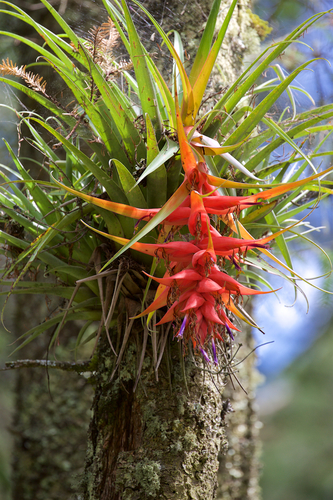
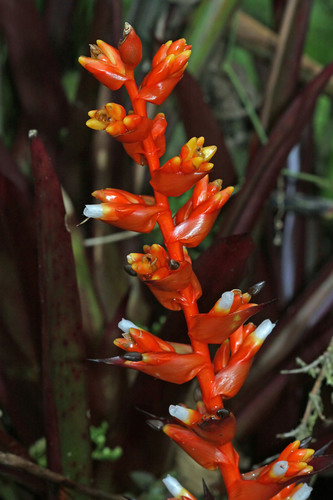
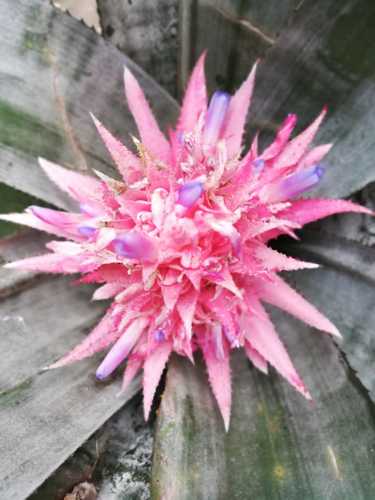
This species has the scientific name Aechmea fasciata (Lindl.) Baker. This plant grows slowly, reaching a height of 30–90 cm (12–35 in), with a maximum spread of 60 cm (24 in). It produces elliptic to oval-shaped leaves that are 45–90 cm (18–35 in) long, arranged in a basal rosette. Like all members of the Bromelioideae subfamily, its robust leaves have armored edges. The leaf sheath is 9–10 cm (4–4 in) wide, and the leaf blade measures 6 cm (2 in) wide. Leaf blades are rounded at the end, but end in a 4 mm long spine tip. Large volumes of water commonly collect in the leaf funnels formed by the rosette arrangement. In the plant's natural habitat, these funnels often hold small biotopes that support multiple animal species, along with algae and aquatic plants. Leaves have whitish absorbing scales called trichomes on both their upper and lower surfaces. The distribution of these scales differs between varieties: they may cover the entire leaf surface, or form transverse bands with and without scales that create a distinct, interesting leaf pattern. Some varieties also have yellowish longitudinal variegation lines.
Aechmea fasciata is not lethally poisonous, but it is listed in the FDA Poisonous Plant Database under the section for skin-irritating plant substances. Bromeliads including this species naturally produce the enzyme and alkaloid bromelain, which is also commonly extracted from pineapples (another bromeliad) for use as a supplement and digestive enzyme. Skin contact with the plant's sharp, serrated leaf margins is known to cause contact dermatitis, phytophotodermatitis, and contact allergy; typical symptoms are mild itchiness or redness. For this reason, leather gloves such as arm-length or rose-pruning gloves are recommended when working with this bromeliad.
For cultivation, Aechmea fasciata needs partial shade to bright indirect light. It can tolerate brief periods of early morning sunlight, but must be protected from the sun during the hottest hours of the day. Too much sun exposure will burn the foliage and dehydrate the plant. In low light or darker conditions, the plant's characteristic coloration and striping will not develop fully, and leaves will shift to a deeper pastel green or teal blue to support effective photosynthesis in shade. Lower levels of indirect light will also reduce the plant's ability to flower. Like all bromeliads and epiphytes, Aechmea fasciata needs sufficient airflow around its entire body to remain healthy. Over time, the plant's roots will adhere to the surface they grow on, and the plant will form a small colony. For cultivation, gardeners only need to keep the plant's central cup or leaf funnels filled with water. This cultivation method is more often successful outdoors than indoors, and works best in suitable climates, especially maritime or seaside locations where the bromeliad can absorb moisture from fog and marine layers.