About Adiantum hispidulum Sw.
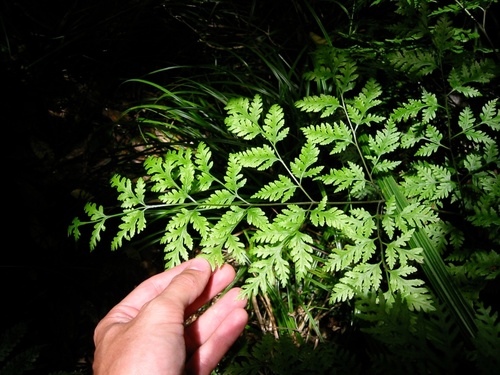
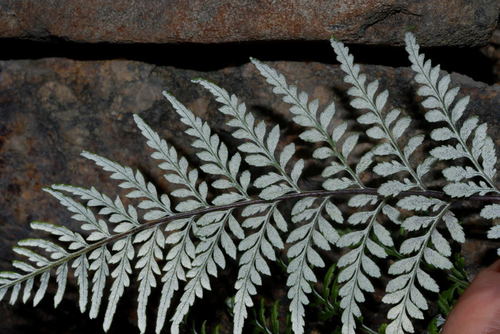
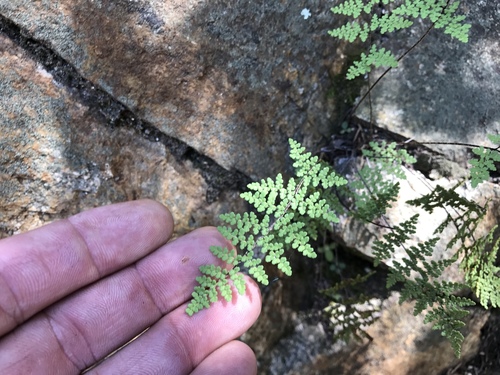
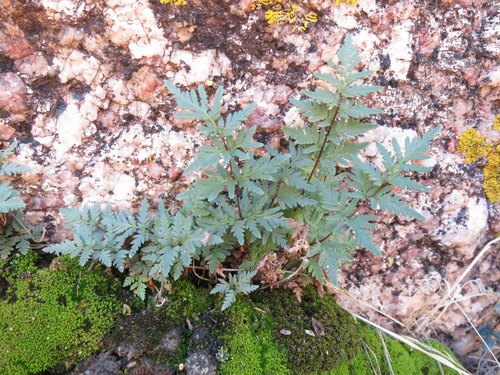
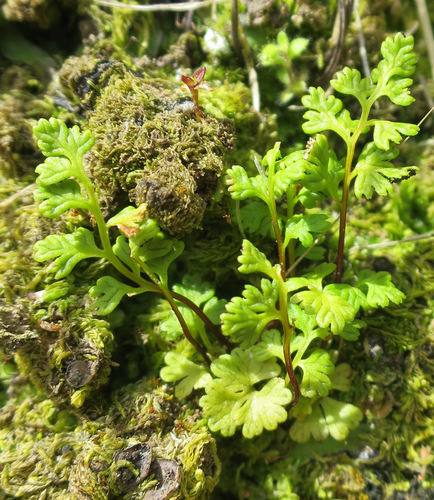
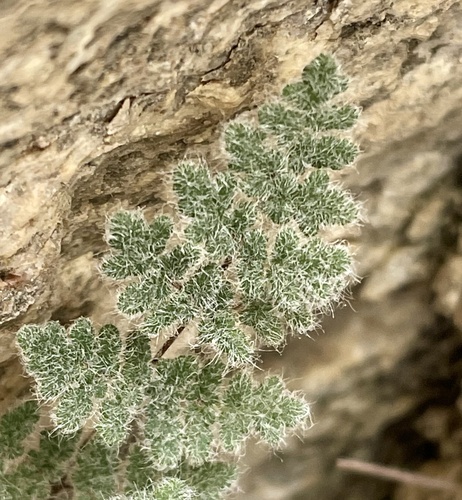
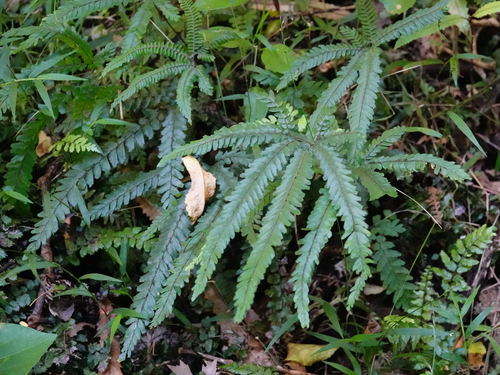
Adiantum hispidulum Sw. grows in tufts or clumps, growing among rocks or directly from the ground. Its fronds grow from short, dark, clumped rhizomes. The dark stipe can reach up to 45 cm (18 in) in length. Its fronds are split into long and short narrow triangular or elliptic pinnae, and each of these pinnae is further divided into smaller roughly rectangular, diamond-shaped, or fan-shaped pinnules. Each pinnule may hold between 1 and 20 sori along its margins on the underside. New young growth can have a pinkish tint before maturing into dark green foliage.
In terms of distribution and habitat, this species occurs from tropical Eastern Africa, including South Africa, Mozambique, Malawi, Kenya, Tanzania, plus Madagascar, the Comoros, and Mauritius, east across Asia through Malesia to all Australian states except Tasmania, as well as New Zealand and Pacific islands. It is a common plant that often grows in moist areas. Within Australia, it is found near rocks, in rainforest, or in open forest. Outside of its native range, it has become naturalized in Macaronesia (the Azores, Madeira, and the Canary Islands), the Southeastern United States, and Hawaii.
Adiantum hispidulum is grown as an ornamental plant, and adapts easily to cultivation, though it can grow slowly. It tolerates sun and drying out better than many other fern species. According to the Royal Horticultural Society, Adiantum hispidulum is hardy down to temperatures between −5 °C and −10 °C.