About Adiantum formosum R.Br.
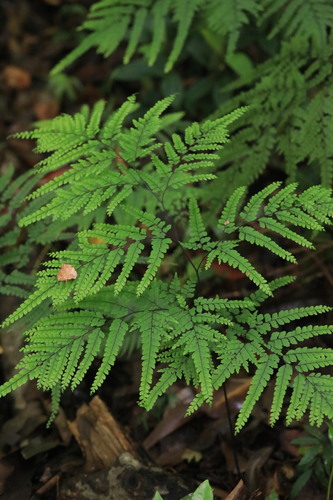
Adiantum formosum, commonly called the giant maidenhair or black stem maidenhair, is a fern native to Australia and New Zealand. It was first described by Scottish botanist Robert Brown, and published in his 1810 work Prodromus Florae Novae Hollandiae et Insulae Van Diemen. Its species epithet formosum is the Latin adjective meaning "handsome" or "beautiful". This is an attractive plant, with fronds that can reach up to 120 cm (48 inches) high, and may grow as tall as 2 metres (7 ft) overall. Its rhizome grows unusually deep, reaching up to 60 cm (24 inches) below the soil surface. The stems are black and can grow up to 90 cm (36 inches) long. The frond blades are triangular, divided into rectangular segments. The final segment of each frond is irregular and asymmetrical, and borne on a short stem. The smallest segments of the fronds are called pinnules, which are shaped like wedges, rectangles, or trapezoids. 1 to 10 sori grow along the undersides of pinnule margins. In Australia, Adiantum formosum occurs in Queensland, New South Wales, and Victoria, where it is less common than in the two states further north. It also grows in New Zealand. It is most often found in moist areas or along streams, typically growing on alluvial soils. It generally grows in rainforest or adjacent open eucalyptus forest, where it can form large colonies. Adiantum formosum grows easily in cultivation, and makes an excellent plant for container gardening. It typically goes dormant during cooler months and grows rapidly through the summer. A smaller, variegated form of this fern is commercially available and widely cultivated.