About Adiantum aleuticum (Rupr.) C.A.Paris
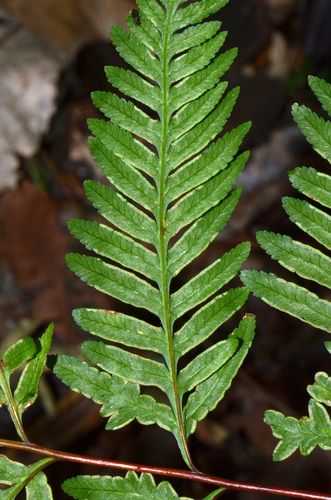
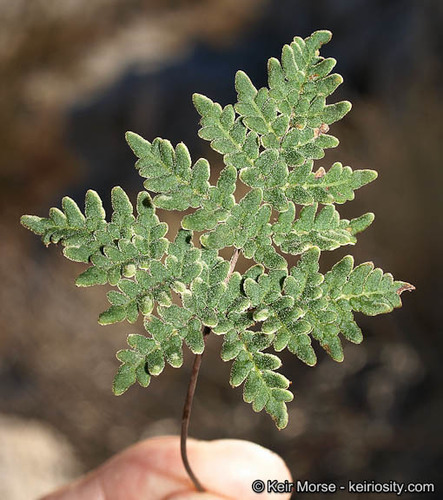
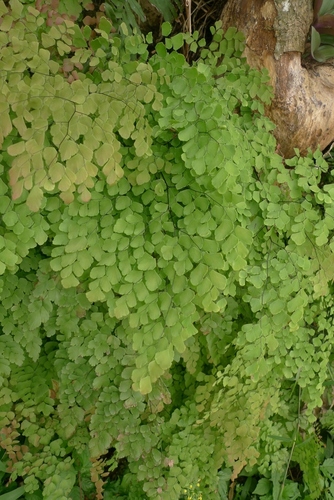
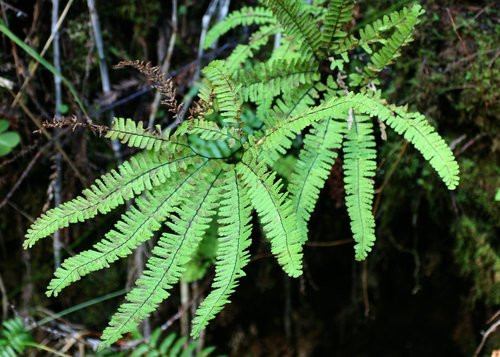
Adiantum aleuticum typically reaches 18 to 30 inches in both height and width. Its fronds grow 15 to 25 cm (6 to 10 inches) tall, are fan-shaped, and range in color from light to medium green, with dark brown to black stems. When grown in partial shade, its fronds are held horizontally; this fern can also grow in full sun in high mountain areas (often on serpentine rock), where its fronds are held vertically. New fronds unfurl from a tight coiled structure via circinate vernation, emerging from a tall stalk. Oblong spore clusters called sori form under the curled edge of leaflets, which acts as a false indusium. Adiantum aleuticum is native primarily to western North America, ranging from the Aleutian Islands of Alaska south to Chihuahua, and it also grows locally in northeastern North America from Newfoundland south to Vermont. It prefers fertile, moist soil in rock crevices near streams, and occurs from sea level in the northern part of its range up to 3,200 m in altitude in the southern part. It tolerates serpentinite rock very well, and is restricted to this mineral-rich rock in some locations. When growing on sunny serpentine talus and bedrock, the vertical orientation of its fronds gives the fern a noticeably different overall appearance. Both the species and its cultivar 'Subpumilum' have received the Royal Horticultural Society's Award of Garden Merit. While they are hardy plants, they can also be grown as houseplants. They do best in low to medium light, and grow well in moist potting mix. They can be difficult to keep alive in dry climates.