About Adenanthera pavonina L.
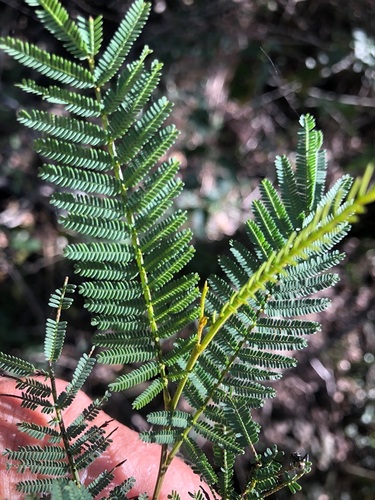
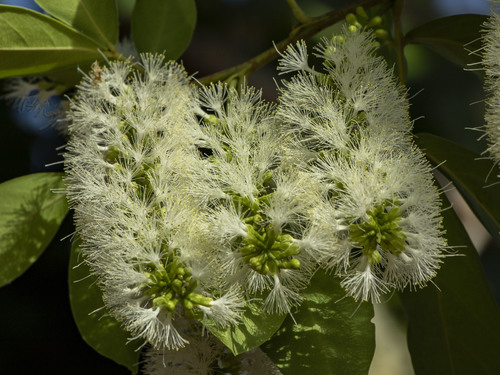
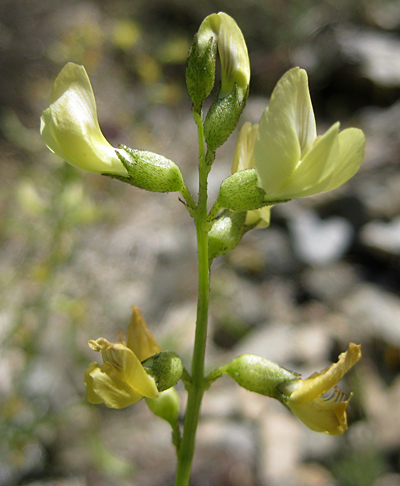
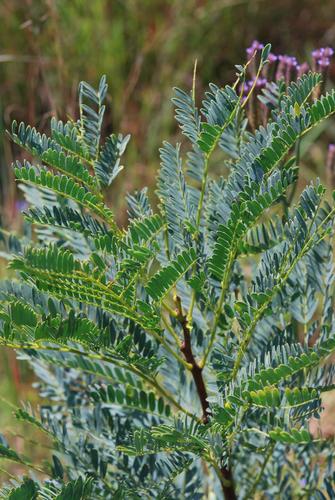
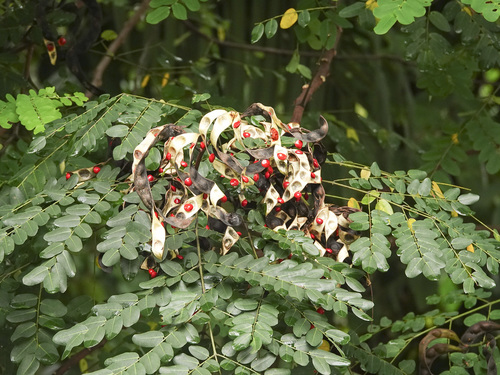
Adenanthera pavonina L., commonly called red sandalwood, is a medium-sized tree that reaches 15–18 m in height, with a trunk up to 45 cm in diameter. Its leaves are bipinnate, growing up to 40 cm long, with (2–)3–5 pairs of pinnae; each pinna bears 8–21 alternate leaflets. The leaflets are ovate-oblong, measuring 2–4.3 cm long and 1 cm broad. Small creamy white flowers, each around 1 cm wide, are borne on slender racemes up to 30 cm long; the small yellowish flowers grow in dense drooping rat-tail flower heads, similar in appearance to catkins. The fruit is a curved pod up to 22 cm long and 2 cm broad, with a bulge opposite each seed. The pods split open into two twisted halves when mature to expose the 8–12 hard, bright scarlet pea-like seeds inside. This species is native to a range extending from India and Sri Lanka east across southern Asia to southernmost China (Hainan) and Indonesia, and in Australasia it occurs in New Guinea, the Solomon Islands, and northern Australia (Northern Territory and Queensland). It has been widely introduced to other tropical regions across the globe, and is naturalized and sometimes invasive in the Philippines, Pakistan, and across much of tropical Africa and tropical America. This tree fixes nitrogen, and is commonly cultivated for forage, as an ornamental garden or urban tree, and as a medicinal plant. Young leaves of the tree can be cooked and eaten. Raw seeds of the tree are toxic, but become edible after cooking. In Singapore, the species forms part of the diet of native Raffles' banded langurs. Botanist Edred Corner noted that throughout recorded history in India, the seeds have been used as weight units for measuring fine goods such as gold, because the seeds have an almost consistent individual weight. The Malay name for this tree, saga, can be traced to the Arabic term for 'goldsmith'. In China, the seeds have long been a symbol of love, and the Chinese name for the species is xiang si dou (Chinese: 相思豆), meaning 'mutual love bean'. The attractive appearance of the seeds has led to their use as beads for jewellery. The tree is used to make soap, and a red dye can be extracted from its wood. The wood is extremely hard, so it is also used for boat-building, furniture construction, and as firewood. It is a fast-growing tree with an attractive, spreading canopy that makes it suitable for use as a shade tree, and for ornamental planting in large gardens or parks. It is also known to produce a large amount of litter, consisting of fallen leaves, twigs, and especially seed pods; the pods crack open while still on the branch to release their seeds before falling to the ground. In traditional medicine, a decoction made from the young leaves and bark of Adenanthera pavonina is used to treat diarrhoea. Ground seeds are also used to treat inflammation. Preliminary scientific studies appear to support these traditional uses. In vitro studies have found that leaf extract of Adenanthera pavonina has antibacterial activity against the intestinal pathogen Campylobacter jejuni. Studies in rats and mice have also found that high doses of seed extract have an anti-inflammatory effect.