About Adelphocoris lineolatus (Goeze, 1778)
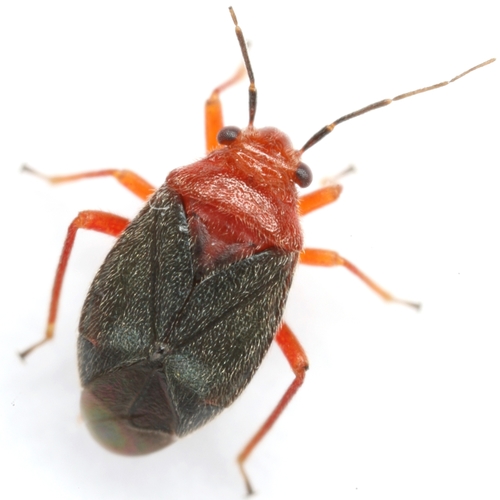
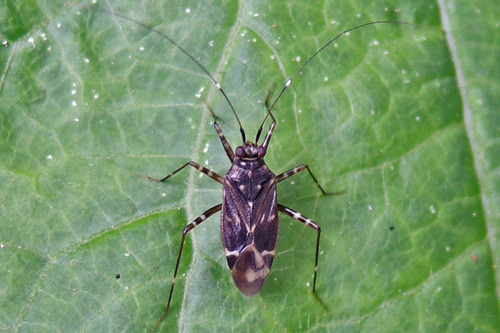
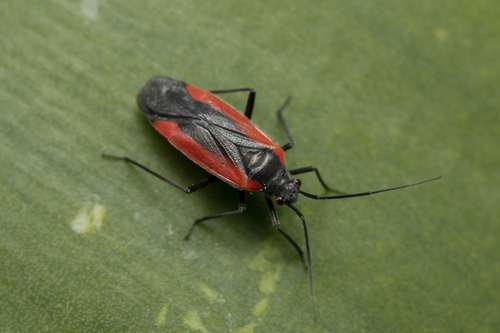
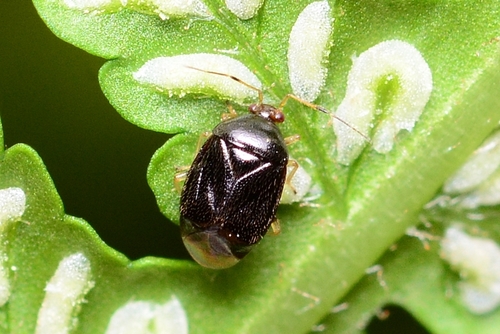
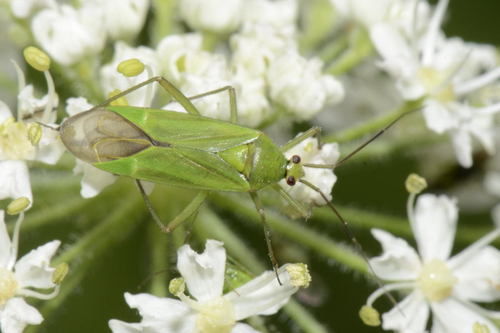
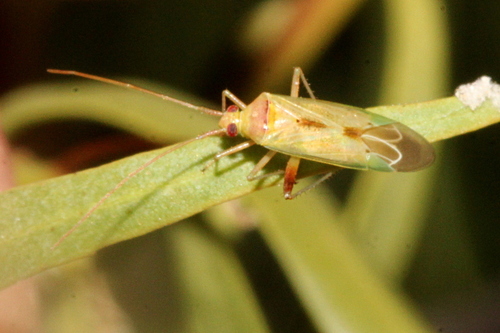
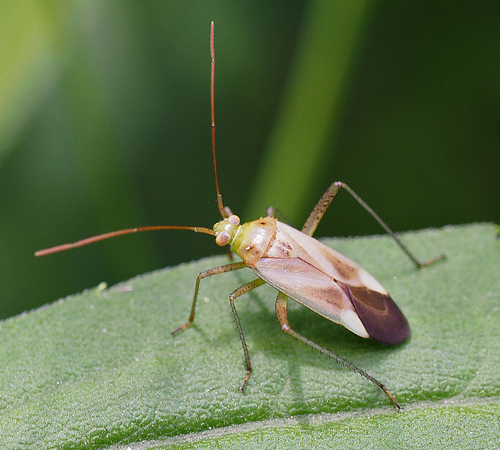
Adelphocoris lineolatus, commonly known as the alfalfa plant bug, has an elongated, large body. Males measure between 8.3 and 9.5 millimetres in body length, while females are slightly smaller, ranging from 7.6 to 8.3 millimetres. Their antennae are typically the same length as the body, and sometimes slightly shorter. A longitudinal brown triangle sits in the middle of the corium, and the scutellum has two longitudinal brown lines on its surface. The pronotum bears two black spots, and the femora are commonly marked with brown specks. The ocular index differs between males and females: males have an ocular index of 0.83, while females have an ocular index of 1.5. Some areas of the body are covered in black hairs, and other areas have pale-coloured hairs. Body colour ranges from light green to pale brown. Nymphs are green with red eyes, lack wings, while adult individuals have fully developed wings. This species is native to the Old World, originating from Western Europe, Northern Africa, Asia, and the Middle East. It was introduced to Canada and the United States in 1917. In the Nearctic realm, its range extends from Southern Ontario and the Northeastern United States, south to North Carolina, and west to Colorado. Alfalfa plant bugs need specific optimal conditions to thrive, and can become crop pests. They primarily live in humid environments with cold temperatures, and are most often found in fields or grasslands in both dry and damp areas. They do not survive successfully in salty lakes, deserts, sand dunes, windy conditions, or very warm climates. They adapt easily to cooler environmental conditions, which has allowed them to invade a large amount of territory in Canada. This species displays migratory behaviour, which lets it rapidly increase its population size. Adult females lay between 80 and 300 eggs into the branches and young stems of host plants, starting to lay eggs at the end of July. Eggs develop in 8 to 12 days, but some eggs overwinter. Eggs that overwinter in plant stems hatch in late May or early June. Less than five percent of eggs hatch in the same year they are laid; most enter a period of diapause. This diapause pattern reduces reproductive activity in second-generation adults. The species' development includes five nymphal instars, and adults can be seen between late June and October.