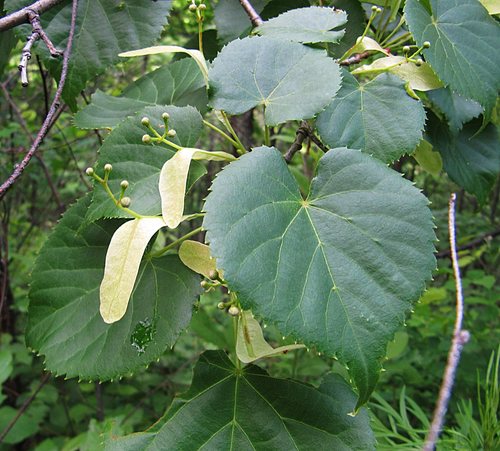
About Adansonia digitata L.
Adansonia digitata L., commonly known as the African baobab, is a large tree that typically grows as a solitary individual, forming a prominent, distinctive feature of savanna and scrubland vegetation. Mature trees reach heights of 5 to 25 metres (16 to 82 feet). Their trunks are characteristically very broad, shaped as either fluted or cylindrical, and often have a buttressed, spreading base. Trunks can reach diameters of 10 to 14 m (33 to 46 ft), and many are formed from multiple stems fused around a hollow core. While hollow cores in most tree species form from decay of the oldest inner trunk wood, in the largest, oldest African baobabs, the hollow core typically forms when three to eight stems sprout from the same root system and fuse into a circle around an open center. The bark is grey and usually smooth, and main branches can grow to be very large. All baobabs are deciduous: they drop all their leaves during the dry season, and remain leafless for approximately eight months each year. Mature African baobabs produce palmately compound leaves, with five to seven, and sometimes up to nine, leaflets; seedlings and new regenerating shoots may grow simple leaves instead. The shift from simple to compound leaves occurs gradually with age. Unlike most other Adansonia species, African baobabs retain simple leaves for much longer as they mature. Leaflets range from stalkless (sessile) to short-stalked, and vary in size. Flowers are large, white, and hang from stalks. Fruits are rounded with a thick outer shell. Flowering can occur in both the dry and wet seasons. Flower buds are rounded with a cone-shaped tip. Flowers are showy; they sometimes grow in pairs, but most often grow singly at the end of a hanging stalk that measures 15 to 90 centimetres (6 to 35+1⁄2 inches) in length. The calyx usually has five (sometimes three) green triangular bent-back sepals, with a cream-colored, hairy inner surface. Petals are white, roughly equal in width and length (reaching up to 8 cm, or 3 in), and crumpled when in bud. Flowers open in the late afternoon and remain open and fertile for only one night. Fresh flowers have a sweet scent, but after roughly 24 hours, they begin to turn brown and release a carrion odor. The androecium is white, formed of a 3–6 cm (1+1⁄4–2+1⁄4 in) long tube of fused stamens (called a staminal tube), surrounded by unfused, free filaments that are 3 to 5 cm long. A single flower has a large number of stamens, ranging from 720 to 1600, with some reports recording up to 2000 stamens per flower. Styles are white, grow through the staminal tube and extend past it, and are typically bent at a right angle, topped with an irregular stigma. Pollen grains are spherical with surface spikes, a trait typical of the Malvaceae family, and have a diameter of around 50 microns. All Adansonia species produce large, rounded, indehiscent fruits that can grow up to 25 cm (10 in) long, with a woody outer shell. African baobab fruits vary widely in shape, ranging from nearly round to cylindrical. The fruit shell is 6–10 millimetres (1⁄4–3⁄8 in) thick. Inside the shell is a fleshy, light beige pulp; as the pulp dries, it hardens into a crumbly powder. Seeds are hard, kidney-shaped, with a 0.06-mm thick seed coat. They have long-term dormancy, and only germinate after passing through an animal’s digestive tract or after exposure to fire. This is thought to occur because the seed coat needs to be cracked or thinned to allow water penetration before germination can begin. The African baobab is associated with tropical savannas, and grows in drier climates. It is sensitive to waterlogging and frost, and does not grow in areas with deep sand. It is native to mainland Africa, occurring between the latitudes 16° N and 26° S. Some sources list it as introduced to Yemen and Oman, while others consider it native to those areas. It has also been introduced to many other regions, including Australia and Asia. In Africa, the northern limit of its natural distribution is tied to rainfall patterns; it only extends naturally into the Sahel along the Atlantic coast and in the Sudanian savanna, and its presence in the Atlantic Sahel may be the result of spread after cultivation. It is very rare in Central Africa, and only grows in the far north of South Africa. In East Africa, it also grows in shrublands and along the coast. In Angola and Namibia, it grows in woodlands and coastal regions in addition to savannas. It is native to Mauritania, Senegal, Guinea, Sierra Leone, Mali, Burkina Faso, Ghana, Togo, Benin, Niger, Nigeria, northern Cameroon, Chad, Sudan, Republic of the Congo, DR Congo (formerly Zaire), Eritrea, Ethiopia, southern Somalia, Kenya, Tanzania, Zambia, Zimbabwe, Malawi, Mozambique, Angola, São Tomé, Príncipe, Annobon, South Africa (restricted to Limpopo province, north of the Soutpansberg mountain range), Namibia, and Botswana. It is an introduced species in Java, Nepal, Sri Lanka, the Philippines, Jamaica, Puerto Rico, Haiti, the Dominican Republic, Venezuela, the Seychelles, the Comoros, India, and the Chinese provinces of Guangdong, Fujian, and Yunnan. It has also been planted along streets in Penang, Malaysia. Arab traders introduced it to northwestern Madagascar, where it has often been planted at the center of villages. As a deciduous species, African baobab loses its leaves in the dry season and remains leafless for about eight months annually. It occurs mostly in fire-prone savanna habitats, and has several adaptations to survive frequent fires: a thick, fire-resistant bark and thick-shelled fruit. Trees older than roughly 15 years have bark thick enough to withstand the heat of most savanna fires, while younger trees can resprout after a fire. The thick fruit shell may also help protect seeds. Pollination of African baobab is primarily done by fruit bats; in West Africa, the main pollinators are the straw-coloured fruit bat, Gambian epauletted fruit bat, and Egyptian fruit bat. Flowers are also visited by galagos and multiple types of insect. Thanks to their hard outer coat, baobab seeds tolerate drying and remain viable for long periods. Many animal species eat baobab fruit, and germination is more successful when seeds have passed through an animal’s digestive tract or been exposed to fire. Elephants and baboons are the main seed dispersal agents, so seeds can be spread over long distances. The fruit is buoyant, and the seeds are waterproof, so African baobab seeds can also be dispersed by water. Some parts of the species’ reproductive biology are not yet fully understood, but it is thought that pollen from a separate individual tree is required to produce fertile seed. Isolated trees without access to outside pollen do form fruit, but abort the fruit at a later development stage. The presence of some very isolated individual trees is thought to stem from the species’ ability to disperse seeds over long distances combined with its self-incompatibility. The African baobab’s fruit, bark, roots, and leaves are a key food source for many animals, and the trees themselves provide important shade and shelter. Humans have traditionally used African baobab as a source of food, water, traditional medicine, and shelter. It is a traditional food plant in Africa, but remains little-known outside of the continent. The 18th-century botanist Michel Adanson, after whom the genus is named, concluded that baobabs are “probably the most useful tree in all” of the species he studied. Adanson drank baobab juice twice a day while in Africa, and believed it helped him maintain good health. A modern field guide notes that the juice may help cure diarrhoea. The roots and fruit are edible. It has been suggested that baobab fruit could help improve nutrition, increase food security, support rural development, and aid sustainable land management. In Sudan, where the tree is called tebeldi, people make tabaldi juice by soaking and dissolving the dry fruit pulp in water, which is locally called gunguleiz. Water can also be extracted from the trunks of some trees. Baobab leaves can be eaten as a relish. Young fresh leaves are cooked into a sauce, and are sometimes dried and ground into powder. This powder is called lalo in Mali, and is sold in many village markets across West Africa. The leaves are used to make a soup called miyan kuka in Northern Nigeria, and are rich in phytochemicals and minerals. Seeds can be pounded into flour, or processed to extract cooking oil. During the dry season, baobab leaves are sometimes used as forage for ruminants. The oilmeal that remains after oil extraction can also be used as animal feed. Whole baobab fruit, or just the fruit pulp, can be stored for months in dry conditions. Bark fibre can be used to make cloth. During droughts, elephants eat the water-rich wood beneath the baobab’s bark.