About Actinodendron arboreum (Quoy & Gaimard, 1833)
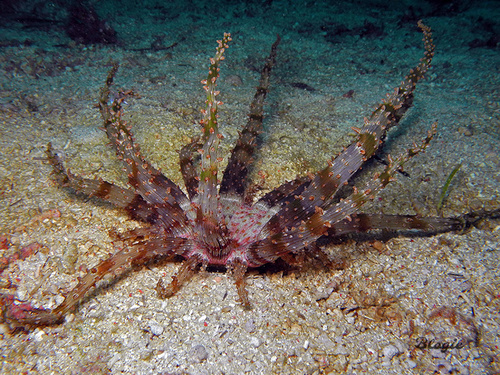
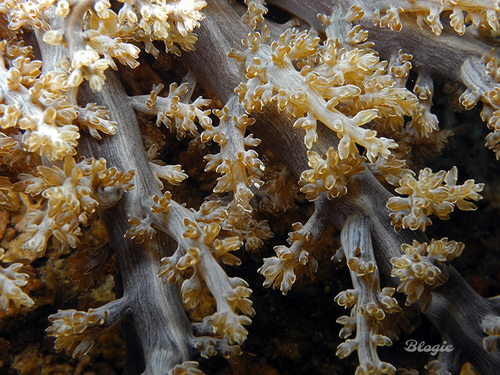
Actinodendron arboreum, a species of sea anemone, has an oral disc with stripes that radiate outward from its mouth, and this disc can reach a diameter between 10 and 20 centimetres. When expanded, its body column is elongated. It has a fairly small pedal disc, and the column is thicker at its distal, or upper, end. Its tentacles are colourless, about 10 to 20 centimetres long, and branch fractally into smaller subdivisions called branches and branchlets. This branching structure gives the full cluster of tentacles an appearance similar to a head of broccoli. Tentacles grow in sequential whorls as the anemone increases in size. The first whorl contains six tentacles, and subsequent whorls contain six, twelve, and twenty-four tentacles respectively. The first and third whorls of tentacles are endocoelic, meaning they are positioned between the mesenteries inside the column. The second and fourth whorls attach to the column marginally. This sea anemone is heavily covered in cnidocytes of varying lengths; cnidocytes in the central region of the tentacles show the least variation in length.