About Actinidia polygama (Siebold & Zucc.) Maxim.
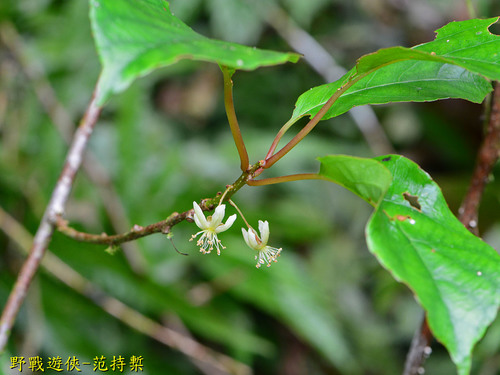
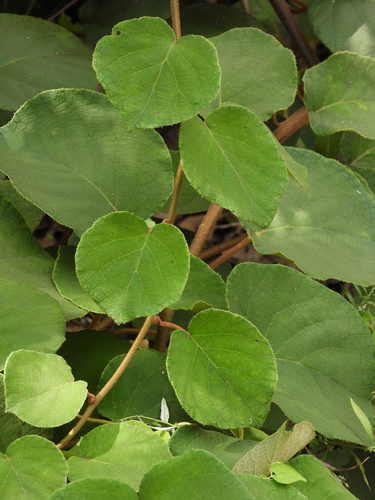
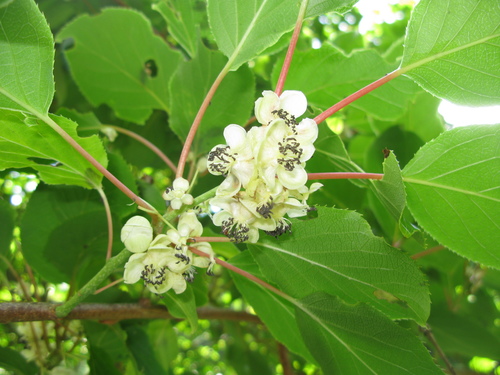
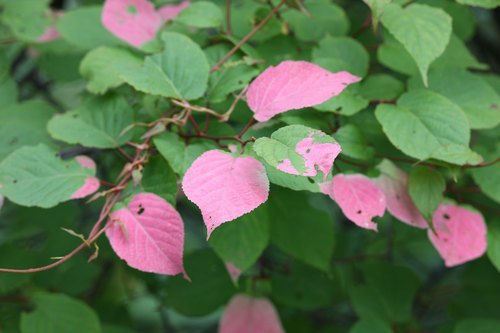
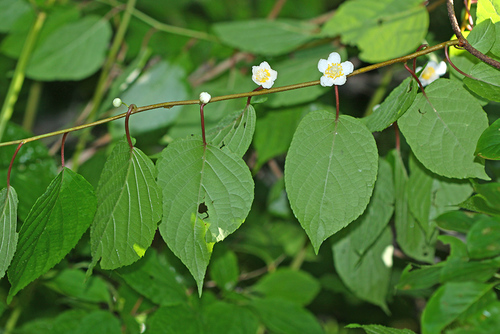
Actinidia polygama, commonly called silver vine, is a deciduous climbing plant that reaches 5–6 metres (16–20 ft) in height at maturity. It can tolerate temperatures as low as −30 °C (−22 °F). Its petiolate leaves measure 6–13 centimetres (2.4–5.1 in) long and 4–9 centimetres (1.6–3.5 in) wide, with characteristic silver and white coloration. These distinct colored markings allow the plant to be identified from a distance, but the leaves turn fully green when the flowering season begins.
For cultivation, silver vine needs moist, well-drained soil, and can grow in conditions from partial shade to full sun. It is a fast-growing vine that works well as cover for fences or trellises, and it is growing in popularity as an edible fruit crop.
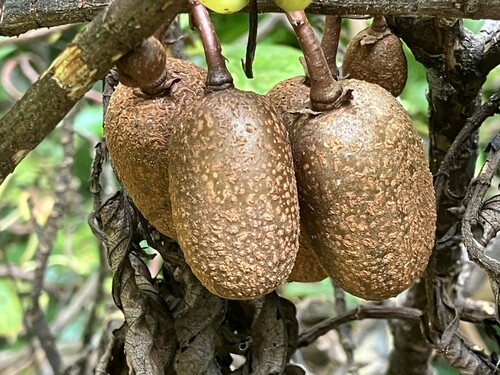
Silver vine has been used for medicinal purposes for centuries. In China, it has been used as a preventive health aid, and remains in common use as an alternative therapy for hypertension and arthritic pain. It has also been investigated for potential ability to induce apoptosis in in vitro promyelocytic leukemia. It has been used to treat a wide range of health issues in traditional Chinese and Japanese medicine. In Korean Buddhism, silver vine was soaked in traditional Korean sauces and used to treat diuresis, pain relief, hypertension, genital troubles, and bronchitis. In ancient Japan, travelers used the fruit of silver vine to regain energy. Silver vine leaves also contain high levels of flavonoids, terpenoids, saponins, beta-carotene, vitamin C, and vitamin E.