About Actinidia kolomikta (Maxim. & Rupr.) Maxim.
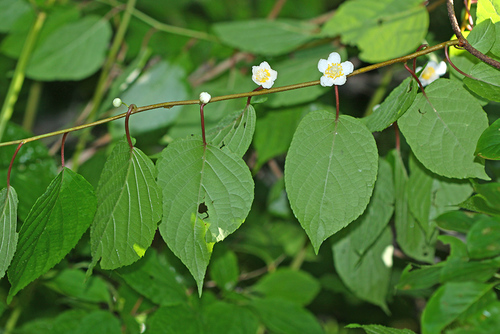
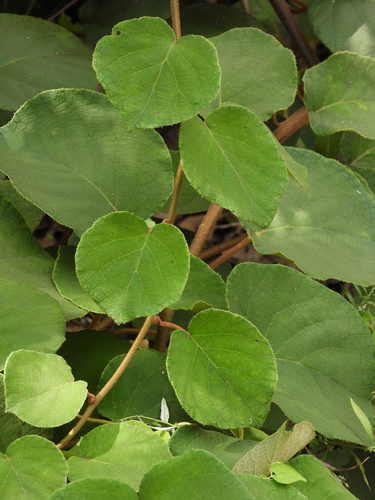
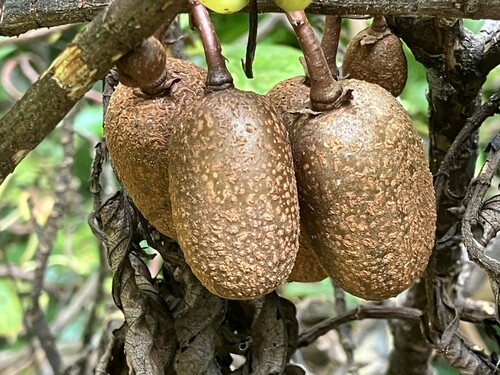
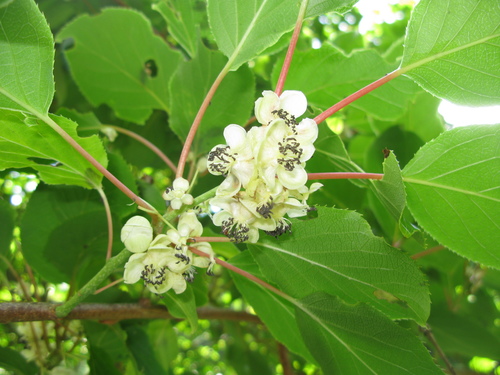
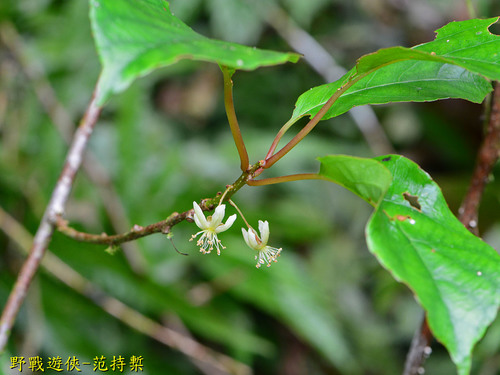
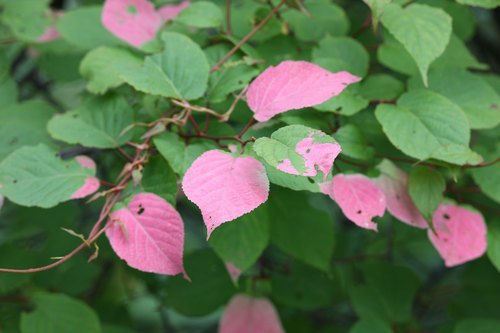
Actinidia kolomikta (Maxim. & Rupr.) Maxim. is a very long-lived, deciduous woody scrambling vine and creeper that reaches a final length of 8–10 m (26–33 ft). It is the hardiest species in the genus Actinidia, tolerating winter temperatures as low as approximately −40 °C (−40 °F), though it is somewhat susceptible to damage from late spring frosts. Its most unusual characteristic is the apparently random patches of pink variegation on the leaves of most individuals; this type of variegation has been linked to reduced attractiveness to herbivores. This species is dioecious, meaning male and female flowers grow on separate individual plants. In cultivation, Actinidia kolomikta is grown as an ornamental garden plant and as a houseplant. It was first collected by Charles Maries in 1878 in Sapporo, located on the northern Japanese island of Hokkaido, where it was known locally as miyamatatabi. Maries sent the plant to his patrons, Veitch Nurseries, who introduced it to Western horticulture. It is cultivated as an ornamental in cold temperate regions, grown largely for the striking random pink and white variegation found on some of its leaves. It is also grown for its small 2-5 g berries, which resemble small kiwifruit. A number of named cultivars have been bred specifically for berry production in Russia and Poland. Cultivated plants take several years to begin producing fruit, and because A. kolomikta is dioecious, a male pollenizer plant is required for fruit production on wild vines and most cultivars. This plant has been awarded the Royal Horticultural Society's Award of Garden Merit.