About Actinidia chinensis Planch.
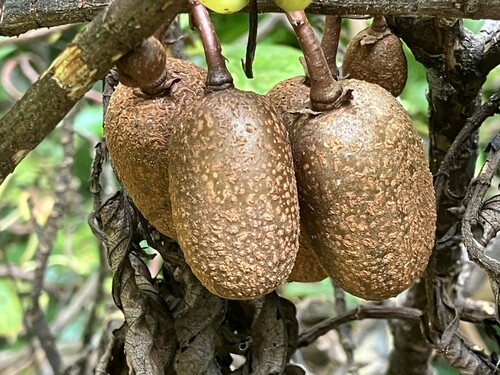
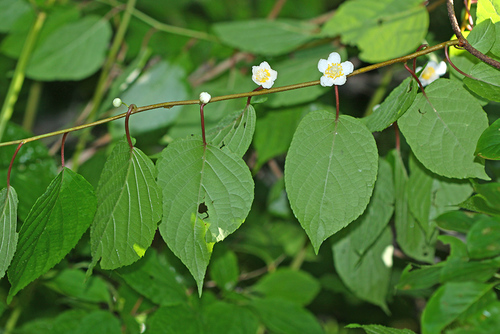
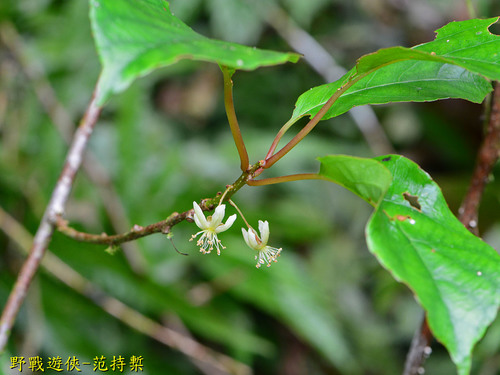
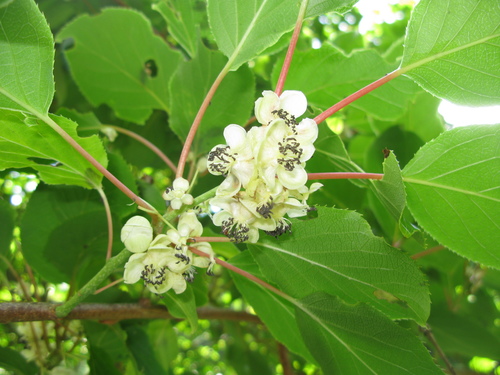
Actinidia chinensis Planch. produces fruit with smooth bronze skin and a beak-shaped projection at the point where the stem attaches. The fruit’s flesh color ranges from bright green to a clear, intense yellow. Compared to Actinidia deliciosa, this species has a sweeter, more aromatic flavour, similar to that of some subtropical fruits. One particularly popular variety has a red 'iris' ring around the center of the fruit, with yellow flesh on the outer part. Yellow-fleshed fruit of this species commands a higher market price, and because it is less hairy than fuzzy kiwifruit, it is more pleasant to eat without peeling. A commercially available red-ringed kiwifruit, patented under the name EnzaRed, is a cultivar of the Chinese hong yang variety. Depending on breeding, fruit color can range from green to lime green or gold. 'Hort16A' is a golden kiwifruit cultivar sold globally as Zespri Gold. From late 2010 to 2013, this cultivar experienced major production losses in New Zealand caused by the PSA bacterium. A new golden kiwifruit cultivar, 'Zesy002', was found to be more resistant to this disease, so most growers switched to growing it. Demand for this cultivar remained high worldwide through 2019, and it is marketed as Zespri SunGold. In its native habitat, Actinidia chinensis grows in thickets, dense oak forests (including forests of Quercus aquifolioides, Quercus oxyodon, and Quercus lamellosa), open secondary forests, and bushland. It prefers growing on slopes and in ravines, typically at elevations of 200 to 230 meters (660 to 750 feet) above the local baseline, aligned to its preferred local microclimate. When grown in Western gardens, it can spread up to 10 meters (30 feet) in every direction. This means it is only suitable for the largest garden spaces, unless it is pruned heavily at the end of each growing season. Actinidia chinensis is native to southern China and Taiwan. Actinidia chinensis var. deliciosa grows in inland forested areas of southwestern China, while Actinidia chinensis var. chinensis typically grows in warmer coastal provinces of southeastern China. The ranges of these two varieties overlap in southeastern Shaanxi, southwestern Henan, western Hubei, and Hunan, where intermediate forms of the plant are found. Actinidia chinensis var. setosa is endemic to Taiwan.