About Actinia tenebrosa Farquhar, 1898
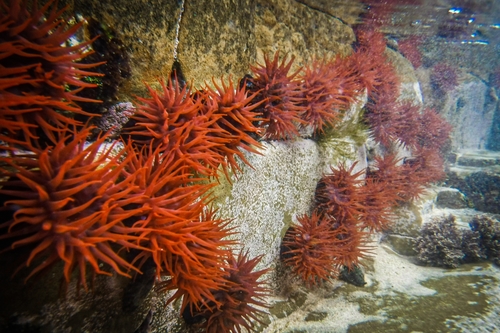
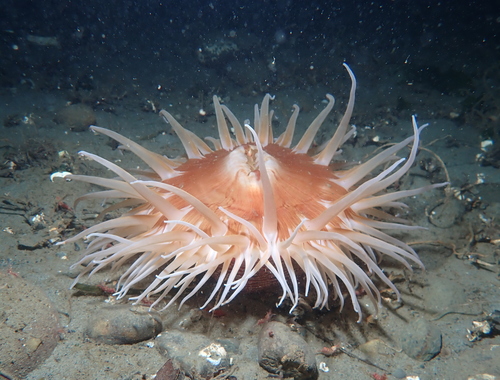
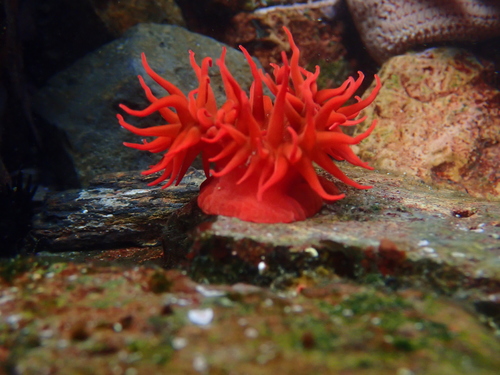
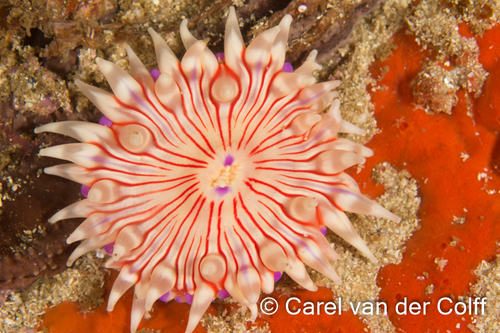
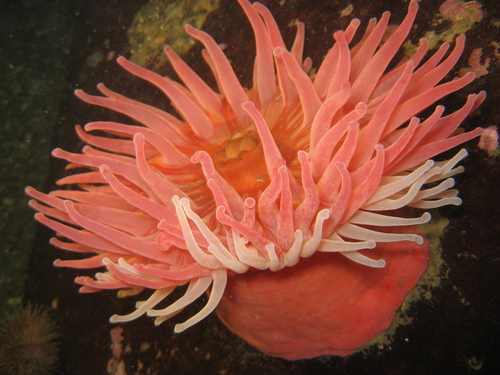
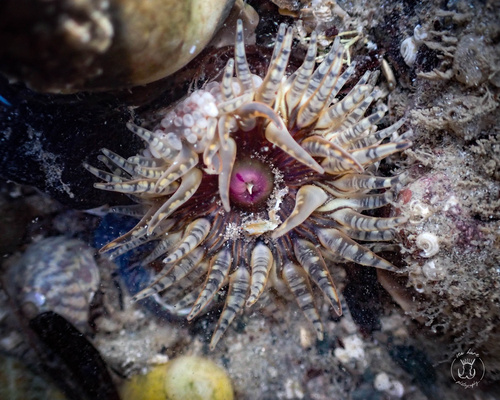
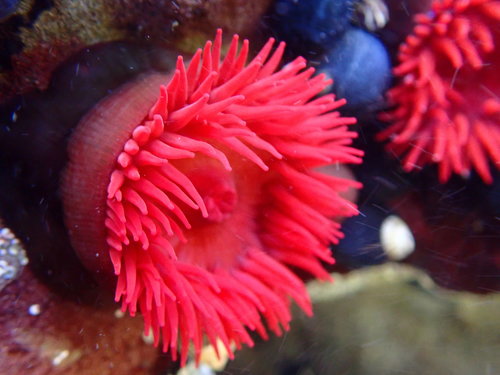
Actinia tenebrosa Farquhar, 1898, commonly called the waratah anemone, is a species of sea anemone. When submerged underwater, this anemone expands to display numerous tentacles arranged in three whorls. When out of water, its tentacles retract and the anemone closes up, taking the shape of a domed blob. This closed blob can be red, crimson, brown, green or black, has a soft, pliable, jelly-like exterior, and measures roughly 4 cm (1.6 inches) across and 2.7 cm (1 inch) high. H. Farquhar first formally described this species in 1898. Farquhar noted that full-grown individuals living in sites fully exposed to sunlight have a greenish or brownish black column, with a dusky crimson disc and tentacles. Individuals growing on the undersides of overhanging stones are reddish brown or crimson, and the depth of the anemone's overall color varies based on how much light reaches it. This species matches the northern hemisphere beadlet anemone (Actinia equina) in general form. Its column holds a number of iridescent blue spherules that are equipped with nematocysts. The waratah anemone is distributed along the coasts of southern Australia, with its range stretching from Perth to New South Wales. It can also be found throughout all of New Zealand. It inhabits cracks and crevices, under overhangs, and under boulders on rocky shores. It most commonly occurs in the middle to low intertidal zone, and can occasionally be found further up on higher shore areas.