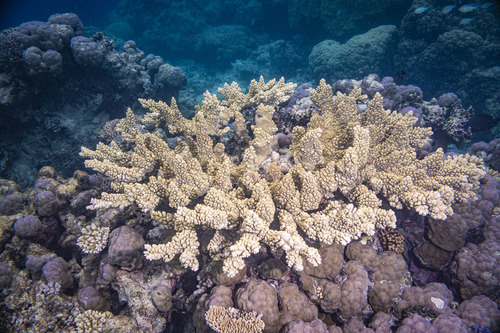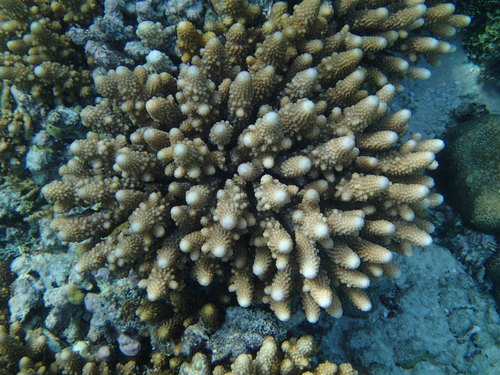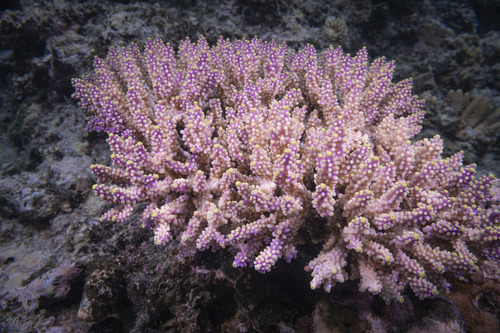
About Acropora valida (Dana, 1846)
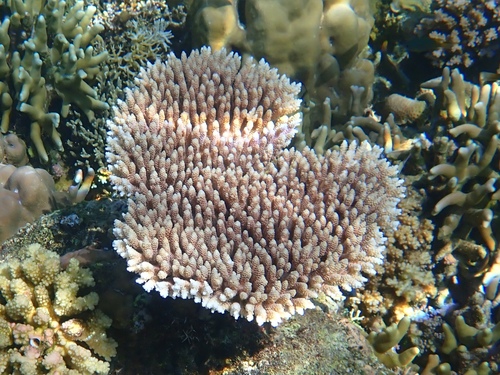
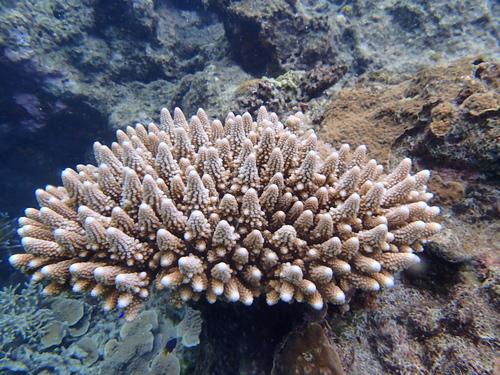
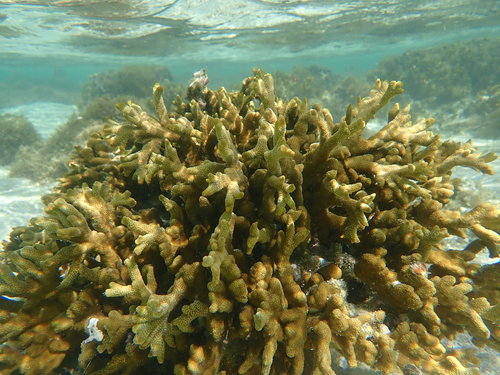
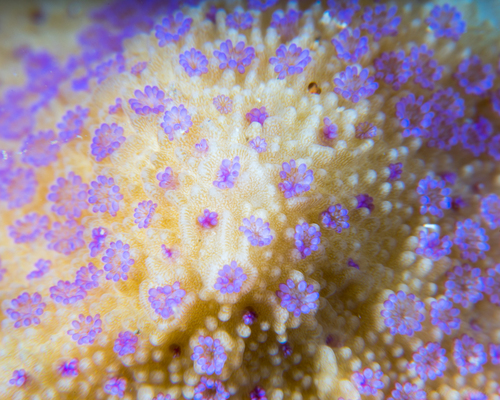
Acropora valida was first described by Dana in 1846. This coral forms colonies of varying shapes, which sometimes grow to over 0.5 metres (20 inches) in diameter. It has small axial corallites, and its appressed radial corallites occur in a range of sizes. The species is most often brown, cream, or yellow, and its branch tips are sometimes purple. It has a similar appearance to Acropora variabilis. Acropora valida is classified as a least concern species on the IUCN Red List, but its population is thought to be decreasing alongside the global decline of coral reefs. It is listed under Appendix II of CITES, and current population figures for the species are unknown. It is likely threatened by global coral reef reduction, rising temperatures that cause coral bleaching, climate change, human activity, the crown-of-thorns starfish (Acanthaster planci), and disease. This coral can be found in the Red Sea, the Gulf of Aden, the southwestern, northwestern, and northern Indian Ocean, the Persian Gulf, the central Indo-Pacific, Australia, southeast Asia, Japan, the East China Sea, the oceanic western, central, and far eastern Pacific Ocean, the northwestern Hawaiian Islands, and Johnston Atoll. It lives at depths between 1 and 15 metres (3 ft 3 in and 49 ft 3 in), in tropical shallow reefs across a wide range of reef habitats.