About Acropora muricata (Linnaeus, 1758)
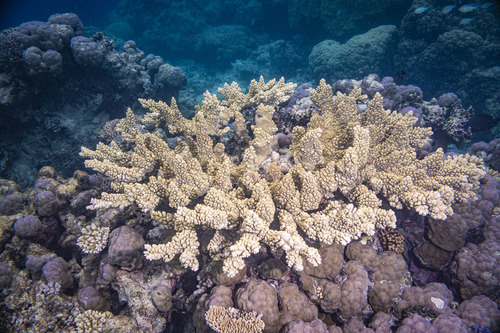
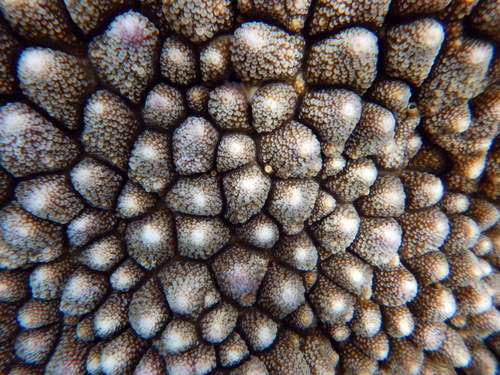
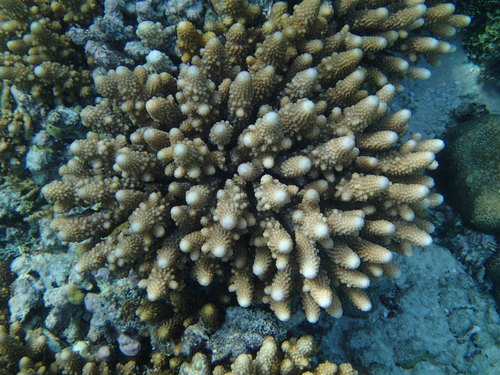
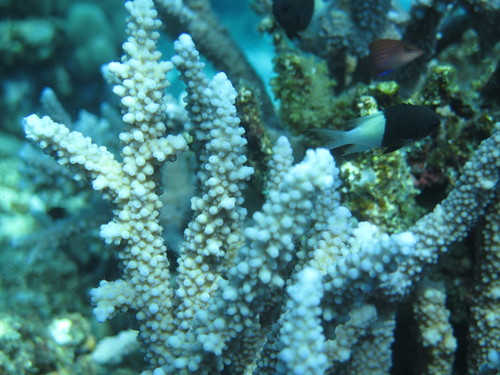
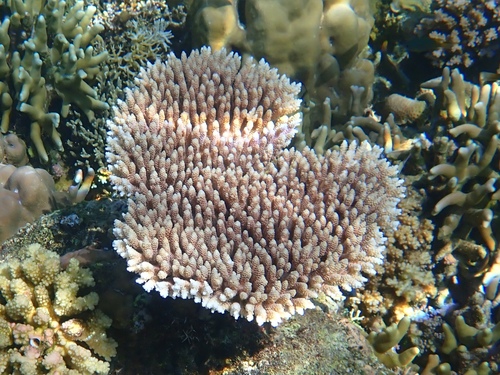
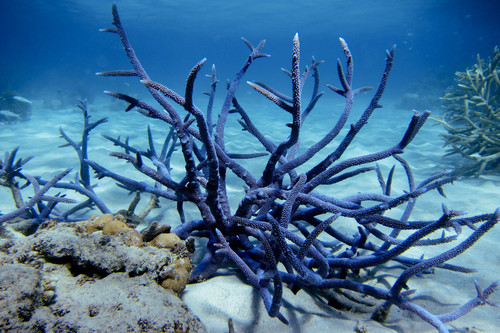
Acropora muricata forms arborescent colonies that grow into thickets with diameters reaching up to 10 metres (33 feet). In shallower water, its branches are short, while in deeper water, the branches are less clumped. Its axial corallites protrude from the branches, and its radial corallites are tube-shaped. This species can be blue, brown, or cream in color, and the ends of its branches are pale. It bears a close resemblance to Acropora teres. The IUCN Red List classifies Acropora muricata as a near threatened species, and its overall population is believed to be decreasing. It is also listed under Appendix II of CITES. Exact population counts for this species are unknown. It is likely threatened by global coral reef decline, rising temperatures that cause coral bleaching, climate change, human activity, the crown-of-thorns starfish (Acanthaster planci), and disease. Acropora muricata can be found in the Gulf of Aden, the Red Sea, the northwest, southwest, and northern Indian Ocean, the Persian Gulf, Australia, the central Indo-Pacific, Japan, Southeast Asia, the East China Sea, and the oceanic central and western Pacific Ocean. It grows at depths ranging from 5 to 30 metres (16 to 98 feet).