About Acropora hemprichii (Ehrenberg, 1834)
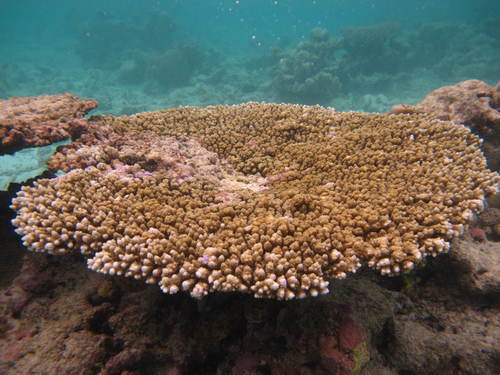
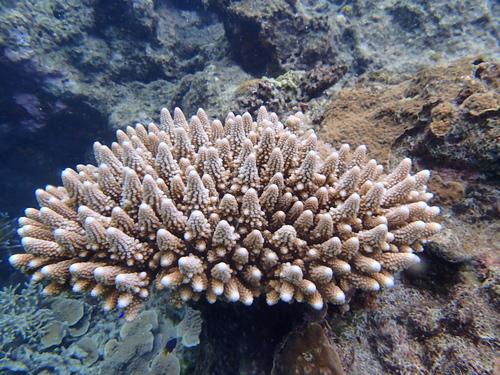
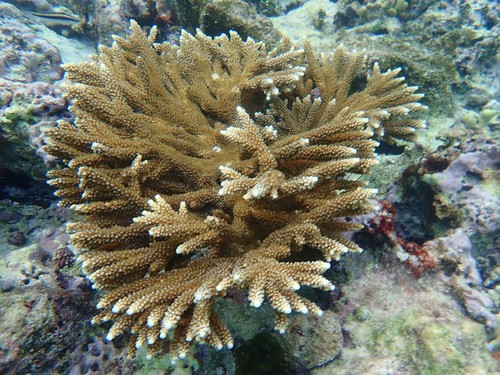
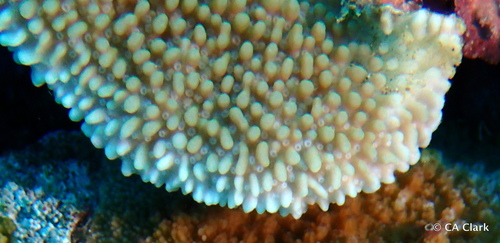
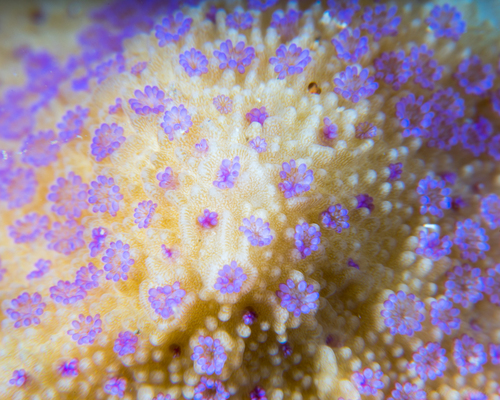
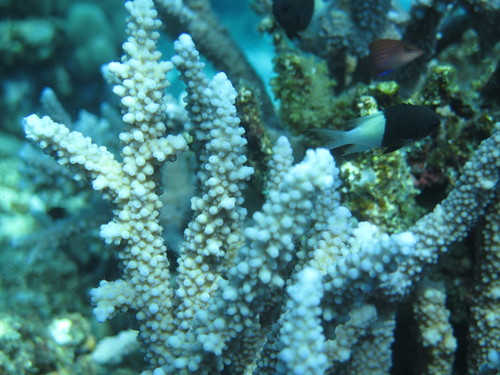
Acropora hemprichii (Ehrenberg, 1834) forms colonies of densely packed, flat or upward-facing branches. Individual branches reach diameters of 12 to 30 millimetres (0.47 to 1.18 in) and grow to around 80 millimetres (3.1 in) in length. Mature colonies are often more than 2 m (6.6 ft) wide, and can grow as single-species stands independent of other species. This species has rounded, dome-shaped axial corallites, and incipient axial corallites are present on some specimens. Its radial corallites are large, cone-shaped, irregularly spaced, and have smooth walls. The coenosteum is smooth, and the species is typically brown or pink-brown in color. It inhabits shallow marine reefs at depths of 3 to 15 m (9.8 to 49.2 ft). Analysis of specimens from the Red Sea shows this species has a lifespan of 13 to 24 years. Its skeleton is made of aragonite. Acropora hemprichii is a common species restricted to a limited geographic range: it occurs in the Red Sea, Gulf of Aden, Indian Ocean, and Philippines. While coral bleaching impacts the species overall, northern Red Sea populations have avoided most bleaching damage, with only 6% of reefs hosting this species destroyed over recent decades. Populations in the southern Red Sea have fared far worse. The earliest known occurrence of this species dates to between 0.78 and 0.13 million years ago. No total population count is available, but populations are believed to be declining. Threats to the species include disease, coral bleaching caused by rising sea temperatures, fishing, human coastal infrastructure development, and predation by Acanthaster planci. It is classified as Vulnerable on the IUCN Red List, and is listed on CITES Appendix II.