About Acropora abrotanoides (Lamarck, 1816)
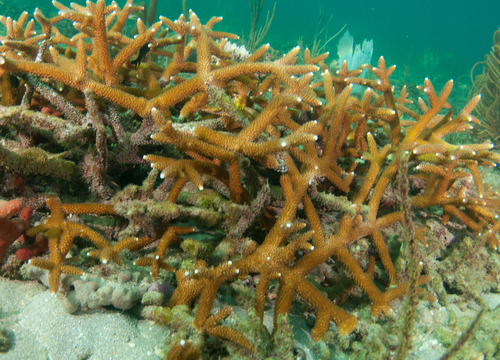
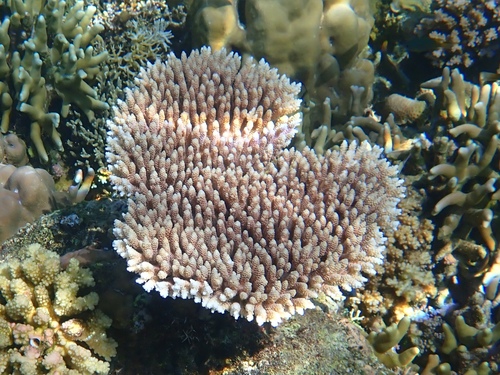
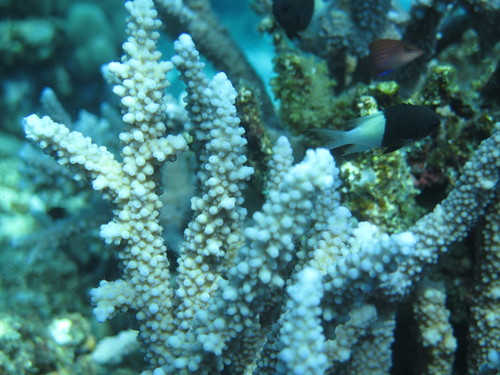
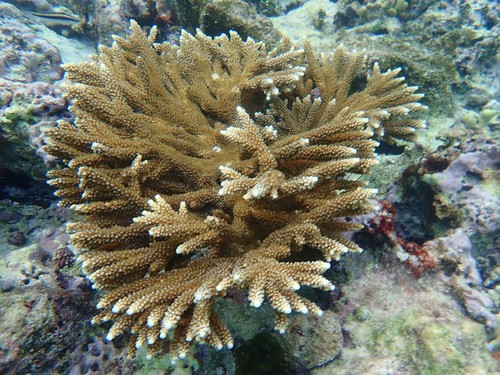
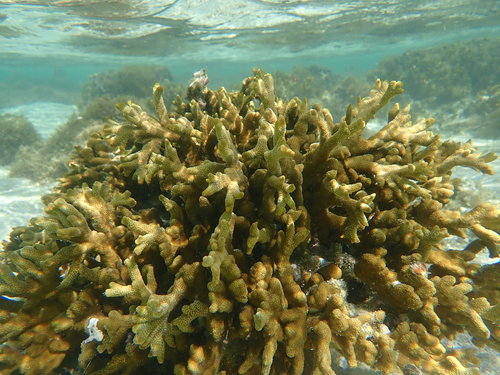
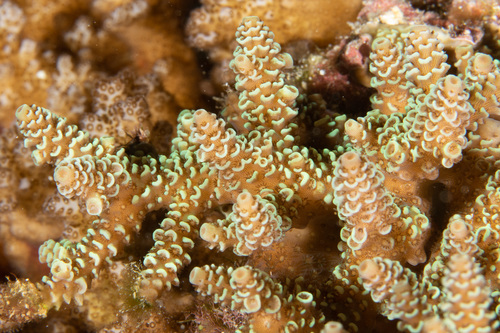
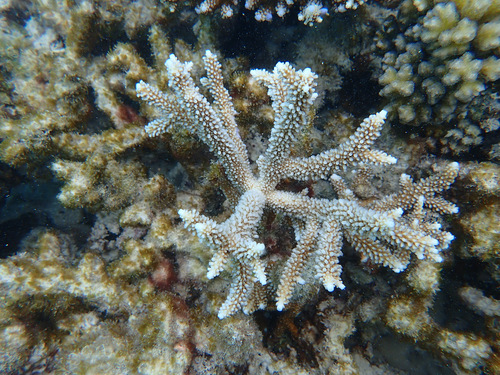
Acropora abrotanoides forms colonies of fused branches that grow prostrate across the seabed, with vertical outer branches. Colonies can reach up to 3 metres (9.8 ft) in diameter, and may be table-shaped. In the center of a colony, branches are fused together, and these branches are either elongated or conical, sometimes with tapering pointed ends. Its branches contain both axial and radial corallites. Radial corallites are observed to be elongated, while axial corallites occur in varying numbers and are rasp-like or tubular in shape. Radial corallites have well-developed tips that evolved to prevent predation. This species is green-grey or pink-brown in colour, and is similar to Acropora pinguis and Acropora robusta. Acropora abrotanoides is distributed from the Gulf of Aden and the Red Sea, through the Indian Ocean to the Pacific Ocean, and also occurs in the East China Sea, Australia, Japan, and the south-eastern Atlantic Ocean.