About Acronicta tridens (Denis & Schiffermüller), 1775
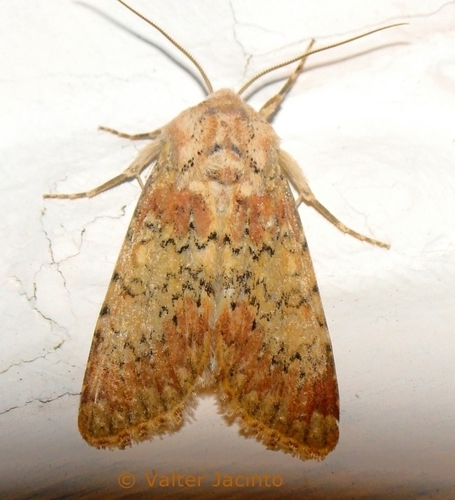
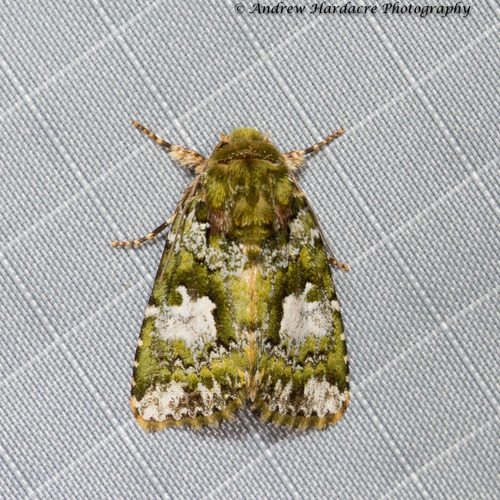
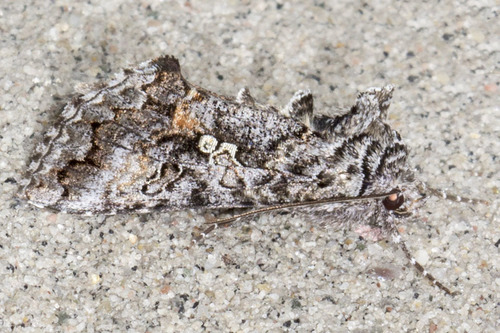
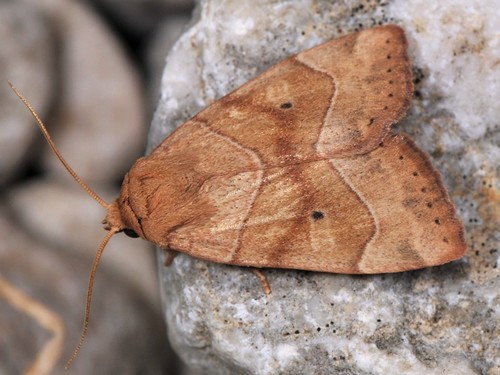
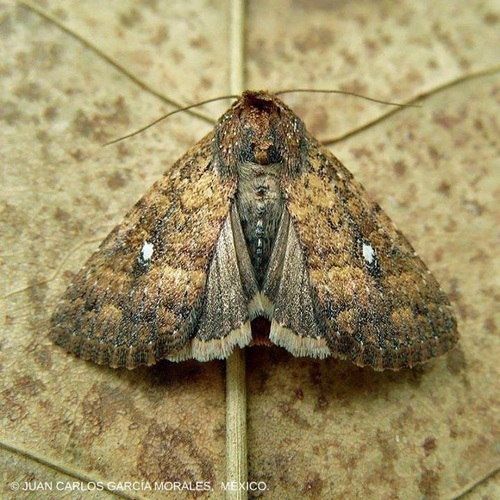
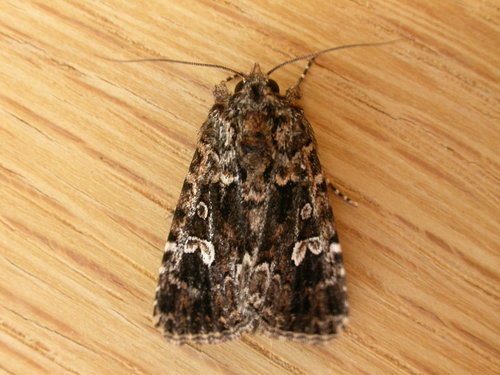
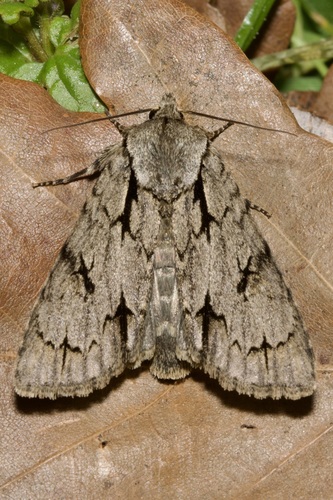
Acronicta tridens, commonly known as the dark dagger, is a moth species belonging to the Noctuidae family. It was first formally described by Michael Denis and Ignaz Schiffermüller in 1775. Its distribution ranges across all of Europe, from southern Fennoscandia to the Balkans and Italy, and also extends through Turkey, the Near East, the European part of Russia, southern Siberia, the Ural, the Russian Far East (including Primorye, southern Khabarovsk, southern Amur region and Sakhalin), the Korean Peninsula, China, and Japan’s Hokkaido. This moth has grey forewings marked with prominent black “dagger” markings. Male dark daggers have white hindwings, while female dark daggers have dirty grey hindwings. The species has a total wingspan of 35 to 43 mm, or 1.4 to 1.7 inches. Adult dark daggers are extremely similar in appearance to adults of the closely related grey dagger, Acronicta psi. Despite its common name “dark dagger”, this species is typically the paler of the two, and the white hindwings of male dark daggers are usually a useful identifying trait. The only reliable method to distinguish adult individuals of the two species is through examination of their genitalia. Larvae of the two species, however, are very different in appearance. Dark dagger adults fly at night during June and July, and are attracted to light, and sometimes to sugar. The larva of this species is black, patterned with red and white stripes. It lacks the bold yellow markings and prominent horn that are characteristic of grey dagger larvae. Dark dagger larvae feed on a wide variety of host plants. The species overwinters in the pupal stage, and sometimes spends two winters as a pupa. Recorded food plants for the dark dagger are Betula (birch), Caragana, Crataegus (hawthorn), Malus (apple), Prunus, Pyrus (pear), Rhamnus (buckthorn), Rosa (rose), Salix (willow), and Sorbus (rowan).