About Acrocephalus schoenobaenus (Linnaeus, 1758)
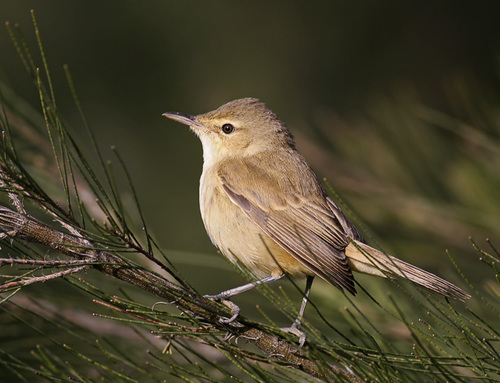
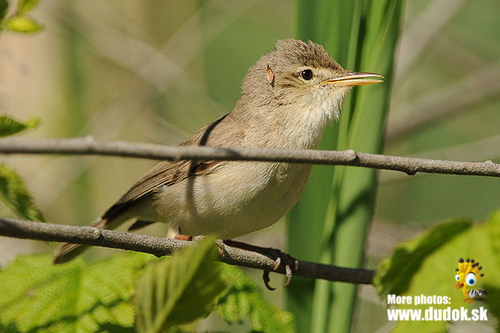
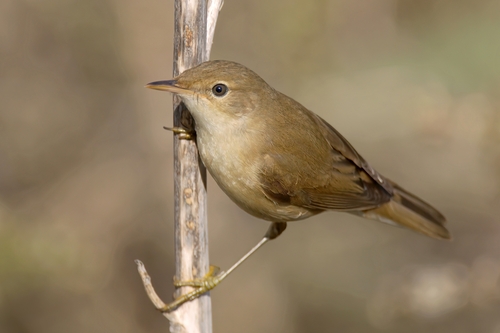
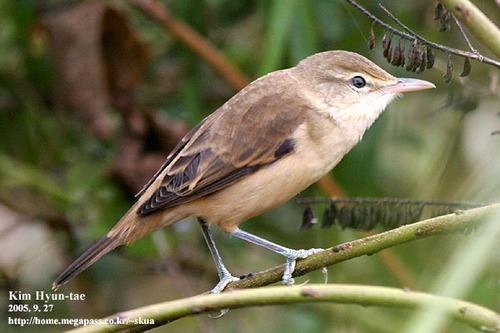
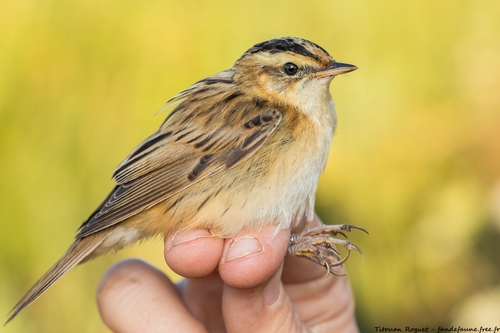
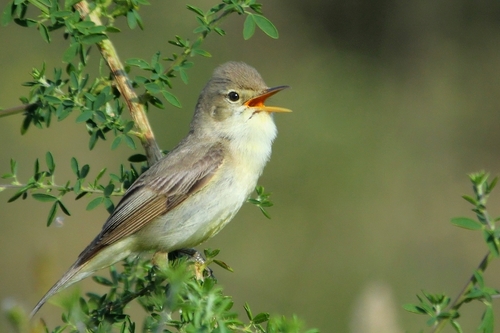
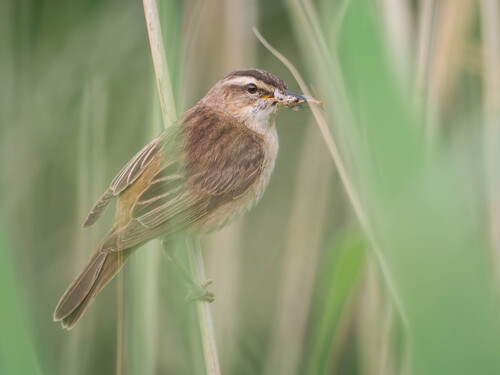
This medium-sized warbler measures 11.5–13 cm (4.5–5.1 in) in length and weighs approximately 12 g (0.42 oz). It has streaked brown back and wings, pale underparts, and a warm brown unstreaked rump that contrasts with its duller wings. Its forehead is flattened, its crown is streaked with black, it has a strong pointed bill, a prominent whitish supercilium, and greyish legs. The plumage of males and females is identical, but the sexes can be distinguished when caught for ringing by the presence of a brood patch (in females) or a cloacal protuberance (in males). Juvenile birds have dark spots on the breast; they are more easily confused with aquatic warblers because of their apparent pale central crown stripe that contrasts with darker crown edges. Other species similar to the sedge warbler include moustached warblers and Pallas's grasshopper warblers. The oldest recorded sedge warbler was a ringed individual in Finland that lived to 10 years and 1 month old; the typical lifespan of the species is 2 years. The sedge warbler's song is varied, rushed, and chattering, with sweeter phrases and some mimicry, which is typical of Acrocephalus warblers. Its song is made of phrases arranged in random order, so no two songs are ever the same. Male sedge warblers with the widest song repertoires mate with the largest number of females. The sedge warbler has a large range, with an estimated Global Extent of Occurrence of 10 million square kilometres, and a large global population that includes between 8.8 million and 15 million birds in Europe. Data analysis by the British Trust for Ornithology shows that fluctuations in the sedge warbler population come from changes in adult survival rate, caused by shifting rainfall patterns on the species' wintering grounds. While global population changes have not been measured, BirdLife International designates the sedge warbler's conservation status as 'of least concern'. This species breeds across Europe, western Asia, and central Asia, and is migratory. After feeding to build up energy following breeding, they migrate quickly across southern Europe and the Sahara from August to September. Studies in Nigeria and Uganda indicate that sedge warblers return to the same wintering sites year after year. All sedge warblers spend winter in sub-Saharan Africa, ranging from Senegal in the west to Ethiopia in the east, and reaching as far south as the eastern Cape Province of South Africa and northern Namibia. The routes taken during southward migration, and the birds' eventual wintering grounds, correspond to their breeding grounds. Birds ringed in the United Kingdom and Netherlands are later recovered from south-west Iberia to Italy; birds from Sweden are recovered in central Europe and Italy; and Finnish birds are found from north-east Italy and Malta east to the Aegean region. Sedge warblers from the former Soviet Union take migration routes via the eastern Mediterranean Sea and Middle East. Loss of wetland feeding areas along migration routes, and the expansion of the Sahara Desert, pose threats to the sedge warbler's breeding population. Birds begin leaving Africa in late February, build up fat reserves at wetlands before and likely after crossing the Sahara, and arrive in Europe starting in March. Unlike other members of the Acrocephalus genus, the sedge warbler's range extends from the Arctic to mid-latitudes, and it is adapted to cool, cloudy, moist conditions. Though it is often associated with wetlands, it can breed 500 metres (1,600 ft) or more away from water. During the breeding season, this species is found in reedbeds, often alongside scrub and ditches, and also uses habitats away from water including hedgerows, patches of stinging nettles, and arable crops. On African wintering grounds, it uses habitats such as reeds at wetlands, papyrus, grass, sedge, reedmace, and tall elephant grass. In Ethiopia, it can be found at altitudes between 1,800–2,400 metres (5,900–7,900 ft) above sea level. The sedge warbler's animal prey includes mayflies, dragonflies, damselflies, grasshoppers, bugs, lacewings, moths, beetles, and flies. It also consumes vegetable material including elderberries and blackberries. On wintering grounds, its food includes non-biting midges, plus flowers and berries from the toothbrush tree. In late July, before migration begins, sedge warblers tend to seek out sites with large populations of plum-reed aphids and stay there longer than they stay at other locations. Ringing studies show that birds may travel considerable distances (for example, from southern England to northern France) to search for food before starting their actual migration. In Portugal, the aphid supply dwindles too early for sedge warblers to use it, so many birds do not stop there and already have heavy fat reserves when they pass through the area. Birds that build up the heaviest fat reserves before migration are capable of making non-stop flights, for example from Africa to southern Britain, or from Uganda to Iraq. Some individuals double their normal body weight when fuelling for migration. Lighter birds have to complete the journey in multiple shorter segments. Sedge warblers feed in low, thick vegetation, especially reeds and rushes, but also forage in arable fields and around bushes. A study conducted at Attenborough, Nottinghamshire in England found that during the breeding season, 47% of foraging habitat used was marshland (mostly Glyceria grasses), 26% was shrub, 21% was field vegetation, and 6% was woodland. The species uses two main feeding techniques: 'picking' insects from vegetation while perched or sometimes hovering, and 'leap-catching', where the bird grabs flying insects as it flies between perches. Sedge warblers typically hop between plant stems and pick insects from the undersides of leaves, and they take advantage of cooler temperatures around dusk and dawn that make their prey less mobile.